
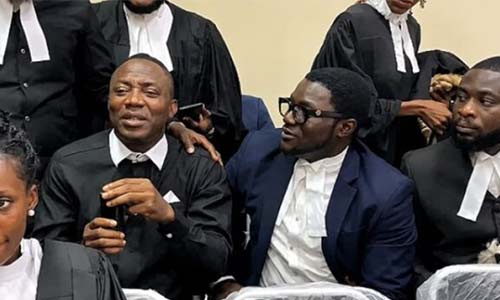
Federal High Court: Sowore Seeks SSS Counsel as Witness in Cyberbullying Trial
Summary
- Activist Omoyele Sowore sought to compel SSS lead counsel Akinlolu Kehinde, SAN, to testify in his cyberbullying trial.
- The Department of State Services (SSS) opposed this move, labeling it a "delay tactic."
- Sowore faces charges of allegedly cyberbullying President Bola Tinubu.
- The Federal High Court in Abuja is currently considering this procedural dispute.
What Happened
A ruling in favor of compelling opposing counsel to testify could establish a notable precedent for strategic witness summoning in future Nigerian criminal proceedings, particularly those with political undertones or involving prominent individuals.
In a significant procedural development at the Federal High Court in Abuja, activist and presidential candidate Omoyele Sowore has sought to compel the lead counsel for the Department of State Services (SSS), Akinlolu Kehinde, SAN, to appear as a witness in his ongoing cyberbullying trial. This move by Sowore, who is also the African Action Congress (AAC) presidential candidate, introduces a novel element into the proceedings.
The SSS, through its representatives, has vehemently opposed this application. The security agency characterized Sowore's attempt to summon its senior legal representative as a deliberate "delay tactic," aiming to prolong the resolution of the case. This objection was formally presented before the Federal High Court on Tuesday.
The underlying legal battle involves allegations that Omoyele Sowore engaged in cyberbullying against President Bola Tinubu. The SSS is a key party in this prosecution, making the attempt to call its lead counsel to testify a particularly contentious point in the litigation.
Legal Context
The ongoing cyberbullying case against Omoyele Sowore, which centers on alleged offenses against President Bola Tinubu, has taken an unexpected turn with this application. Typically, legal counsel represents their clients and does not serve as a witness in the same proceedings, especially against their own client's interests or in a manner that could compromise attorney-client privilege or trial strategy.
The attempt to issue an Akinlolu Kehinde SAN witness summon highlights a complex procedural dispute within the Nigerian legal system. Such a maneuver raises fundamental questions about the ethical boundaries of legal representation and the permissible scope of litigation tactics in criminal trials. The court's decision on this matter could clarify the limits of compelling opposing counsel to provide testimony.
This particular development in the Sowore SSS counsel witness cyberbullying trial underscores the intricate nature of high-profile cases involving political figures and state security agencies. The Federal High Court Abuja Sowore proceedings are now tasked with navigating this unusual request, which could have broader implications for how legal teams conduct themselves in politically sensitive cybercrime litigation tactics.
Why It Matters
The outcome of Sowore's bid to summon Akinlolu Kehinde, SAN, carries significant weight beyond the immediate cyberbullying allegations. A ruling in favor of compelling opposing counsel to testify could establish a notable precedent for strategic witness summoning in future Nigerian criminal proceedings, particularly those with political undertones or involving prominent individuals.
Conversely, if the court upholds the SSS's objection and rejects the application, it would reinforce existing norms regarding the distinct roles of counsel and witness, thereby safeguarding the integrity of legal representation. This decision will be closely watched by legal practitioners, as it could influence the tactical approaches employed in Nigeria cybercrime litigation tactics, especially in cases where state agencies are involved.
This procedural battle within the Omoyele Sowore cyberbullying case highlights the intense scrutiny and innovative legal strategies that can emerge in politically charged trials. The Federal High Court's resolution of this specific dispute will not only impact the trajectory of Sowore's trial but also contribute to the evolving jurisprudence concerning the conduct of legal professionals and the limits of procedural maneuvers in the Nigerian justice system.
Practical Implications
This development highlights a procedural dispute in a high-profile cyberbullying trial, specifically concerning the attempt to compel opposing counsel to testify. Lawyers involved in similar politically sensitive cases should monitor the court's decision on this matter, as it could establish a precedent for strategic witness summoning and the boundaries of legal representation in Nigerian criminal proceedings.
Source
How does this affect you?
Get an AI analysis of this article grounded in your jurisdictions, practice areas, and any policy documents you've uploaded to Wansom.
Wansom is AI and can make mistakes.