
South Sudan Ministries Convene for Disability National Action Plan
Summary
- A two-day consultation in Yambio addressed South Sudan’s National Action Plan for Disability Inclusion.
- The Union of Persons with Disabilities in Western Equatoria State called for equal opportunities and greater government support.
- South Sudan ratified the Convention on the Rights of Persons with Disabilities in 2023.
- The nation is currently developing a Disability Bill and a National Action Plan for Disability Inclusion.
- Stakeholders are urged to actively participate in shaping these new legal frameworks.
Consultation Drives Disability Inclusion Dialogue
The future of persons with disabilities must be a future of dignity, equality, participation, opportunity and empowerment.
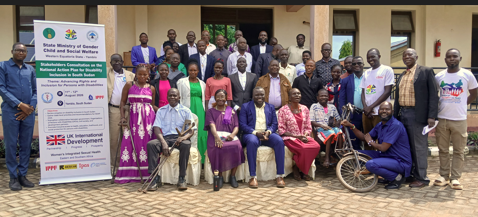
A two-day consultation meeting recently convened in Yambio, bringing together a diverse group of stakeholders to address the critical need for disability inclusion across South Sudan. Organized jointly by the National Ministry of Gender, Child and Social Welfare and the Western Equatoria State Ministry of Gender and Social Welfare, the gathering focused specifically on the development of South Sudan’s National Action Plan for Disability Inclusion. Participants included government officials, civil society organizations, development partners, and persons with disabilities themselves, all contributing to discussions aimed at strengthening the rights and participation of this vulnerable population.
During the consultation, the Union of Persons with Disabilities in Western Equatoria State issued a clear call for enhanced government support, greater inclusion, and equal opportunities. Moses Luiz Mangianga, who chairs the Western Equatoria Union, emphasized that individuals with disabilities should be recognized as productive and capable members of society, rather than merely recipients of aid. He articulated a vision for their future, stating it "must be a future of dignity, equality, participation, opportunity and empowerment." Mangianga further urged both the government and its development partners to prioritize persons with disabilities across key sectors, including education, healthcare, employment, skills training, economic empowerment, and leadership roles. He also advocated for their increased involvement in decision-making processes, stressing that their perspectives must be considered when designing programs that directly impact their lives.
The union also presented specific data highlighting the scale of the challenge in the region. In Yambio County alone, approximately 2,410 persons with disabilities have been identified, comprising 1,010 children and about 1,400 adults. The Union of Persons with Disabilities in Western Equatoria State underscored the necessity for these figures to be regularly updated and verified to ensure accurate planning and resource allocation.
Foundational Legal and Policy Frameworks
The ongoing efforts to advance disability rights in South Sudan are underpinned by significant national and international commitments. In a crucial step towards greater inclusion, South Sudan ratified the Convention on the Rights of Persons with Disabilities (CRPD) in 2023. This ratification provides a robust legal framework guiding the nation's policy development in this area. Building on this foundation, the country is actively engaged in the development of a comprehensive Disability Bill and the aforementioned National Action Plan for Disability Inclusion. These forthcoming legal frameworks represent a pivotal moment for South Sudan disability inclusion legislation.
Emmanuel Lubari, who serves as the Director for Disability at the National Ministry of Gender, Child and Social Welfare in Juba, highlighted the collaborative nature essential for successful disability inclusion. He emphasized that effective progress requires concerted cooperation among various government institutions, development partners, civil society organizations, and persons with disabilities themselves. Lubari articulated this principle by stating, "We do not do for them, but we work with them, and we work together." He strongly encouraged all stakeholders, particularly persons with disabilities, to actively participate in shaping the National Action Plan, ensuring it reflects their lived experiences and needs. The development of the Disability Bill South Sudan is a key component of this broader legislative push.
Towards Comprehensive National Inclusion
The Yambio consultation and the broader national initiatives signify a critical juncture for disability rights in South Sudan, aiming to embed inclusion deeply within governmental systems and development programs. Cecelia Anigunde, the Western Equatoria State Minister of Gender and Social Welfare, underscored the importance of the consultation as an opportunity to gather vital information. This data, she noted, is instrumental in strengthening the integration of persons with disabilities into the national framework, stating, "We are here to document very important information that will help the nation, so that people with disabilities can be included in the system."
The discussions held during the two-day event were designed to identify specific challenges and formulate practical measures to bolster the rights and enhance the participation of persons with disabilities, not only within Western Equatoria State but also across the entirety of South Sudan. The ultimate goal is to move beyond mere assistance, fostering an environment where individuals with disabilities can fully exercise their rights and contribute meaningfully to society, aligning with the vision of dignity, equality, and empowerment articulated by advocates. The successful promulgation and implementation of the South Sudan Disability Bill National Action Plan will be crucial for realizing these aspirations.
Practical Implications
Lawyers and compliance officers in South Sudan should closely monitor the development and eventual promulgation of the Disability Bill and National Action Plan for Disability Inclusion. These forthcoming legal frameworks will introduce new compliance obligations and rights related to persons with disabilities, impacting areas such as employment, public services, and infrastructure accessibility, requiring proactive review and adaptation of existing policies and practices.
Source
How does this affect you?
Get an AI analysis of this article grounded in your jurisdictions, practice areas, and any policy documents you've uploaded to Wansom.
Wansom is AI and can make mistakes.