
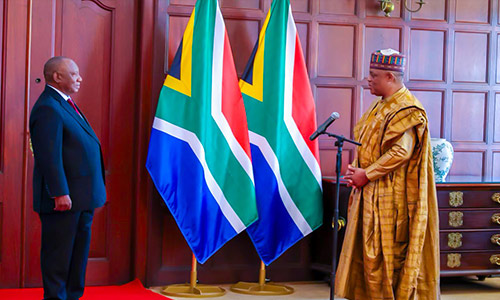
South Africa Summons Nigerian Envoy Over Remarks, Invokes Vienna Convention
South Africa has summoned Nigeria’s High Commissioner to South Africa, Femi Fani-Kayode, over his allegations concerning the live broadcast of his presentation of letters of credence to President Cyril Ramaphosa and his subsequent social media comments, invoking the Vienna Convention on Diplomatic Relations. This action signifies a formal diplomatic protest by the South African government regarding the conduct of the Nigerian envoy and the manner in which a diplomatic event was handled and subsequently discussed publicly.
The legal significance of this development lies in the invocation of the Vienna Convention, a cornerstone of international diplomatic law that governs the conduct of diplomats and the privileges and immunities they enjoy. South Africa's recourse to this convention suggests a belief that Mr. Fani-Kayode's actions may have contravened established diplomatic norms or protocols. For legal practitioners, this case highlights the importance of understanding the boundaries of diplomatic immunity and the mechanisms available for addressing alleged breaches of diplomatic conduct, particularly when such issues spill into the public domain via social media.
The legal framework underpinning this situation is primarily the Vienna Convention on Diplomatic Relations (1961), to which both South Africa and Nigeria are signatories. This convention outlines the functions of diplomatic missions, the inviolability of diplomatic premises and archives, and the personal inviolability of diplomats. It also provides a framework for resolving disputes between states concerning diplomatic relations. The specific context involves an alleged grievance by the Nigerian High Commissioner regarding a perceived slight during a formal diplomatic ceremony, which he then aired publicly, prompting the South African government's response.
The key parties involved are the South African government, acting through its Ministry of International Relations and Cooperation, and Nigeria’s High Commissioner to South Africa, Femi Fani-Kayode. The Nigerian government, through its High Commissioner, is also implicitly involved. The courts are not directly involved at this stage, as the matter is being handled through diplomatic channels, which are the primary recourse for resolving such inter-state disagreements before they escalate to formal legal disputes.
Practitioners advising diplomats or governments on diplomatic relations should monitor how this situation evolves. The outcome could set a precedent for how alleged diplomatic protocol breaches, especially those amplified by social media, are handled between African nations. It underscores the need for diplomats to adhere strictly to diplomatic channels for resolving grievances and to exercise caution in their public statements, particularly on platforms that can rapidly disseminate information and potentially inflame bilateral relations. Businesses operating in or with these countries should also be aware of potential diplomatic tensions that could impact broader bilateral ties.
How does this affect you?
Get an AI analysis of this article grounded in your jurisdictions, practice areas, and any policy documents you've uploaded to Wansom.
Finish Reading the Full Story and the Expert Analysis.
Get the latest legal & regulatory intelligence in Nigeria
Wansom is AI and can make mistakes.