
South Africa Summons Fani-Kayode: Social Media Remarks Trigger Diplomatic Action
Summary
- The South African government summoned Nigeria's High Commissioner, Femi Fani-Kayode, over his public statements.
- The summons was prompted by Fani-Kayode's allegations that his letters of credence presentation was excluded from a live broadcast and his subsequent social media comments.
- This action signifies an escalation in the diplomatic disagreement between the Nigerian envoy and South Africa.
- South Africa explicitly directed the High Commissioner to "Follow Diplomatic Channels" for official grievances.
- The South African government invoked the Vienna Convention in its response, highlighting the legal framework for diplomatic conduct.
Diplomatic Repercussions for Social Media Remarks
By citing this convention, South Africa is signaling that it views the High Commissioner’s public statements as potentially infringing upon the established framework for diplomatic behavior.
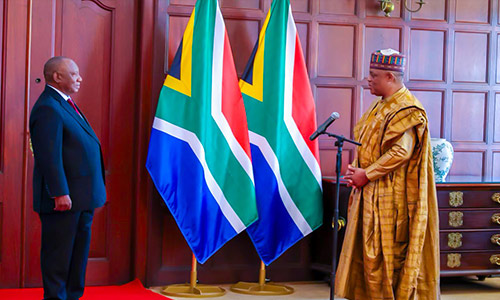
The South African government has taken formal action by summoning Nigeria’s High Commissioner, Femi Fani-Kayode, in response to his public statements. This diplomatic intervention was directly triggered by allegations made by Mr. Fani-Kayode concerning the presentation of his letters of credence to President Cyril Ramaphosa. The High Commissioner publicly claimed that the live broadcast of this official ceremony, a standard protocol for such significant diplomatic events, was deliberately excluded.
Adding to the diplomatic friction, Mr. Fani-Kayode subsequently amplified his grievances through comments posted on social media platforms. These online remarks, following his initial allegations about the broadcast exclusion, appear to have been the primary catalyst for the South African authorities to issue the summons. The act of calling in a foreign envoy signifies a serious level of concern and dissatisfaction from the host nation regarding the diplomat's conduct and public commentary.
Escalation of Bilateral Disagreement
This formal summons of High Commissioner Fani-Kayode marks a significant escalation in the ongoing diplomatic disagreement that has emerged between the Nigerian envoy and the South African government. Diplomatic summonses are not routine occurrences; they are typically reserved for situations where a host country perceives a serious breach of protocol, a misrepresentation, or an unacceptable public statement by a foreign representative. The South African government's decision to take such a step underscores the gravity with which it views the High Commissioner's actions.
In their communication, South African officials explicitly instructed the High Commissioner to "Follow Diplomatic Channels." This directive serves as a clear reminder of the established norms for international relations, emphasizing that any concerns or disputes should be addressed through official governmental communication pathways and private discussions, rather than through public platforms like social media. This reinforces the principle of discreet and formal engagement in diplomatic affairs.
Invoking the Vienna Convention on Diplomatic Relations
A critical aspect of South Africa’s response was its invocation of the Vienna Convention. This foundational international treaty, formally known as the Vienna Convention on Diplomatic Relations of 1961, governs the conduct, privileges, and immunities of diplomatic missions and their personnel worldwide. By citing this convention, South Africa is signaling that it views the High Commissioner’s public statements as potentially infringing upon the established framework for diplomatic behavior.
The Vienna Convention outlines not only the rights and protections afforded to diplomats but also their obligations, which include respecting the laws and regulations of the receiving state and refraining from interfering in its internal affairs. The South African government's reference to this convention suggests that it believes Mr. Fani-Kayode's social media remarks and allegations may have crossed the line of appropriate diplomatic engagement, thereby necessitating a formal response grounded in international legal principles. This highlights the delicate balance between diplomatic freedom of expression and the responsibilities inherent in an envoy's role.
Practical Implications
This incident highlights the legal boundaries governing diplomatic conduct and the invocation of international conventions like the Vienna Convention in response to public statements by envoys. Lawyers advising diplomatic personnel or entities involved in international relations should note the potential for formal diplomatic action arising from public commentary.
Source
How does this affect you?
Get an AI analysis of this article grounded in your jurisdictions, practice areas, and any policy documents you've uploaded to Wansom.
Finish Reading the Full Story and the Expert Analysis.
Get the latest legal & regulatory intelligence in Nigeria
Wansom is AI and can make mistakes.