
South Africa’s ConCourt Finds 24-Year Pardon Delay Unconstitutional
Twenty-four years passed between the submission of a joint presidential pardon application and its eventual resolution. During that time, South Africa had four successive presidents. The application moved through government processes, the applicants repeatedly sought answers, and officials continued to indicate that the matter was being considered. Yet no decision was made.
On 21 October 2026, the Constitutional Court delivered a unanimous judgment declaring that the failure of successive Presidents to decide the application of Fusi Simon Mofokeng and Tshokolo Joseph Mokoena breached their constitutional obligations. In Mofokeng and Another v President and Others [2026] ZACC 43, the Court found that the 24-year delay could only have resulted from wilful neglect or gross negligence. It held that the applicants were entitled to constitutional damages, with the amount to be determined through further submissions.
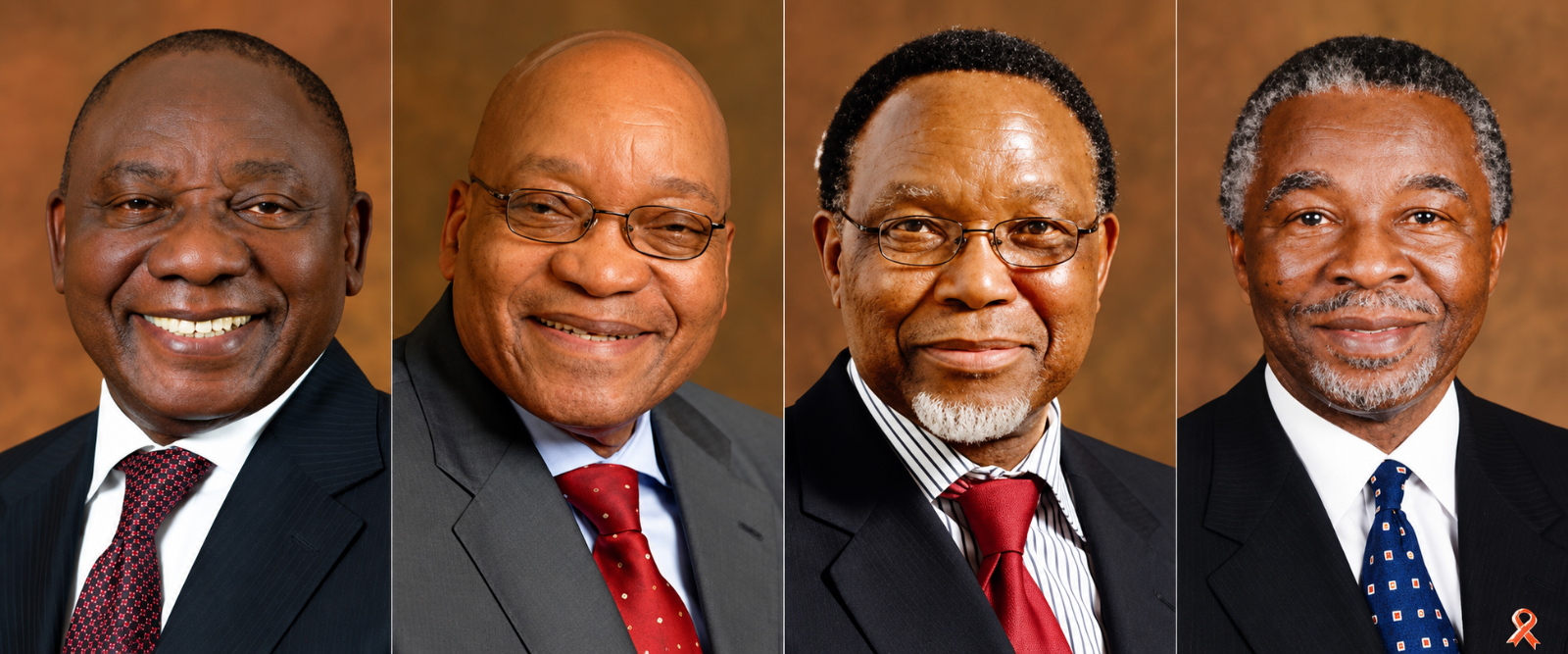
The judgment concerned President Cyril Ramaphosa and his predecessors Thabo Mbeki, Kgalema Motlanthe and Jacob Zuma. It was not a finding that each former President was personally liable to pay compensation. Rather, the Court addressed the constitutional obligations attached to the presidential office and the failure of successive administrations to ensure that the application was decided.
The case presents a fundamental question about executive power: what does constitutional accountability mean when a decision reserved to the President is effectively lost inside the administrative machinery supporting that office?
The Court’s answer was emphatic. Delegating the processing of an application does not delegate away the constitutional responsibility to ensure that it is dealt with. Nor can a pardon granted after litigation erase the consequences of years of inaction.
For South Africa’s constitutional order, the ruling is significant not only because of the extraordinary duration of the delay, but because it recognises that a person can suffer a distinct constitutional injury when the state fails to make a decision it is constitutionally obliged to consider.
The origins of the case: a conviction that followed a deadly shoot-out
The story began on 2 April 1992, when a shoot-out between members of an African National Congress self-defence unit and the South African Police in Bethlehem, in the Free State, left one police officer dead and another seriously injured.
Mofokeng and Mokoena were subsequently convicted in 1993 of murder, attempted murder and conspiracy to commit robbery. They received life imprisonment and an additional 18 years. Neither man had been at the scene of the shoot-out or been involved with the self-defence unit, according to the Constitutional Court’s account of the case. Their convictions for murder and attempted murder rested on the doctrine of common purpose and the testimony of a single State witness whose evidence was later considered unreliable.
The significance of the common-purpose doctrine is that criminal liability may, in appropriate circumstances, extend beyond the person who physically performs an act. But its application does not eliminate the need for a lawful evidential basis to establish the accused’s participation and the other requirements of criminal liability.
In this case, later developments raised serious questions about the basis on which the two men had been convicted.
During Truth and Reconciliation Commission proceedings, members of the self-defence unit who had participated in the shoot-out confirmed that Mofokeng and Mokoena had not been involved. Three members reportedly stated that the two men were strangers to them. Four actual participants received amnesty for their involvement in the killings.
Mofokeng and Mokoena maintained their innocence throughout their trial and imprisonment. They pursued legal avenues to challenge the convictions, including an attempt to obtain amnesty through the TRC process. They ultimately withdrew their TRC application because they were unwilling to admit guilt for crimes they said they had not committed.
That decision left them outside a process through which other participants had obtained amnesty. It also meant that their search for official recognition of their circumstances continued through other legal and administrative channels.
They were released on parole in April 2011, having spent 19 years in prison. Their release, however, did not resolve the question of the convictions or their request for presidential clemency.
The Constitutional Court’s 2026 judgment was not an appeal overturning the original criminal convictions. Its focus was the subsequent failure to decide the pardon application and the constitutional consequences of that delay.
That distinction matters. The Court was not asked simply to revisit the criminal trial. It was asked to determine whether the executive had failed to perform its constitutional obligations in handling an application intended to address the applicants’ circumstances.
November 2001: the application that never reached a decision
In November 2001, Mofokeng and Mokoena jointly applied to the President for pardons under section 84(2)(j) of the Constitution.
Their application relied on information emerging from the TRC process, including admissions by members of the self-defence unit, the grant of amnesty to actual participants and concerns about the reliability of the State’s principal witness. The applicants also relied on an allegation that the witness had admitted receiving a bribe to provide false information. These were the grounds supporting their application, rather than a new criminal trial conducted by the Constitutional Court.
The application did not lead to a presidential decision.
Over the following years, the applicants contacted government officials and the Department of Justice to establish its status. They were told that it was under consideration. The Court’s record showed that the application had been processed within the Department, but the Presidency could not explain why it had not reached the President’s office for a decision.
The missing decision became more than an administrative inconvenience. The applicants had exhausted other avenues, continued to pursue official recognition of their claims and depended on the constitutional process for a decision that only the President could make.
In around 2008, while their original application remained pending, they also applied under a special presidential pardons process introduced during Mbeki’s presidency for politically motivated offences outside the TRC framework. They did so despite knowing that their continued assertion of innocence did not fit the special dispensation’s requirements.
They later pursued another route under section 327 of the Criminal Procedure Act, which allows certain applications for reconsideration of criminal convictions or sentences to be referred through the prescribed process. Their application was rejected in 2018, but they were not properly informed of the decision at the time. They learned of it only in March 2019.
In April 2021, the applicants contacted the Presidency again, seeking an update on the original pardon application. The Department asked them to provide new forms and further information, describing the matter as requiring a fresh recommendation. The applicants supplied additional material on the understanding that it would supplement not replace the 2001 application.
By July 2023, they had provided the requested documentary material. Still, no decision followed.
The sequence is important. The delay was not simply the time taken to consider a complex request. It continued through repeated enquiries, further documentation, parallel proceedings and official assurances that the matter was under consideration.
The state’s inability to establish what had happened to the original application became central to the constitutional case.
Four presidencies, one constitutional responsibility
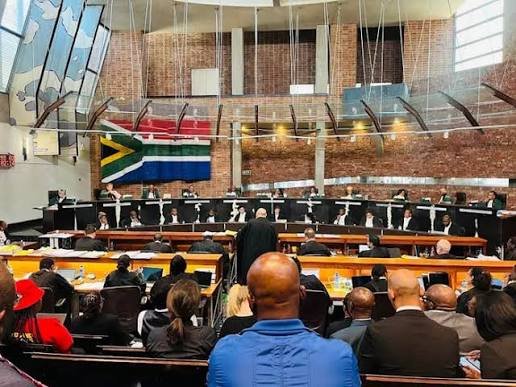
The application remained unresolved across the presidencies of Thabo Mbeki, Kgalema Motlanthe, Jacob Zuma and Cyril Ramaphosa.
The respondents argued that the relevant period should be calculated from November 2021, when they said a fresh application had been submitted, rather than from November 2001. They maintained that the original application had been overtaken by subsequent proceedings and that the delay after 2021 was attributable in part to an under-capacitated unit within the Department of Justice.
The Court rejected that account.
It accepted that the original application had been submitted in 2001 and found that it remained valid. The later requests for documents and updated information did not erase the government’s responsibility for the application that had already been lodged. The Department’s inability to explain why the file had not reached the Presidency could not be used to reset the clock.
The Court also rejected the suggestion that administrative understaffing provided an adequate explanation for the delay.
This reasoning went to the institutional structure of the pardon power.
The President is the constitutional actor authorised to exercise the power to grant pardons. Although administrative functions can be performed by the Minister of Justice and the Department, the constitutional responsibility cannot be divided in a way that leaves no one accountable when an application disappears or remains unresolved.
If the President could avoid responsibility whenever an application was mishandled by officials, an accountability gap would arise: the official with the power to make the final decision could point to the department, while the department could argue that the final decision belonged to the President.
The Court rejected that possibility. It held that the President must maintain control of, and remains responsible for, every stage of the pardon process, including functions delegated to the Minister or Department.
The principle extends beyond the facts of this case. Constitutional power may be exercised through an administrative system, but that system cannot become a shield against constitutional accountability.
The obligation belongs to the office even when the failure occurs elsewhere in the chain of administration.
The constitutional provisions at the centre of the judgment
The Court considered the President’s pardon power under section 84(2)(j) of the Constitution, read with sections 83(b) and 237.
Section 84(2)(j) authorises the President to pardon or reprieve offenders and remit fines, penalties or forfeitures. It is a power vested in the President as Head of State.
Section 83(b) provides that the President must uphold, defend and respect the Constitution as the supreme law of the Republic. Section 237 requires that all constitutional obligations be performed diligently and without delay.
Read together, these provisions do not mean that every applicant is entitled to receive a pardon. They mean that the constitutional power must be exercised within the constitutional order and that an application cannot simply be left undecided indefinitely.
The distinction is essential.
A pardon involves a discretionary decision. The President may ultimately grant or refuse it, subject to the applicable legal requirements. But the existence of discretion over the outcome does not create discretion to ignore the application.
The Court treated the obligation to decide rationally, in good faith, lawfully and without unreasonable delay as a constitutional duty. A failure to discharge that duty is not cured merely because the ultimate decision is discretionary.
This was also why the matter fell within the Constitutional Court’s exclusive jurisdiction under section 167(4)(e), which covers disputes between organs of state in the national or provincial sphere concerning the constitutional status, powers or functions of those organs. The Court concluded that the application concerned a failure to fulfil a constitutional obligation vested in the President.
The judgment relied on the Court’s earlier decision in Minister for Justice and Constitutional Development v Chonco and Others, which had addressed the constitutional responsibilities surrounding the processing of pardon applications. Although some observations in that earlier case were obiter, the Court considered them highly persuasive and found no reason to depart from them.
The result was a clear constitutional proposition: the President has discretion over the decision to grant a pardon, but not an unrestricted licence to leave a pardon application without a decision.
Why a 24-year delay could not be excused
The Presidency acknowledged that the delay was deeply regrettable. Ramaphosa apologised and accepted that, even if the failures originated within the Department of Justice, ultimate responsibility rested with him because the power to grant pardons belonged to the President.
The Court accepted those concessions as properly made, but did not treat the apology as sufficient to resolve the constitutional claim.
Justice Narandran Kollapen, writing for the unanimous Court, concluded that the only way a 24-year delay could have occurred was through wilful neglect or gross negligence. He further observed that even a four-year delay the period advanced by the respondents as the relevant one would have been unacceptable and inexplicable.
This was not a finding that the four Presidents had all personally taken the same action or possessed the same knowledge of the application. The former Presidents were cited in their personal capacities but did not oppose or participate in the proceedings. The judgment instead addressed the successive failures associated with the exercise of the presidential function and the constitutional responsibility attached to that office.
The Court’s criticism was directed at the failure of the system to deliver a decision despite repeated attempts by the applicants to obtain one.
The government’s reliance on inadequate staffing did not answer the constitutional problem. An under-resourced administrative process may explain how a delay occurred, but it does not make an otherwise unconstitutional failure lawful.
The longer the delay continued, the more serious the consequences became. The applicants were not simply waiting for a routine administrative response. They were seeking a decision on a request connected to the consequences of convictions they maintained were wrongful, after having spent almost two decades in prison.
The Court’s judgment made clear that the state could not treat such a request as a file that might be considered whenever administrative capacity allowed.
The human cost: one applicant died before receiving his pardon
The case was not only about constitutional administration. It was also about what prolonged inaction meant for two people who had already spent 19 years in prison.
Mofokeng and Mokoena were released on parole in April 2011, but they continued seeking a decision on their pardon application. Their efforts did not end with release, and the absence of a decision left the underlying dispute unresolved.
Mokoena’s health deteriorated. The government was informed that he was unwell and that he wished to have the pardon application decided before his death. The Department was subsequently notified that he had died, yet the judgment record described no meaningful response to that notification.
The Court regarded this conduct as particularly troubling. The delay had deprived Mokoena of the opportunity to receive a decision during his lifetime. It also meant that his widow, Xoliswa Percival Mokoena, had to continue the litigation on behalf of his estate.
The Court rejected the argument that Mokoena’s death prevented his estate from pursuing constitutional damages. The constitutional injury was not extinguished simply because the applicant had died before the Court could determine the case.
That point matters. If a public authority could escape accountability whenever a person died before their claim was resolved, the most serious and prolonged administrative failures could become the hardest to remedy.
The judgment recognised that the harm was not confined to the period of imprisonment. The applicants continued to live with the consequences of their convictions and the unresolved application long after their release.
It was therefore not enough for the state to say that the pardons had eventually been granted. The Court had to consider the harm caused by the delay itself.
The pardons were granted, but the case did not become moot
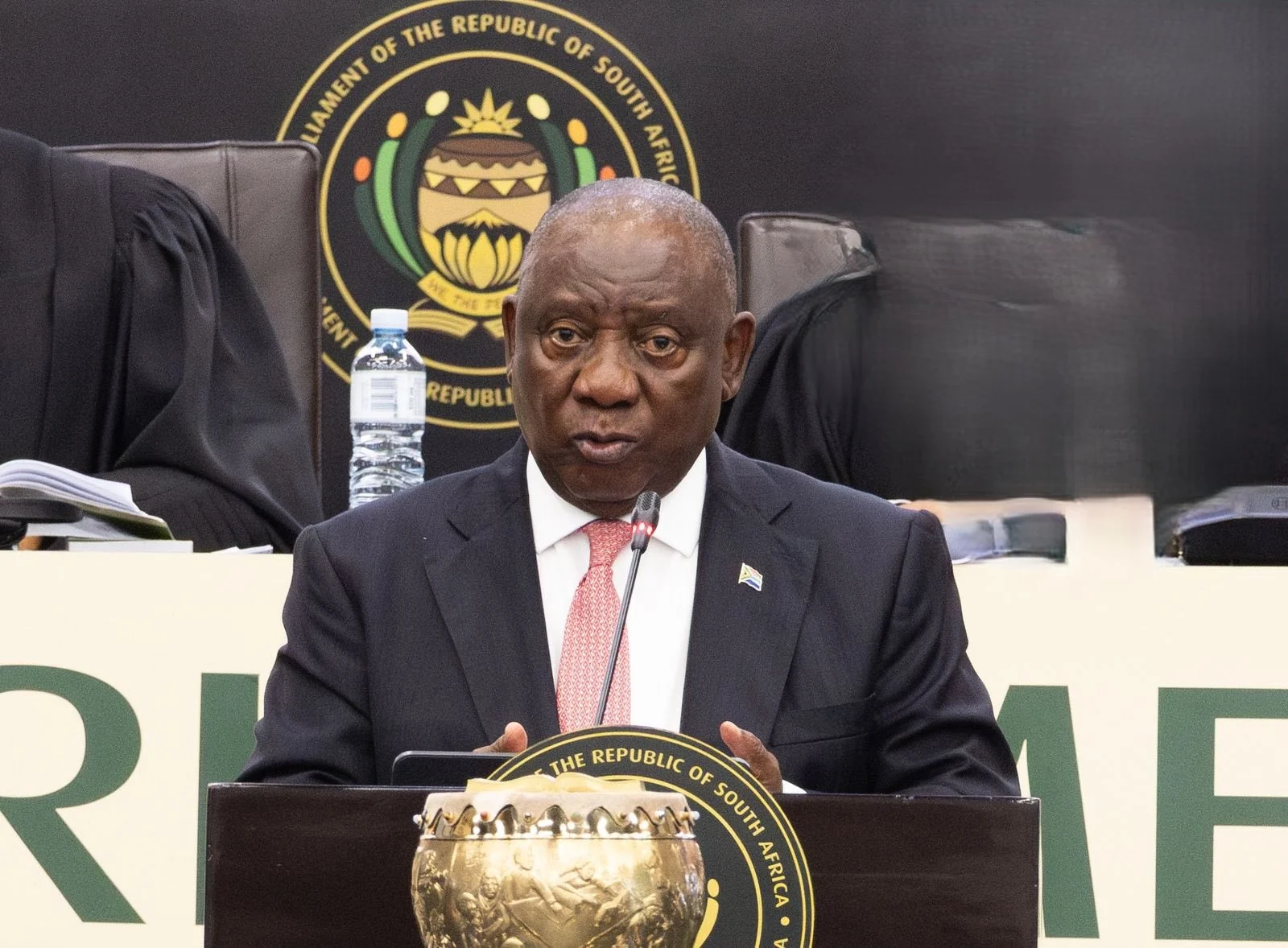
The applicants launched their Constitutional Court proceedings in August 2025. After the litigation began, Ramaphosa undertook to decide the application by 31 January 2026.
On 19 December 2025, the President granted full pardons to both men under section 84(2)(j) of the Constitution. Mokoena received a posthumous pardon.
That decision addressed the outstanding request for clemency. It did not, however, settle whether the previous failure to decide the application had breached the Constitution or whether a remedy was still required.
The respondents argued that the pardons had rendered the case moot because the immediate relief—an order requiring a decision—was no longer necessary. But the applicants were seeking more than a decision on the application. They also sought declarations concerning the constitutional failures and relief for the harm caused by the delay.
The Court agreed that the issues remained live.
A case does not necessarily become moot merely because the state eventually performs the act that should have been performed earlier. Where the applicant continues to seek a declaration that the delay was unconstitutional and a remedy for the resulting harm, the legality of the earlier conduct remains a real question.
The Court therefore considered whether the successive Presidents had failed to fulfil their constitutional obligations, whether the applicants’ corresponding constitutional rights had been infringed, and what remedy would be appropriate.
This is a consequential point for public administration. If belated compliance automatically extinguished every legal consequence of earlier inaction, an authority could avoid accountability simply by acting after litigation had begun.
The judgment rejects that approach. A decision eventually made may resolve the outstanding request, but it does not necessarily repair the injury caused by an unreasonable delay.
From declaration to compensation: why constitutional damages mattered
Having found a constitutional breach, the Court considered the appropriate remedy.
A declaration that the President had failed to fulfil a constitutional obligation would formally recognise the wrong. But the Court concluded that declaratory relief alone would not adequately address the seriousness of the applicants’ circumstances.
The applicants had spent 24 years waiting for a decision on their joint pardon application. They had repeatedly followed up with officials, received assurances that the matter was being considered and ultimately had to approach the highest court in the country to obtain a determination of the constitutional issue.
The Court held that constitutional damages were the most appropriate remedy in the circumstances. It concluded that requiring the applicants to start another, lengthy civil action for delictual damages would be manifestly unjust and unreasonable after their prolonged struggle.
The judgment was significant because it considered constitutional damages for a breach of a constitutional obligation that did not arise directly from the Bill of Rights. The Court reasoned that the President’s obligation to consider pardon applications properly and timeously necessarily corresponded to a right on the part of applicants to have their applications considered in that way.
That right would be hollow if the state could breach the obligation for decades without any meaningful consequence.
The Court considered several factors in deciding that constitutional damages were appropriate:
The duration of the breach: The application remained unresolved for 24 years.
The conduct of the Presidency and administration: The applicants repeatedly raised concerns, yet the process failed to produce a decision.
The nature of the right: The right to have a pardon application considered properly and timeously was connected to a power that only the President could exercise.
The consequences for the applicants: The delay continued after their release from prison and, in Mokoena’s case, outlasted his life.
The Court did not set a final monetary amount in the judgment. It directed the applicants to make further submissions on the quantum of constitutional damages, with the respondents given an opportunity to respond.
That distinction should be kept clear. The Court determined entitlement to constitutional damages; the amount remained to be determined through the subsequent process.
Nor did the judgment impose a personal damages award against all four Presidents. The proceedings concerned the constitutional obligations of successive presidential administrations, and the costs order was made against Ramaphosa in his official capacity.
Why the Court declined to order a structural interdict
The applicants also sought a structural interdict, a form of court order that can require a public authority to take specified steps and report back on compliance.
Their concern was that the administrative process for dealing with pardon applications was in disarray and that the failure in their case might reflect broader systemic problems. A structural order could have required the Presidency and relevant departments to review the process and demonstrate that future applications would be handled appropriately.
The Court did not grant that relief.
It explained that structural interdicts are not automatic whenever a constitutional violation has occurred. They are used when necessary to secure compliance with a court order, and the interests of justice must justify that level of judicial supervision. The Court found that a structural interdict was not required in this case.
This refusal did not excuse the administrative failure. The Court’s findings on the constitutional breach were unequivocal. But it distinguished between identifying a violation and prescribing an ongoing system of supervision.
The Court also declined to prescribe a universal time limit within which all pardon applications must be decided. What constitutes an acceptable period depends on the facts and context of each application. A court can determine that a particular delay is unconstitutional without establishing a single deadline suitable for every case.
The judgment therefore combines strong accountability with restraint in designing administrative remedies. It leaves the executive responsible for improving the process, while making clear that future failures may be subject to constitutional scrutiny.
The wider implications for executive accountability
The case has implications beyond the presidential pardon process.
First, it reinforces the principle that a constitutional power cannot be exercised in a manner that leaves the person affected without a decision indefinitely. Discretion over the outcome does not mean discretion over whether to act at all.
Second, it clarifies that an office-holder cannot avoid constitutional responsibility by pointing to administrative tasks delegated to a department. Delegation may be necessary for the operation of government, but the constitutional duty must remain traceable to the actor empowered to make the final decision.
Third, it demonstrates that eventual compliance does not necessarily cure the consequences of prior constitutional violations. Where the delay itself causes harm, the Court may still grant declaratory or monetary relief after the underlying request has been decided.
Fourth, the judgment illustrates the importance of records, communication and administrative continuity. A pardon application that cannot be traced from submission to final decision exposes a failure not only of administration but also of accountability. The state must be able to establish what happened to an application, which officials handled it, what information was requested and why a decision has or has not been made.
These are not simply questions of internal efficiency. They go to the constitutional requirement that public power be exercised lawfully, rationally and without unreasonable delay.
The judgment does not mean that every delayed application automatically gives rise to constitutional damages. The remedy depended on the exceptional circumstances of this case, including the extraordinary length of the delay, the conduct of the authorities and the consequences for the applicants.
But the principle is clear: where a constitutional obligation is left unperformed for an extraordinary period, the Court may require more than an apology or a belated decision.
What the judgment does and does not decide
The decision should be read carefully.
It establishes that the failure to decide Mofokeng and Mokoena’s joint pardon application over 24 years breached constitutional obligations attached to the presidential office. It also establishes that constitutional damages are an appropriate remedy in their circumstances, with the amount to be determined later.
It does not mean that the President must grant every pardon application. The decision to grant or refuse a pardon remains discretionary, subject to constitutional and legal constraints.
It does not amount to a fresh criminal trial or an order setting aside the original convictions. The case concerned the failure to decide the pardon application and the harm caused by that failure.
It does not impose a universal deadline for every pardon application, nor did it grant the structural interdict sought by the applicants.
And it does not establish that all four Presidents are personally liable to pay damages. The constitutional responsibility followed the presidential office across successive administrations; the Court’s costs order was against the current President in his official capacity.
These limits do not reduce the judgment’s importance. They identify precisely where the Court drew the line: discretion over the substance of a pardon is one thing; indefinite failure to discharge the constitutional duty to consider an application is another.
Conclusion: the Constitution does not permit an application to disappear
The 24-year delay in Mofokeng and Mokoena’s pardon application exposed a fundamental weakness in the relationship between constitutional power and administrative responsibility.
The President alone could grant the pardon, but the application passed through an administrative process that failed to bring it to a decision. Successive administrations did not resolve the matter, despite repeated follow-ups. By the time the President finally granted the pardons in December 2025, one applicant had died.
The Constitutional Court’s unanimous judgment of 21 October 2026 made clear that the failure was not merely regrettable. It was unconstitutional. The obligation to consider a pardon application diligently and without delay is part of the constitutional responsibilities attached to the presidential office, and administrative shortcomings cannot excuse a breach of that duty.
The Court’s decision to recognise entitlement to constitutional damages also matters. It acknowledges that the injury caused by prolonged inaction does not disappear simply because the state eventually makes the decision it should have made years earlier.
For the Presidency and the Department of Justice, the judgment is a warning against allowing responsibility to dissolve across administrative boundaries. For people seeking the exercise of a constitutional power, it confirms that a discretionary outcome does not mean the process can be ignored.
Twenty-four years of silence were not a neutral administrative delay. They were a constitutional failure. The Court has now said so and has required a remedy for the harm that followed.
Citations
- 1.Constitutional Court of South Africa — Mofokeng and Another v President and Others [2026] ZACC 43, Case CCT 246/25, judgment delivered 21 October 2026. Official judgment page and post-judgment media summary.
- 2.Constitutional Court of South Africa — Minister for Justice and Constitutional Development v Chonco and Others [2009] ZACC 25, 30 September 2009. The earlier case considered the constitutional obligations involved in processing presidential pardon applications. Constitutional Court judgments repository.
- 3.Sunday World — Tshwarelo eseng Mogakane, “Ramaphosa, Zuma, Motlanthe, Mbeki failed innocent prisoners, ConCourt rules,” 21 October 2026. Read the report.
- 4.The Citizen — Molefe Seeletsa, “‘Smacks of an uncaring attitude’: ConCourt slams Ramaphosa, predecessors over 24-year delay in pardon saga,” 22 October 2026. Read the report.
Finish Reading the Full Story and Expert Analysis.
Get the latest legal & regulatory intelligence in South Africa
Wansom is AI and can make mistakes.