
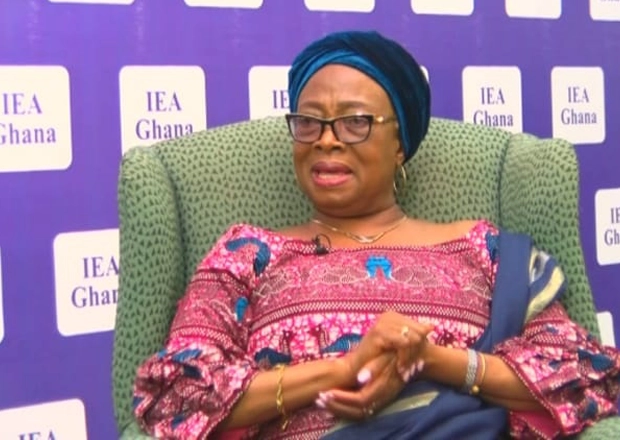
Sophia Akuffo Ghana: Calls For Local Decision-Making Reform, Citizen Power
Summary
- Former Chief Justice Sophia Akuffo advocated for constitutional reforms to grant Ghanaian citizens a stronger role in local decision-making.
- Speaking at an IEA forum on Tuesday, October 6, she argued that the current constitutional implementation limits citizen influence, especially outside urban centers.
- Akuffo highlighted an imbalance in resource distribution and decision-making power between Ghana's urban and rural areas.
- She stressed that specific constitutional provisions are needed to increase public participation for true democracy and national development.
Call for Empowered Local Governance
Without deliberate constitutional reforms specifically designed to strengthen public participation, the legitimate concerns and pressing priorities of a significant segment of the citizenry risk being continuously overlooked.
Former Chief Justice Sophia Akuffo has issued a compelling call for fundamental constitutional reforms in Ghana, advocating for a system that grants citizens a more robust and meaningful role in decisions directly impacting their communities. Speaking at an Institute of Economic Affairs (IEA) forum on Tuesday, October 6, Akuffo, who also serves as a Senior Fellow at the IEA, articulated a vision for a restructured democratic framework. She emphasized that the nation's governance model must evolve beyond merely offering citizens a platform to voice opinions, instead creating tangible opportunities for them to directly influence critical policy and development choices at the local level. This initiative aligns with the broader objective of Sophia Akuffo Ghana local decision-making reform.
The IEA forum served as a platform for discussing the Prempeh Committee’s report and the government’s current position on constitutional review. During her address, Akuffo highlighted a perceived deficiency in the practical implementation of the existing Constitution. She argued that its current application has left many Ghanaians with limited influence over the very decisions that shape their daily existence and future prospects. Her intervention underscores a growing recognition of the need to bridge the gap between governance structures and the lived experiences of ordinary citizens, particularly concerning local issues.
Critiquing the Current Framework and Its Impact
Akuffo's critique centered on what she described as an undue concentration of decision-making authority within a relatively small group. This centralization, she contended, has significantly weakened the capacity of ordinary citizens, especially those residing in areas outside major urban centers, to effectively influence the development priorities within their own communities. The former Chief Justice vividly illustrated this imbalance, stating that if one is not actively "sitting at a table" where decisions are made, they risk becoming "part of the food that is being eaten or shared," metaphorically highlighting their disempowerment.
This imbalance, she further noted, is particularly evident in the disparate distribution of resources and opportunities observed between Ghana's bustling urban hubs and its more rural countryside. In these less urbanized regions, citizens frequently find themselves with considerably less sway over crucial decisions that directly affect their local environments and livelihoods. Akuffo stressed that strengthening Ghana constitutional review citizen participation is not merely an aspirational goal but a foundational requirement for the proper functioning of any democratic system, especially in the context of Ghana local governance reform.
Advocating for Deeper Citizen Engagement
To rectify these systemic shortcomings, Sophia Akuffo explicitly called for the integration of specific provisions within the Constitution aimed at substantially increasing public participation. Such measures, she argued, are essential to empower citizens with a more direct and impactful role in decision-making processes, particularly at the levels where these choices exert the most immediate and profound effect on their lives. She underscored that the collective voice of the people is of paramount importance and was, in fact, anticipated to be a powerful and audible force even under the existing constitutional arrangements.
Akuffo issued a clear and unequivocal warning: Without deliberate constitutional reforms specifically designed to strengthen public participation, the legitimate concerns and pressing priorities of a significant segment of the citizenry risk being continuously overlooked. She posited that true democracy, particularly when national development is the ultimate objective, can only be realized through the meaningful involvement of the populace. This involvement, she clarified, extends beyond mere vocal expression to encompass active and substantive participation in the selection of important choices at the levels most relevant to them, thereby advancing the goals of Ghana decentralization policy.
Practical Implications
Lawyers advising on public law, local government, or constitutional matters in Ghana should monitor the progress of these proposed reforms, as they could lead to significant legislative changes impacting citizen engagement requirements for projects and policy formulation at the local level. This signals a potential shift towards greater mandatory public consultation.
Source
How does this affect you?
Get an AI analysis of this article grounded in your jurisdictions, practice areas, and any policy documents you've uploaded to Wansom.
Finish Reading the Full Story and the Expert Analysis.
Get the latest legal & regulatory intelligence in Ghana
Wansom is AI and can make mistakes.