
LA County Superior Court: SoCal Edison Inverse Condemnation Bid Denied Over Eaton Fire
Summary
- Southern California Edison has temporarily avoided liability for damages caused by last year's Eaton Fire.
- Insurance companies representing policyholders who suffered losses from the wildfire had sought to hold SCE liable under the inverse condemnation theory.
- LA County Superior Court Judge Laura Seigle tentatively denied their motion for summary judgment due to insufficient evidence of inherent risk.
- The ruling highlights the heightened burden of proof required to show that equipment damage is an inherent risk.
What Happened
These facts and underlying evidence do not establish that a wildfire is an inherent risk of SCE's idle lines as a matter of law.
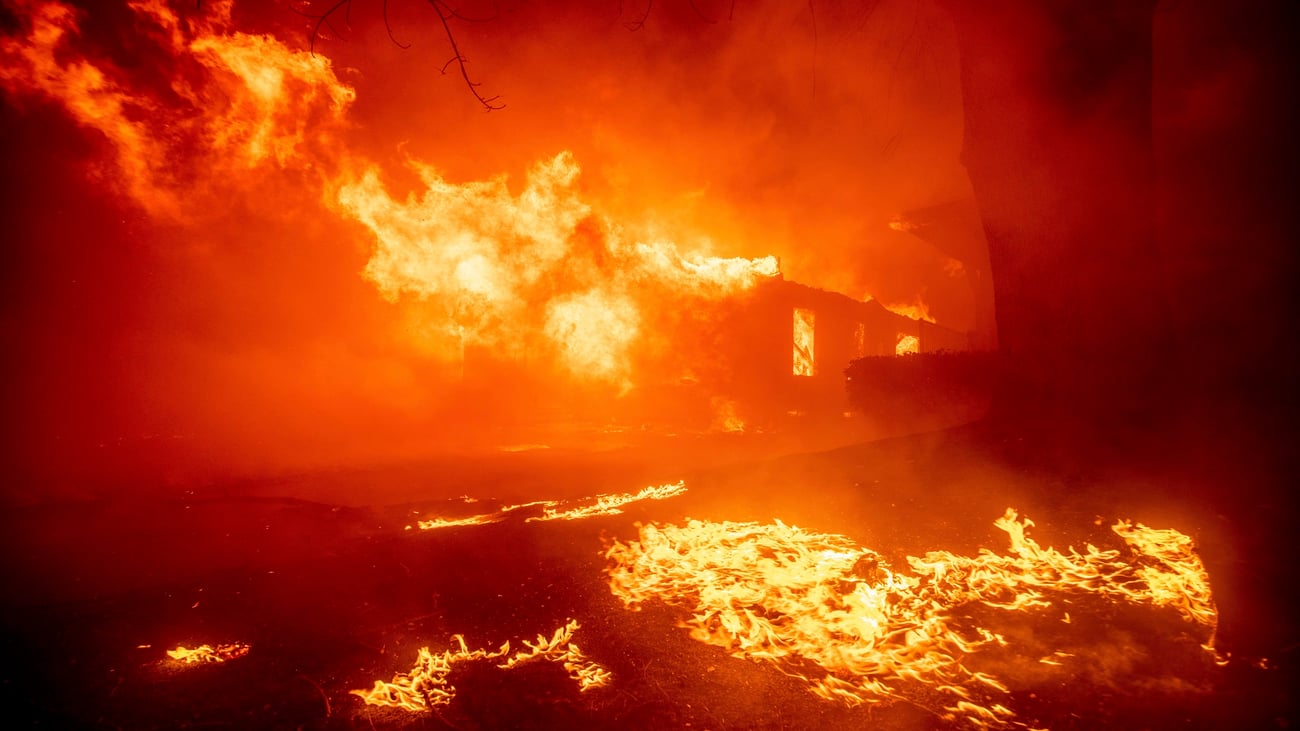
Southern California Edison (SCE) has temporarily avoided liability for damages caused by last year's Eaton Fire in Los Angeles County. Insurance companies representing policyholders who suffered losses from the wildfire had sought to hold SCE liable under the inverse condemnation theory, but LA County Superior Court Judge Laura Seigle tentatively denied their motion for summary judgment. The insurers claimed that two electrical arc flashes at an out-of-service utility tower caused the massive fire, which killed 19 people and destroyed over 9,000 buildings.
The Eaton Fire was one of several devastating wildfires in California last year, with insured losses totaling $17.5 billion, according to a report by Aon plc. The fire broke out on January 7, 2025, the same day as the Palisades Fire on the opposite side of LA County.
The insurers' argument relied on the idea that SCE's equipment contributed to the fire damage, but Judge Seigle found that they failed to provide sufficient evidence that idle power lines and facilities present an inherent risk of causing wildfires.
Legal Context
Under California law, a public utility can be sued for inverse condemnation if their equipment causes damage to private property, regardless of whether the utility was negligent or not. This theory has become increasingly relevant in recent years as massive wildfires caused by utility equipment have become more frequent in the state.
To prevail on an inverse condemnation claim, plaintiffs must show a causal connection between the utility's equipment and the damage to private property, as well as that the damage was substantially caused by an inherent risk created by the design, construction, and maintenance of the equipment. In this case, Judge Seigle found that the insurers failed to meet their burden of proof on the latter point.
The inverse condemnation theory has been a major headache for utilities like SCE, PG&E, and Southern California Gas, which have faced numerous lawsuits over wildfires caused by their equipment.
Why It Matters
The outcome of this case has significant implications for lawyers advising clients on inverse condemnation claims against utilities in California. The ruling highlights the heightened burden of proof required to show that equipment damage is an inherent risk, and emphasizes the need for plaintiffs to provide specific evidence addressing the question of fires resulting from idle power lines and facilities.
The decision also underscores the importance of a 'but for' causal connection between the fire and utility equipment being insufficient to prevail on an inverse condemnation argument. This means that lawyers must be prepared to argue that such connections do not necessarily establish liability under this theory.
Ultimately, the ruling in this case will likely have far-reaching consequences for the way utilities operate in California and the way they are held accountable for damages caused by their equipment.
Practical Implications
Lawyers advising clients on inverse condemnation claims against utilities in California should watch for the heightened burden of proof required to show that equipment damage is an inherent risk, and be prepared to argue that a 'but for' causal connection between the fire and utility equipment is not sufficient to prevail.
Source
How does this affect you?
Get an AI analysis of this article grounded in your jurisdictions, practice areas, and any policy documents you've uploaded to Wansom.
Wansom is AI and can make mistakes.