
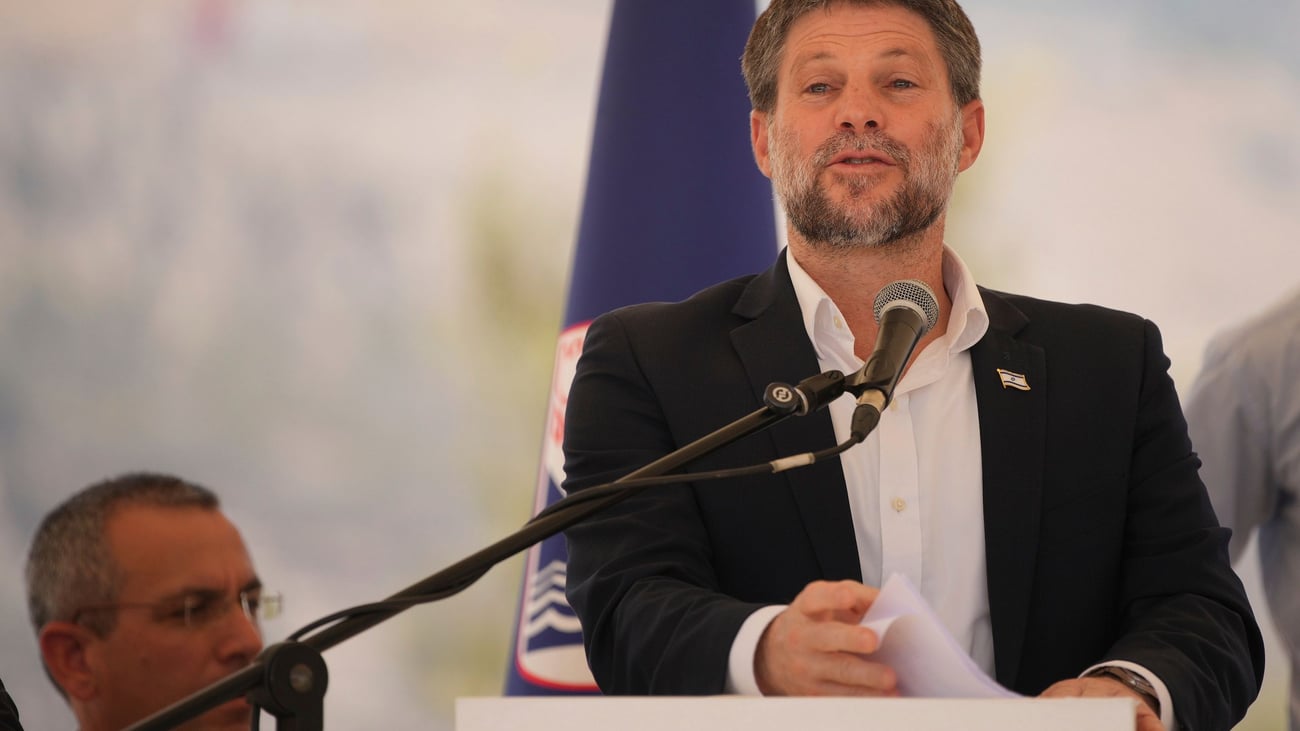
Smotrich Judaization Plan: Negev, Galilee Population Boost
Summary
- Israeli Finance Minister Bezalel Smotrich announced a plan to significantly increase the Jewish population in the Negev and Galilee regions.
- The proposal aims to add one million Jews, establish 40 new communities, and expand existing ones, explicitly mirroring settlement growth in the occupied West Bank.
- Smotrich's plan includes canceling existing development plans in Arab communities and establishing new industrial and employment zones.
- His Religious Zionism party released an AI-generated video depicting Arab men reacting negatively to the proposed initiative.
- The announcement comes amidst Israel's preparations for closely contested elections scheduled for October 27.
A Controversial Proposal for Demographic Shift
The minister explicitly stated his intention to replicate the 'revolution' seen in the occupied West Bank, where Israeli settlement construction has surged, applying this model 'on a massive scale' to the Negev and Galilee.
Israel's far-right Finance Minister, Bezalel Smotrich, recently unveiled his party's comprehensive strategy aimed at significantly increasing the Jewish population within the Negev and Galilee regions. The minister, representing the Religious Zionism party, articulated this ambitious initiative on Thursday, framing it as a crucial step toward the "Judaization of the Negev and Galilee."
The plan outlines a target of attracting an additional one million Jewish residents to these areas, which are characterized by substantial Arab Israeli populations. To achieve this demographic shift, the proposal includes the establishment of 40 new communities, the development of dozens of agricultural farms, and the expansion of existing settlements. Furthermore, it calls for the construction of hundreds of thousands of new housing units across both regions.
Beyond population growth, the Smotrich plan also seeks to dismantle what it terms "reckless plans in Arab communities," which the minister claims have encroached upon land reserves and pose a threat to Jewish settlement in the vicinity. The initiative additionally promises to create new industrial and employment zones. In a related move, Smotrich's party disseminated an AI-generated video on X, depicting two Arab men expressing distress and anger over the proposed changes.
Emulating West Bank Settlement Expansion
A central tenet of the proposed strategy for the Negev and Galilee is its explicit emulation of the settlement model implemented in the occupied West Bank, which Smotrich referred to by its biblical names, Judea and Samaria. The minister declared his intention to replicate the "revolution" that has led to a surge in Israeli settlement construction in that territory, applying this approach "on a massive scale" to Israel's northern and southern regions.
The West Bank has been under Israeli occupation since 1967, and it is currently home to around 750,000 Israeli settlers alongside approximately 3.2 million Palestinians. These Israeli settlements are widely considered illegal under international law. By drawing a direct parallel to this controversial model, the Smotrich Judaization plan Negev Galilee signals a potential expansion of policies typically associated with disputed territories into sovereign Israeli land with significant Arab minority populations.
Smotrich's party intends to demand that the incoming government actively facilitate this expansion by removing existing barriers and strategically placing "Zionist professionals in key positions" to oversee the implementation of the plan. This approach underscores a commitment to a demographic and administrative restructuring of the targeted regions, mirroring the administrative and physical expansion seen in the West Bank.
Political Motivations and Societal Impact
The unveiling of this far-reaching plan occurs as Israel prepares for closely contested elections scheduled for October 27. Prime Minister Benjamin Netanyahu is reportedly facing an uphill battle in the upcoming polls, and Smotrich's Religious Zionism party, a member of Netanyahu's current coalition, is currently polling near the electoral threshold required to secure seats in the next parliament. The timing suggests the proposal may be aimed at galvanizing support among a specific segment of the electorate.
The Negev, located in southern Israel, and the Galilee, in the country's north, are regions with substantial Arab Israeli populations. This minority group constitutes approximately 21% of Israel's total population of approximately 9.66 million people. The majority of these individuals identify as Palestinian, being either descendants of those who remained in Israel after its establishment in 1948 or having stayed themselves.
Practical Implications
This political development signals potential future legal challenges under international law concerning human rights and land rights in Israel's Negev and Galilee regions. Lawyers should monitor for policy implementation that could lead to litigation risks or require advice on compliance with international humanitarian law and human rights standards.
Source
How does this affect you?
Get an AI analysis of this article grounded in your jurisdictions, practice areas, and any policy documents you've uploaded to Wansom.
Finish this article free. Just your email for instant unlock.
Wansom is AI and can make mistakes.