
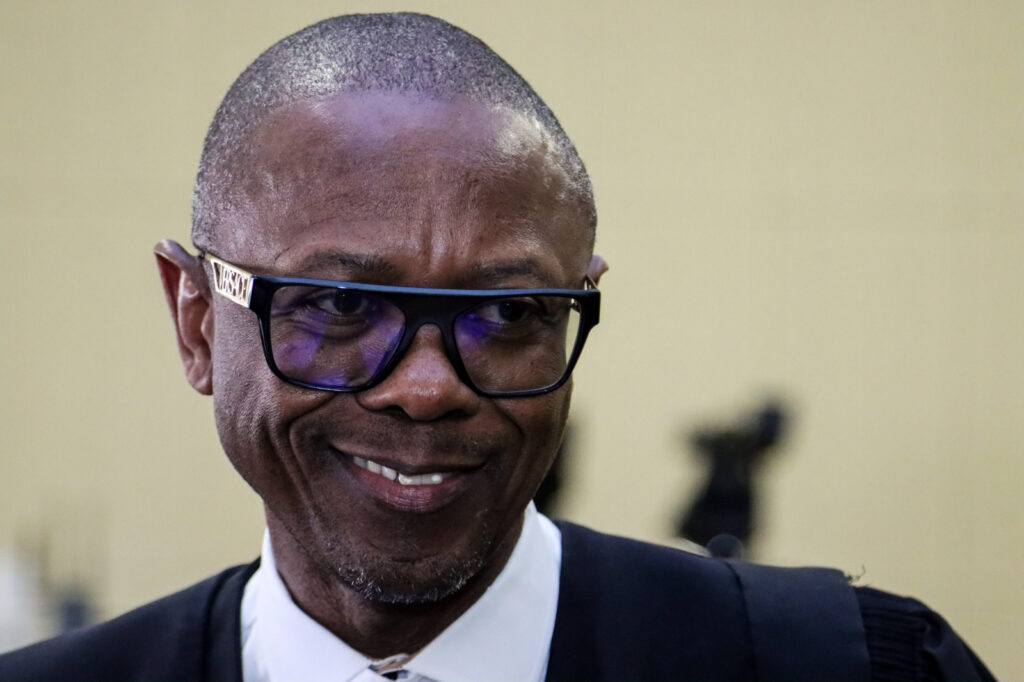
Sisa Namandje: Namibia Must Reject Fake News as Free Speech
Summary
- Lawyer Sisa Namandje recently addressed the issue of misinformation at a public lecture in Namibia.
- He called for society to abolish fake news that attempts to pass itself off as free speech.
- Namandje urged Namibians to reject the growing culture of misinformation, gossip, and social media abuse.
- He acknowledged the importance of freedom of thought while advocating against harmful falsehoods.
What Happened
Namandje specifically urged the populace of Namibia to actively resist the increasing prevalence of inaccurate reporting, idle chatter, and the intentional misuse of digital platforms.
Prominent legal figure Sisa Namandje recently delivered a significant address at the International University of Management’s Ongwediva campus, focusing on the pervasive issue of false information. During his public lecture on Friday, Namandje strongly advocated for a societal rejection of what he termed "fake news" when it attempts to disguise itself as legitimate free expression. He asserted that such deceptive content must be eradicated by the collective will of the community.
Namandje specifically urged the populace of Namibia to actively resist the increasing prevalence of inaccurate reporting, idle chatter, and the intentional misuse of digital platforms. His remarks highlighted a growing concern over the integrity of public discourse and the potential for malicious content to undermine societal trust. While emphasizing the critical need to combat these negative trends, the lawyer also acknowledged the fundamental importance of individual freedom of thought, framing the challenge as one of distinguishing genuine expression from harmful fabrication.
The Challenge of Misinformation
The lawyer's impassioned plea underscores a critical global and national dilemma for Namibia: how to safeguard open communication while simultaneously combating the corrosive effects of deliberate falsehoods. Namandje's call for society to "abolish" fake news that masquerades as free speech points to a collective responsibility beyond mere regulation, suggesting a cultural shift is necessary to discern and dismiss misleading narratives. This perspective frames the fight against misinformation not solely as a legal battle, but as a societal imperative requiring widespread participation.
His specific mention of "misinformation, gossip, and the deliberate abuse of social media" identifies distinct but often intertwined threats to public discourse in Namibia. Misinformation, whether accidental or intentional, distorts facts, while gossip erodes trust through unsubstantiated claims. The deliberate abuse of social media, in particular, leverages digital platforms for malicious purposes, amplifying these harms. Namandje's address at an academic institution like the International University of Management further highlights the educational component required to equip citizens with the critical thinking skills needed to navigate this complex information landscape.
Societal Implications for Namibia
The intervention by a respected legal professional like Sisa Namandje carries considerable weight, signaling the seriousness with which the spread of false narratives is viewed within Namibia's legal and social circles. By speaking at a public lecture, Namandje aimed to engage a broad audience, including students and community members, directly on the importance of media literacy and responsible digital citizenship. His message serves as a stark reminder that while freedom of expression is a cornerstone of democratic societies, it is not absolute and does not extend to the deliberate propagation of harmful untruths.
Namandje's emphasis on the need for Namibians to "reject" these negative cultural elements suggests a proactive role for individuals in shaping a healthier information environment. This collective rejection is presented as crucial for maintaining social cohesion and informed public debate, particularly in an era where digital tools can rapidly disseminate unverified content. The lawyer's remarks thus position the fight against fake news as a fundamental aspect of civic duty, essential for the well-being of Namibian society.
Source
How does this affect you?
Get an AI analysis of this article grounded in your jurisdictions, practice areas, and any policy documents you've uploaded to Wansom.
Finish Reading the Full Story and the Expert Analysis.
Get the latest legal & regulatory intelligence in Namibia
Wansom is AI and can make mistakes.