
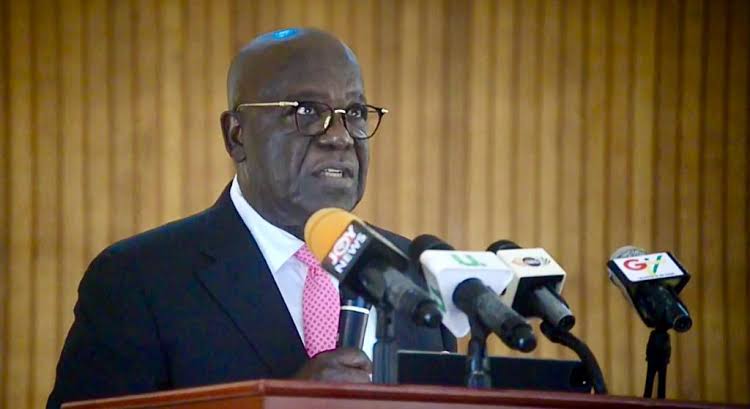
Sir Sam Jonah: Calls for Context on Nkrumah's Preventive Detention Act
Summary
- Sir Samuel Esson Jonah, UCC Chancellor, urged a contextual assessment of Kwame Nkrumah’s constitutional legacy, including the Preventive Detention Act.
- He made these remarks at the 15th Kwame Nkrumah Memorial Lectures.
- The 1958 Act, a major criticism against Nkrumah, was passed when Ghana was barely a year old.
- Historical context includes political bombings and violent secessionist agitation in Ashanti.
- A plot against the government within the army was discovered months after the Act's passage.
Recent Commentary on a Historical Law
Sir Samuel Esson Jonah stressed that any comprehensive understanding of this legislation, and indeed Nkrumah's broader constitutional approach, necessitates a deep dive into the specific historical circumstances prevailing at the time of its enactment.
Sir Samuel Esson Jonah, who serves as the Chancellor for the University of Cape Coast (UCC), recently offered a nuanced perspective on a contentious chapter in Ghana's constitutional law. Speaking at the 15th Kwame Nkrumah Memorial Lectures, Sir Jonah called for a more thorough and context-aware evaluation of Ghana's first President, Kwame Nkrumah's, constitutional legacy, with particular emphasis on the Preventive Detention Act. His remarks underscore the ongoing debate surrounding the exercise of state power in nascent democracies.
He acknowledged that the Preventive Detention Act remains one of the most significant points of criticism leveled against Kwame Nkrumah. However, Sir Samuel Esson Jonah stressed that any comprehensive understanding of this legislation, and indeed Nkrumah's broader constitutional approach, necessitates a deep dive into the specific historical circumstances prevailing at the time of its enactment. This call for contextualization aims to move beyond a purely anachronistic judgment, encouraging a consideration of the pressures and threats faced by the newly independent nation.
The Preventive Detention Act in Historical Context
The historical backdrop cited by Sir Jonah provides crucial insight into the rationale behind the Preventive Detention Act 1958 Ghana. At the time of its passage, the nation was barely a year old, having achieved independence only recently. This period was marked by profound instability and existential threats to the fledgling state. Sir Jonah specifically referenced a series of political bombings that had occurred, indicating a climate of internal unrest and violence.
Furthermore, the country was grappling with violent secessionist agitation in the Ashanti region, a movement that posed a direct challenge to the territorial integrity and unity of the new Ghanaian state. Adding to these immediate dangers, Sir Jonah pointed out that within months of the Act's implementation, a plot against the government was uncovered within its own army. These events, occurring in rapid succession, paint a picture of a government facing multiple, severe threats to its very existence, which, in Sir Jonah’s view, must inform any assessment of the controversial legislation.
Re-evaluating Ghana's Constitutional Legacy
Sir Samuel Esson Jonah's commentary on the Sir Sam Jonah Nkrumah Preventive Detention Act and Kwame Nkrumah's constitutional legacy holds significant implications for the study of Ghana legal history context and constitutional law Ghana. By advocating for a contextual understanding, he challenges contemporary observers to consider the unique pressures faced by leaders establishing a new nation-state. This perspective is particularly vital for constitutional lawyers and human rights practitioners in Ghana, as it encourages a more sophisticated analysis of historical precedents concerning state authority and individual liberties.
His intervention at the Kwame Nkrumah Memorial Lectures serves as a reminder that legislative actions, even those widely criticized in hindsight, often emerge from complex socio-political environments. Understanding these historical exigencies is not necessarily an endorsement of the actions themselves but rather a prerequisite for a complete and nuanced understanding of Ghana's constitutional development. Such an approach fosters a deeper appreciation of the challenges inherent in nation-building and the delicate balance between security and rights, a balance that continues to be debated in modern constitutional discourse.
Practical Implications
This commentary offers a perspective on the historical justification of state power and legislative actions like the Preventive Detention Act, which is critical for constitutional lawyers and human rights practitioners in Ghana when analyzing historical precedents or arguing contemporary cases involving state authority and individual liberties.
Source
How does this affect you?
Get an AI analysis of this article grounded in your jurisdictions, practice areas, and any policy documents you've uploaded to Wansom.
Finish Reading the Full Story and the Expert Analysis.
Get the latest legal & regulatory intelligence in Ghana
Wansom is AI and can make mistakes.