
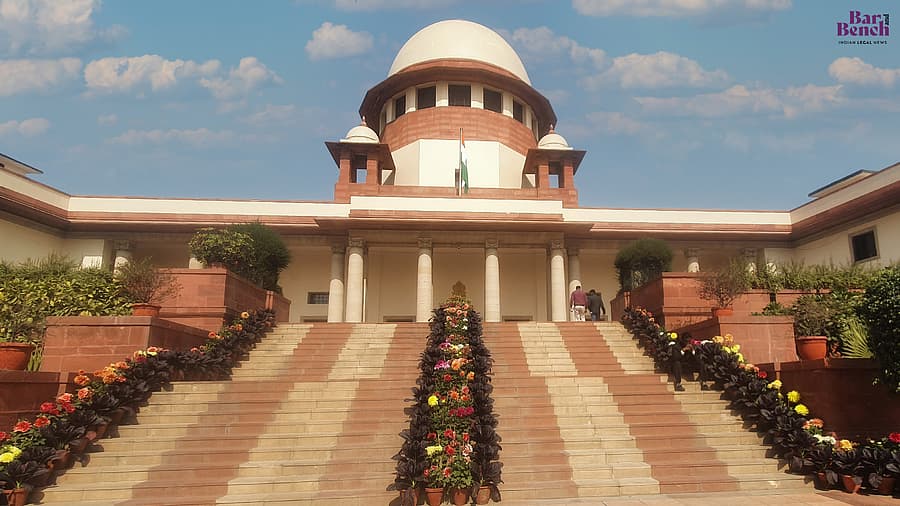
Sikkim SIR Baseline Dismissed by Supreme Court: Upholds 2002 Electoral Roll
Summary
- The Supreme Court has dismissed a plea questioning the use of the 2002 electoral roll as the baseline for the Special Intensive Revision (SIR) in Sikkim.
- The Court's decision means that individuals who were eligible to vote in 2002 will be considered eligible to vote in the current revision exercise.
- The Election Commission had ordered SIR in 16 States and three Union Territories, including Sikkim, in May 2026.
- The final electoral roll is scheduled to be published on September 6.
What Happened
The Court's decision means that individuals who were eligible to vote in 2002 will be considered eligible to vote in the current revision exercise.
The Supreme Court has dismissed a plea questioning the use of the 2002 electoral roll as the baseline for the Special Intensive Revision (SIR) in Sikkim. The petition, which was heard by a Bench comprising Chief Justice of India Surya Kant and Justices Joymalya Bagchi and V Mohana, argued that the choice of 2002 as the cutoff year was not suitable for Sikkim due to its distinct demographic and constitutional position.
The Court's decision means that the Election Commission's order to use the 2002 roll as the baseline will stand. The SIR exercise in Sikkim began on May 30, with a draft roll published on July 5. The final electoral roll is scheduled to be published on September 6.
Legal Context
The Supreme Court's decision has significant implications for the ongoing SIR exercise in Sikkim. The use of the 2002 electoral roll as the baseline means that individuals who were eligible to vote in 2002 will be considered eligible to vote in the current revision exercise.
The Election Commission had ordered SIR in 16 States and three Union Territories, including Sikkim, in May 2026. The uniform basis of the exercise was a key factor in the Court's decision to uphold the use of the 2002 roll as the baseline. Chief Justice Kant questioned why a different baseline should be adopted for Sikkim when the SIR is being conducted on a uniform basis.
Why It Matters
The Supreme Court's decision has important implications for lawyers advising clients in Sikkim. The use of the 2002 electoral roll as the baseline may impact client eligibility and voting rights.
Lawyers should note that individuals who were eligible to vote in 2002 will be considered eligible to vote in the current revision exercise. This means that clients who were not included in the 2002 roll may face challenges in registering for the upcoming elections.
Practical Implications
Lawyers advising clients in Sikkim should note that the Supreme Court has upheld the use of the 2002 electoral roll as the baseline for the ongoing Special Intensive Revision (SIR), which may impact client eligibility and voting rights.
Source
How does this affect you?
Get an AI analysis of this article grounded in your jurisdictions, practice areas, and any policy documents you've uploaded to Wansom.
Wansom is AI and can make mistakes.