
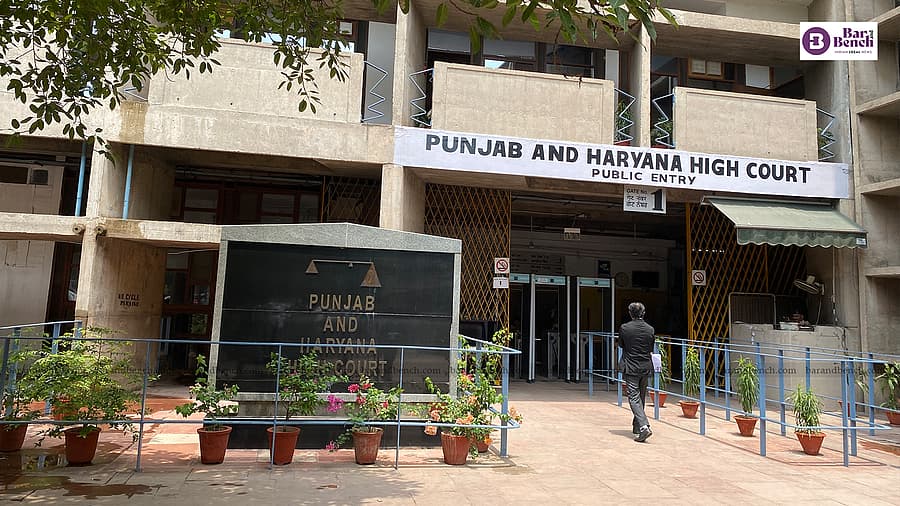
Punjab & Haryana High Court: Orders CBI Probe in Shubham v UT Chandigarh
Summary
- The Punjab and Haryana High Court ordered a CBI probe into an alleged assault on advocate Shubham.
- The alleged assailants are Hitesh and Nikhil, sons of Chandigarh police officers.
- Justice Jasjit Singh Bedi transferred the investigation due to concerns about the Chandigarh Police's impartiality.
- A key reason for the transfer was the deletion of Section 118(1) of the Bharatiya Nyaya Sanhita by local police.
- The court emphasized that justice must not only be done but must also be seen to be done.
What Happened
The court explicitly stated its apprehension that the Chandigarh Police would be unable to conduct a fair and unbiased investigation into the matter, particularly given the familial ties of the alleged assailants to the force.
The Punjab and Haryana High Court has mandated a Central Bureau of Investigation (CBI) inquiry into an alleged assault on an advocate, Shubham, by two individuals identified as Hitesh and Nikhil. These accused are reportedly the sons of serving police officers within the Chandigarh Police force. The incident in question occurred on July 2 at a gym, leading to the advocate's petition that prompted the court's intervention.
Justice Jasjit Singh Bedi presided over the case, titled "Shubham v UT Chandigarh & Others", and issued the directive to transfer the investigation. This significant Punjab Haryana High Court CBI order stems from concerns regarding the impartiality of the local police. The court explicitly stated its apprehension that the Chandigarh Police would be unable to conduct a fair and unbiased investigation into the matter, particularly given the familial ties of the alleged assailants to the force.
Legal Context and Judicial Rationale
A primary factor influencing the court's decision was the Chandigarh Police's deletion of a crucial charge under Section 118(1) of the recently enacted Bharatiya Nyaya Sanhita (BNS), 2023. This specific section addresses the offense of voluntarily causing hurt through the use of dangerous weapons or means. The court viewed this deletion as a critical indicator that the ongoing investigation might not proceed in a free and fair manner, thereby necessitating external oversight.
The original First Information Report (FIR No. 92), registered on July 8, 2026, at Police Station Sector 34, Chandigarh, initially included charges under Sections 126(2), 115(2), 118(1), 351(3), and 3(5) of the BNS, 2023. These provisions correspond to Sections 341, 323, 324, 506, and 34 of the Indian Penal Code (IPC). The Bharatiya Nyaya Sanhita 118(1) deletion was a pivotal point in the Justice Jasjit Singh Bedi order, highlighting the judiciary's scrutiny of how new legal frameworks are applied and enforced by local authorities.
Why It Matters
This ruling, which orders a Shubham v UT Chandigarh CBI probe, underscores the judiciary's commitment to upholding the principles of justice and ensuring public confidence in law enforcement. The court's assertion that "justice must not only be done but must also be seen to be done" serves as a powerful reminder of the imperative for transparency and impartiality, especially when allegations involve individuals connected to the police establishment. The transfer of the investigation to the CBI reflects a judicial mechanism to address potential conflicts of interest and perceived biases within local police forces.
The decision sets a significant precedent, demonstrating the willingness of higher courts to intervene and reassign investigations to central agencies when there is a legitimate basis to doubt the fairness of a local probe. This is particularly relevant in cases involving advocate assault Chandigarh police sons, where the potential for undue influence is heightened. The court's detailed reasoning, focusing on the specific deletion of a BNS section, also highlights the judiciary's role in overseeing the proper application of new criminal laws and ensuring that procedural integrity is maintained throughout the investigative process.
Practical Implications
This ruling underscores the judiciary's willingness to intervene and transfer investigations to central agencies like the CBI when there is a legitimate apprehension of bias or improper conduct by local police, particularly concerning the application or deletion of charges under new statutes like the Bharatiya Nyaya Sanhita. Lawyers should note this precedent for challenging potentially compromised local police investigations.
Source
How does this affect you?
Get an AI analysis of this article grounded in your jurisdictions, practice areas, and any policy documents you've uploaded to Wansom.
Finish Reading the Full Story and the Expert Analysis.
Get the latest legal & regulatory intelligence in India
Wansom is AI and can make mistakes.