
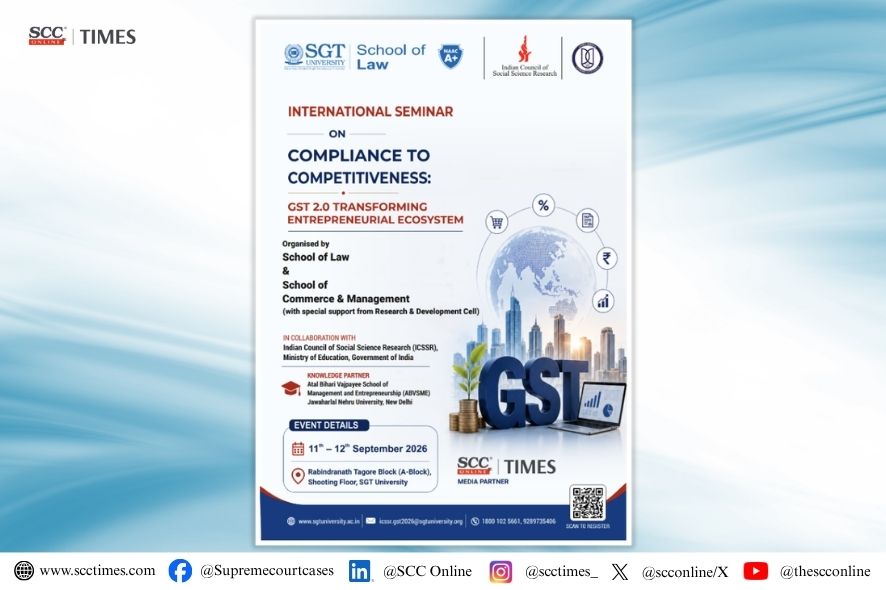
SGT University: GST 2.0 Seminar Call for Papers Examines Reforms
Summary
- SGT University has announced a call for papers for an international seminar on GST 2.0 reforms.
- The seminar aims to critically examine the proposed reforms and their potential impact on India's tax ecosystem.
- Keynote addresses, expert panel discussions, and research paper presentations will be part of the event.
- The seminar seeks to generate actionable insights for building a more efficient and equitable tax system.
What Happened
The seminar aims to critically examine the proposed reforms and their potential impact on India's tax ecosystem.
SGT University in Gurugram has announced a call for papers for an international seminar on GST 2.0 reforms, scheduled to take place from September 11-12, 2026. The seminar aims to critically examine the proposed reforms and their potential impact on India's tax ecosystem. Keynote addresses, expert panel discussions, and research paper presentations will be part of the event, which seeks to generate actionable insights for building a more efficient and equitable tax system.
The seminar will provide a platform for scholars, policymakers, and practitioners to come together and discuss the implications of GST 2.0 reforms on India's socio-economic landscape.
Legal Context
The proposed GST 2.0 reforms are part of ongoing efforts to revamp India's tax policy directions. The current Goods and Services Tax (GST) regime, introduced in 2017, has been subject to various challenges and criticisms. The new reforms aim to address these issues and create a more streamlined and efficient tax system. Lawyers and compliance officers should be aware of the potential implications of these reforms on business operations and tax planning strategies in India.
The seminar will explore future policy directions for GST 2.0, including the potential impact on India's tax case law. This will provide valuable insights for those involved in tax litigation and dispute resolution.
Why It Matters
The proposed GST 2.0 reforms have significant implications for India's tax ecosystem reform. A more efficient and equitable tax system can boost economic growth, increase revenue collection, and reduce the burden on taxpayers. The seminar will provide a platform for stakeholders to discuss the potential benefits and challenges of these reforms and identify areas for improvement.
The insights generated from this seminar will be crucial for policymakers, scholars, and practitioners to shape India's tax policy directions in the coming years.
Practical Implications
Lawyers and compliance officers should watch for the potential implications of these proposed GST 2.0 reforms, which may impact business operations and tax planning strategies in India.
Source
How does this affect you?
Get an AI analysis of this article grounded in your jurisdictions, practice areas, and any policy documents you've uploaded to Wansom.
Wansom is AI and can make mistakes.