
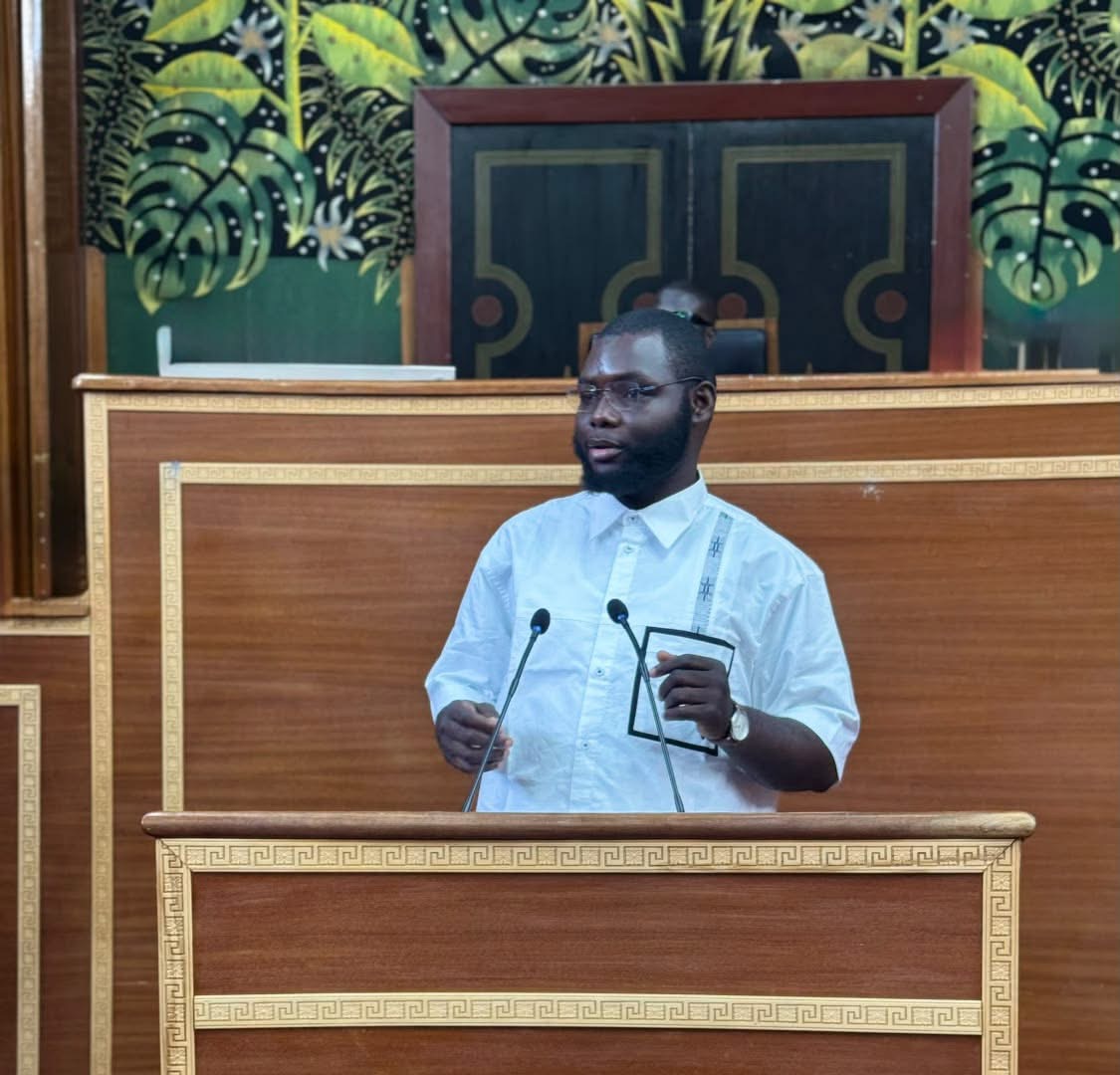
Seydina Diallo: Sénégal Assistants Parlementaires Réforme Urged
Summary
- Jurist Seydina Mouhamadou Malal Diallo proposes reforms to address frequent Constitutional Council censures of National Assembly initiatives in Senegal.
- He attributes these censures to deputies' insufficient mastery of legal rules and a lack of structured legal support.
- Diallo advocates for professionalizing parliamentary assistants, expanding their role beyond administrative tasks to include legal analysis and safeguarding of legislative proposals.
- He also recommends continuous training for deputies in areas like constitutional and parliamentary law.
- These reforms aim to improve legislative quality, prevent future censures, and strengthen the rule of law in Senegal.
The Challenge of Legislative Scrutiny
A system of professionalized parliamentary support holds the potential to yield more robust and constitutionally sound legislation, which could substantially reduce legal uncertainty and mitigate the risk of future laws being challenged or invalidated.
A prominent jurist-constitutionalist, Seydina Mouhamadou Malal Diallo, has highlighted a recurring issue within Senegal's legislative process: the frequent invalidation or rejection of initiatives originating from the National Assembly by the Constitutional Council. According to Diallo, these judicial censures and declarations of inadmissibility stem primarily from a fundamental lack of understanding among elected officials regarding established legal frameworks. He points to an insufficient level of structured legal assistance as a contributing factor to this systemic problem.
Diallo's analysis, shared via Xibaaru, attributes these legislative shortcomings to a deficient grasp of the Constitution, national laws, the National Assembly's internal regulations, and the prescribed procedural norms. When such deficiencies become commonplace, he argues, the legislative process risks being swayed more by political power dynamics than by adherence to legal principles. This situation, in turn, undermines the credibility of the parliamentary institution itself. Each instance of a law being struck down or deemed inadmissible can foster a public perception that the Parliament operates with improvisation rather than with the necessary legal rigor.
A Call for Professionalized Parliamentary Support
To address these challenges, Seydina Mouhamadou Malal Diallo advocates for a comprehensive reform aimed at professionalizing the support provided to deputies, with a particular focus on the role of parliamentary assistants. He contends that these assistants should transcend purely administrative duties, evolving into key contributors to the legislative process. Their responsibilities, under this proposed Sénégal Diallo assistants parlementaires réforme, would encompass the preparation, in-depth analysis, and legal safeguarding of proposed legislation, amendments, and other parliamentary initiatives.
However, Diallo observes that the current level of expertise among these assistants remains underdeveloped. He identifies several critical gaps, including the absence of a clearly defined professional status, a lack of continuous training programs, and insufficient dedicated resources specifically allocated for legislative support. This highlights the need for a more robust professionnalisation soutien députés Sénégal to ensure that elected representatives receive the expert backing required for effective governance.
Enhancing Legislative Competence and Preventing Censures
Beyond the role of assistants, Diallo also proposes targeted training for deputies themselves, covering essential areas such as legistics, constitutional law, parliamentary law, and legislative procedure. He emphasizes that this support should be ongoing, commencing immediately upon a deputy's assumption of office and aligning with the actual pace of parliamentary work, rather than being limited to sporadic, ad-hoc sessions. Such continuous education is crucial for improving the qualité travail législatif Sénégal and proactively preventing future Conseil constitutionnel censures Sénégal.
An example of efforts in this direction was a training session held on April 17, 2026, for members of the National Assembly's Law Commission. This initiative received support from the United Kingdom Embassy in Senegal, ONG 3D, and the Collective of Civil Society Organizations for Elections, with Marie Rose Khady Fatou Faye presiding over its opening. These types of programs, particularly those focused on droit parlementaire formation Sénégal, are vital for equipping parliamentarians with the knowledge needed to navigate complex legal landscapes.
Strengthening the Rule of Law
Ultimately, Seydina Mouhamadou Malal Diallo posits that a more effectively equipped body of deputies and their professionalized assistants would significantly enhance the overall quality of legislative output. This improvement, in turn, would serve as a crucial preventative measure against the repeated censures from the Constitutional Council, thereby reinforcing the rule of law within Senegal. The proposed Sénégal Diallo assistants parlementaires réforme is not merely about procedural efficiency but about embedding legal rigor at the heart of the legislative process.
Lawyers and compliance officers operating in Senegal should closely monitor the progression of these proposed reforms. A system of professionalized parliamentary support holds the potential to yield more robust and constitutionally sound legislation, which could substantially reduce legal uncertainty and mitigate the risk of future laws being challenged or invalidated. This proactive approach to legislative development is essential for a stable and predictable legal environment.
Practical Implications
Lawyers and compliance officers in Senegal should monitor the progress of these proposed reforms, as a professionalized parliamentary support system could lead to more robust and constitutionally sound legislation, potentially reducing legal uncertainty and the risk of laws being challenged or invalidated in the future.
Source
Source: Original reporting via Xibaaru
How does this affect you?
Get an AI analysis of this article grounded in your jurisdictions, practice areas, and any policy documents you've uploaded to Wansom.
Finish Reading the Full Expert Analysis.
Wansom is AI and can make mistakes.