
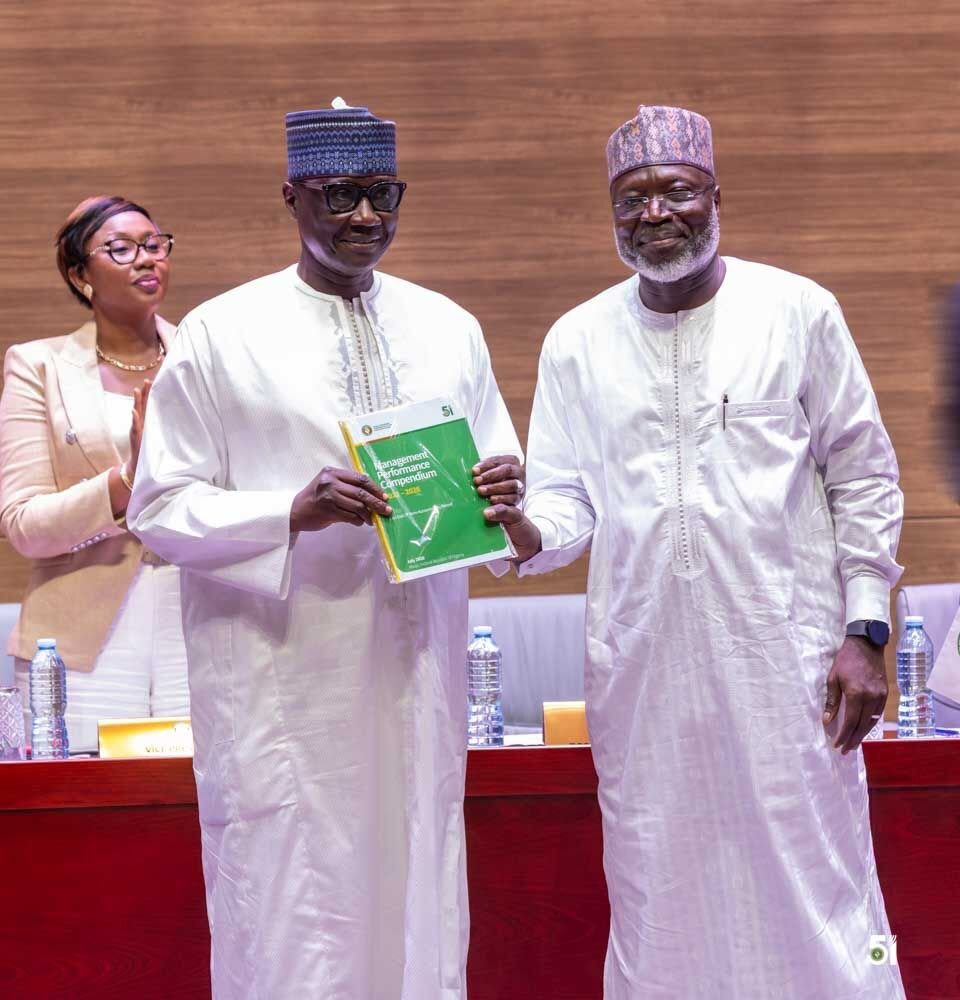
Senegal: Birame Diop ECOWAS Commission President Assumes 2026-2030 Mandate
Summary
- General Birame Diop of Senegal was inaugurated as the President of the ECOWAS Commission on September 1, 2026, in Abuja, succeeding Omar Alieu Touray.
- His mandate, from 2026 to 2030, focuses on unity, solidarity, and mutual respect, aligning with the Senegalese presidency's priorities.
- Key initiatives include the upcoming ECOWAS Eco currency launch, improved collection of community levies, and enhanced free movement facilitation.
- The new leadership also prioritizes the activation of the ECOWAS anti-terrorism brigade to bolster regional security.
- Several other significant appointments were made, including Anthony Ogunjimi of Nigeria as Vice-President and various commissioners for key portfolios.
Leadership Transition at ECOWAS Commission
The upcoming ECOWAS Eco currency launch is a major initiative, alongside efforts to enhance the collection of community levies and streamline the ECOWAS free movement facilitation for both people and goods across member states.
General Birame Diop of Senegal officially assumed his role as the President of the ECOWAS Commission on September 1, 2026, during a ceremony held in Abuja. He takes over from Omar Alieu Touray, a Gambian national, whose four-year term had concluded. Diop's appointment marks a significant leadership change within the regional body, with his mandate set to span from 2026 to 2030.
The nomination of General Diop for this prominent position was formally put forward by Senegal while he was serving as the country's Minister of Armed Forces. This proposal came from President Bassirou Diomaye Faye and Prime Minister Ahmadou Al Aminou Lo, a move that is anticipated to trigger a cabinet reshuffle in Dakar. The transition ceremony, which took place at the Commission's new headquarters, also saw other key leadership changes.
Among the new ECOWAS new leadership appointments, Anthony Ogunjimi from Nigeria succeeded Damtien Tchintchibidja of Togo as Vice-President. Further appointments included Kalilou Sylla of Côte d'Ivoire for internal services, Francess Alghali of Sierra Leone for political affairs, peace, and security, and Dehpue Yenpea Zuo from Liberia for economic affairs and agriculture. Amin Amidu Sulemani of Ghana was named to oversee infrastructure, energy, and digitalization, while Nassirou Bako-Arifari of Benin took charge of human development and social affairs. Carla Maria Borges Bettencourt of Cape Verde was appointed Auditor General for ECOWAS institutions, with Professor Vincent Palokinam Pitché of Togo leading the West African Health Organization and Mam Cherno Jallow heading GIABA.
Strategic Vision and Key Priorities
In his inaugural address, the new President of the ECOWAS Commission, Birame Diop, emphasized a vision centered on unity, solidarity, and mutual respect, according to reports from Afriquinfos. He called for the creation of an institution that is "united, coherent, and effective," urging all organizational staff and stakeholders to collaborate closely. Diop articulated his belief that the Community's ability to maintain unity and determination would serve as a crucial measure of the strength of regional integration.
These guiding principles align closely with the priorities established by the Senegalese presidency of ECOWAS. The upcoming ECOWAS Eco currency launch is a major initiative, alongside efforts to enhance the collection of community levies and streamline the ECOWAS free movement facilitation for both people and goods across member states. Another critical focus is the activation of the ECOWAS anti-terrorism brigade, underscoring a commitment to regional security.
President Bassirou Diomaye Faye, in his discussions with Birame Diop, summarized the multifaceted responsibilities awaiting the Commission. These include fostering regional cohesion, ensuring security, advancing economic integration, and strengthening cooperation among member states. The overarching objective for Diop's ECOWAS mandate 2026-2030 is to build upon the organization's existing achievements and to effectively address the expectations of the West African populace.
Implications for Regional Integration and Security
The agenda set by the new leadership under Birame Diop signals a renewed push for deeper regional integration and enhanced security measures across West Africa. The impending launch of the Eco currency represents a significant step towards economic convergence, aiming to standardize monetary policy and facilitate trade within the bloc. Concurrently, improving the collection of community levies is crucial for ensuring the financial sustainability and operational capacity of ECOWAS initiatives.
Furthermore, the commitment to facilitating the free movement of people and goods is fundamental to the foundational principles of ECOWAS, promising to reduce barriers to commerce and cultural exchange. This initiative is expected to boost intra-regional trade and foster a stronger sense of community among member states. The activation of the dedicated ECOWAS anti-terrorism brigade highlights the urgent need to address persistent security challenges, demonstrating a proactive stance against threats that undermine regional stability and development.
These strategic priorities, encompassing economic, social, and security dimensions, are designed to reinforce the collective strength and resilience of the West African community. The success of these endeavors under the new President of the ECOWAS Commission, Birame Diop, will be pivotal in shaping the region's future, impacting everything from cross-border commerce to the daily lives of its citizens.
Practical Implications
The appointment of Birame Diop as ECOWAS Commission President signals potential shifts in regional policy, particularly regarding economic integration, free movement, and security. Lawyers and compliance officers should monitor developments concerning the Eco currency, community levies, and anti-terrorism initiatives, as these will directly impact cross-border trade, financial regulations, and operational compliance for clients within the ECOWAS region.
Source
How does this affect you?
Get an AI analysis of this article grounded in your jurisdictions, practice areas, and any policy documents you've uploaded to Wansom.
Finish Reading the Full Story and the Expert Analysis.
Wansom is AI and can make mistakes.