
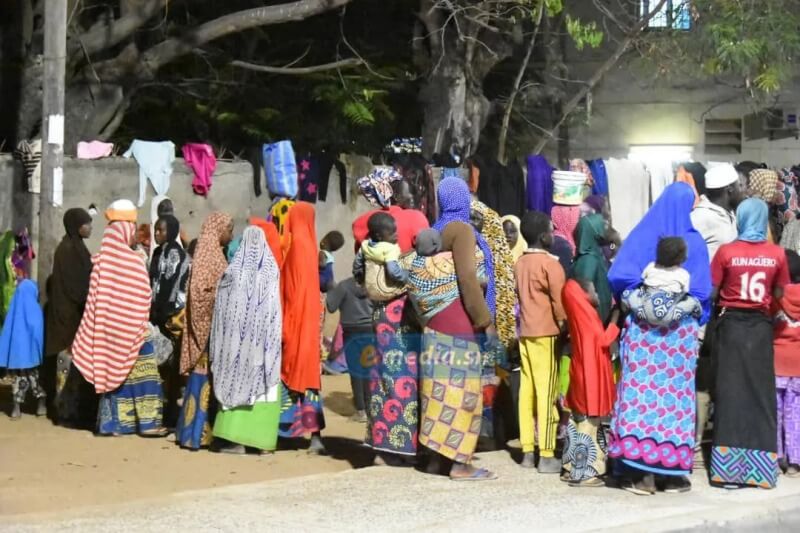
Senegal Xenophobia: Human Rights Groups Urge State Action
Summary
- RADDHO, the Senegalese League for Human Rights (LSDH), and Amnesty International Senegal have expressed deep concern over a rise in xenophobic discourse.
- The human rights groups are specifically alarmed by increasing anti-foreigner sentiment observed in both traditional media and social networks.
- They have called upon the Senegalese State to fulfill its duty to protect foreigners residing within the country.
- The organizations denounce the worrying increase in xenophobia, highlighting its pervasive presence in public communication channels.
Escalating Concerns Over Anti-Foreigner Sentiment
Lawyers and legal professionals should closely monitor any potential legislative or enforcement responses by the Senegalese State aimed at combating this xenophobic discourse.
A coalition of prominent human rights organizations, including RADDHO, the Senegalese League for Human Rights (LSDH), and Amnesty International Senegal, has collectively voiced profound alarm regarding a noticeable surge in xenophobic discourse across Senegal. These groups are specifically highlighting the increasing prevalence of anti-foreigner sentiment, which they describe as a worrying trend that demands immediate attention from state authorities.
The organizations' joint statement underscores their deep disquiet over the rising tide of xenophobia, emphasizing its manifestation in both traditional media outlets and various social networking platforms. This widespread dissemination of hostile rhetoric against non-nationals has prompted the human rights defenders to issue a direct appeal to the Senegalese State, urging it to fulfill its fundamental obligation to protect foreign residents within its borders. The groups' unified stance reflects a serious concern for the safety and rights of foreigners in Senegal, calling for proactive measures to counter the escalating xenophobic narratives.
The State's Duty to Protect Foreigners
The call from RADDHO, LSDH, and Amnesty International Senegal directly invokes the State's responsibility to safeguard the rights and well-being of all individuals residing within its jurisdiction, irrespective of their nationality. This duty is a cornerstone of international human rights law, obliging governments to ensure that foreigners are not subjected to discrimination, violence, or hate speech. The groups' denunciation of the worrying increase in xenophobia points to a potential gap in the current human rights protection framework in Senegal, or at least in its enforcement against such discourse.
By specifically highlighting the platforms where this xenophobic discourse is flourishing—namely, the media and social networks—the human rights organizations are implicitly pointing to areas where the State's regulatory and enforcement capacities may need strengthening. The explicit demand for the State to protect foreigners is not merely a moral plea but a reminder of its legal obligations under both national and international instruments designed to prevent and combat discrimination and hate speech. This situation underscores the critical importance of robust state action to uphold human rights protection in Senegal.
Implications for Human Rights and Public Discourse
The escalating xenophobic discourse in Senegal, as reported by leading human rights groups, carries significant implications for social cohesion and the nation's commitment to human rights. Such anti-foreigner sentiment, if left unchecked, can foster an environment conducive to discrimination, harassment, and even violence against non-nationals, undermining the principles of dignity and equality for all. The concerns raised by Amnesty International Senegal, RADDHO, and LSDH highlight a critical juncture where the State's response will define its stance on protecting vulnerable populations and upholding fundamental freedoms.
Lawyers and legal professionals should closely monitor any potential legislative or enforcement responses by the Senegalese State aimed at combating this xenophobic discourse. Such measures could include new regulations impacting media content, stricter oversight of social media platforms, or enhanced penalties for hate speech. These developments could, in turn, create new compliance exposures for businesses and individuals engaged in public communication, necessitating a careful review of existing policies and practices to ensure adherence to evolving legal standards designed to counter anti-foreigner sentiment and promote human rights protection in Senegal.
Practical Implications
Lawyers should monitor potential legislative or enforcement responses by the Senegalese State to combat xenophobic discourse, which could impact media regulations or create new compliance exposures for businesses and individuals engaging in public communication.
Source
How does this affect you?
Get an AI analysis of this article grounded in your jurisdictions, practice areas, and any policy documents you've uploaded to Wansom.
Wansom is AI and can make mistakes.