
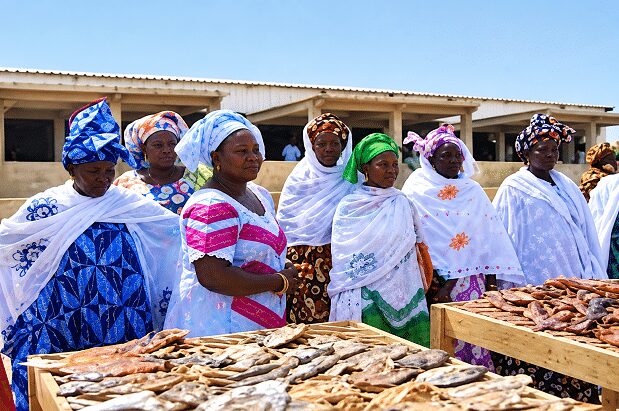
Sénégal: Transformatrices Demand Reconnaissance Juridique
Summary
- On September 21, 2026, women fish processors in Thiaroye-sur-Mer, Sénégal, demanded legal recognition, increased investments, and improved social protection for their profession.
- Less than 15% of the 83 identified processing units are adequately equipped, highlighting poor working conditions.
- They are advocating for the completion of a draft decree to regulate their activities and for integration into key decision-making bodies like the License Allocation Committee.
- Access to fish is a major challenge, with fishmeal and fish oil factories accused of reducing the availability of essential species like sardinella.
- The women emphasize their critical role in seafood circulation, food supply, and the overall sustainability of the fishing industry.
Advocacy for Recognition and Support
Their unified voice represents a significant push for comprehensive support and acknowledgment of their long-standing economic and social impact.
On Monday, September 21, 2026, women fish processors in Thiaroye-sur-Mer, Sénégal, convened to advocate for the legal recognition of their profession and substantial improvements to their working conditions. Representatives highlighted that fewer than 15% of the 83 identified processing units are adequately equipped, underscoring an urgent need for increased investment in the sector. This collective call for support emphasizes their critical role within the artisanal fisheries value chain and the broader economy.
During a press conference, these key stakeholders in the fisheries sector demanded not only formal legal recognition for their work but also enhanced social protection measures. Yaram Fall, a prominent voice from Saint-Louis, specifically called for the creation of a professional identification card for transformatrices, arguing that such recognition must be coupled with improved social security benefits. This is particularly pertinent for women in areas like Guet-Ndar, where many have been engaged in fish processing since childhood, often without formal protections.
Beyond immediate investments, the women fish processors urged public authorities to translate announced commitments into concrete actions. They stressed the importance of their activities for the circulation of seafood products and for ensuring food supply in various regions, asserting that the sustainability of the fishing industry is inextricably linked to their contributions. Their unified voice represents a significant push for comprehensive support and acknowledgment of their long-standing economic and social impact.
Navigating Regulatory Reform
A central demand from the women fish processors is the finalization of a draft decree aimed at regulating their activities, a crucial step towards formalizing their profession and achieving Sénégal transformatrices reconnaissance juridique. Diaba Diop, president of the Réseau des Femmes de la Pêche Artisanale du Sénégal (REFEPAS), noted that this regulatory project has been in progress for some time, indicating a persistent effort to secure its implementation. This decree is expected to provide a much-needed legal framework for their operations, potentially altering the landscape for artisanal value chains.
Further calls for integration extend to key decision-making bodies within the sector. The women are seeking representation on the License Allocation Committee and the National Consultative Council for Maritime Fishing. Diaba Diop emphasized that this inclusion should encompass all women involved across the entire value chain, not just processors and fishmongers, recognizing their diverse contributions from catch valorization to sale. Their active participation in these committees is seen as vital for ensuring that future policies and regulations, including the Décret régularisation transformatrices Sénégal, adequately address their needs and concerns.
While acknowledging ongoing efforts such as the revision of the Code de la Pêche Sénégal and the construction of new infrastructure, the transformatrices are advocating for more specific provisions tailored to their sector within the updated legal framework. They also pressed for the acceleration of construction work on processing units and fishing docks, which are essential for improving their operational efficiency and working conditions. These demands highlight a strategic engagement with legislative processes to secure their future.
Challenges and Economic Impact
Despite their vital contributions, women fish processors face significant operational challenges, particularly concerning access to raw materials. They frequently travel to central markets, ports, and docks to source their products, a task made increasingly difficult by growing competition for fish. A major concern raised is the impact of fishmeal and fish oil factories, which are accused of reducing the availability of certain species crucial for artisanal processing, such as sardinella.
Sardinella is identified as an essential resource for the transformatrices' activities and plays a critical role in the food security of local populations. The diversion of this key species to industrial processing facilities directly threatens the livelihoods of these women and the availability of affordable protein for communities. This issue underscores the broader environmental and economic pressures impacting the artisanal fishing sector in Sénégal.
The ongoing plaidoyer femmes pêche Thiaroye and other regions reflects a deep commitment to their profession and the sustainability of the marine ecosystem. Their efforts to secure legal recognition, social protection, and equitable access to resources are not merely about individual livelihoods but are fundamental to maintaining the integrity of the artisanal fisheries sector and ensuring food sovereignty for many communities in Sénégal.
Practical Implications
Lawyers advising clients in Senegal's fisheries sector should monitor the progress of the proposed decree for legal recognition and regulation of women fish processors, as its eventual implementation could introduce new compliance requirements or alter the operational landscape for artisanal value chains. This ongoing advocacy also signals potential future legislative changes impacting social protection and labor law within the sector.
Source
How does this affect you?
Get an AI analysis of this article grounded in your jurisdictions, practice areas, and any policy documents you've uploaded to Wansom.
Finish Reading the Full Story and the Expert Analysis.
Get the latest legal & regulatory intelligence in Senegal
Wansom is AI and can make mistakes.