
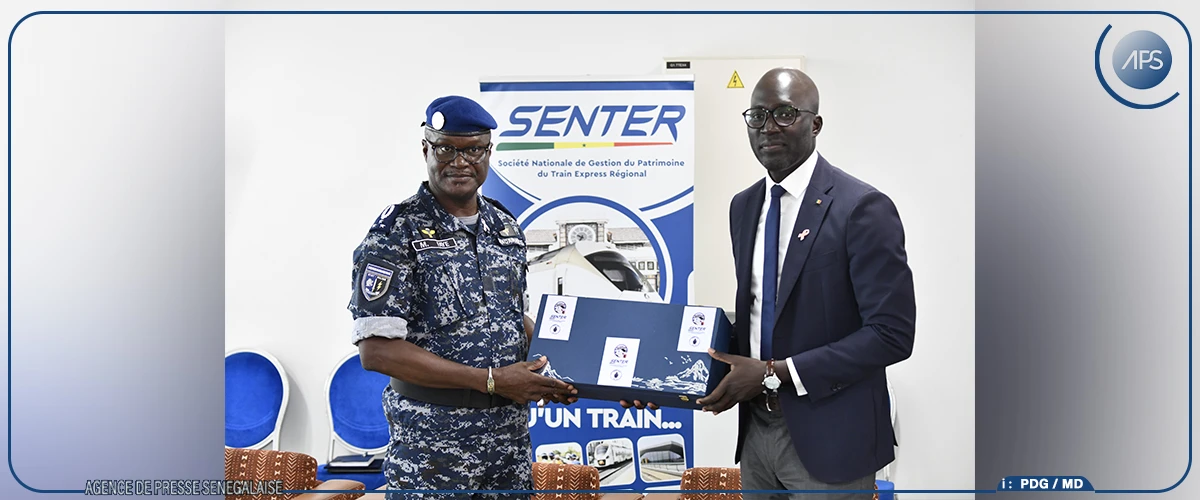
SENTER, Gendarmerie: Protocole Sécurité Ferroviaire Sénégal Renforce TER
Summary
- SENTER and the Gendarmerie nationale have signed an agreement to enhance the security of Senegal's Train express régional (TER) network.
- The protocol involves strengthening the operational resources of the Légion de gendarmerie des transports ferroviaires with over 196 million FCFA worth of new equipment.
- Gendarmerie officer cadets underwent immersive training within the TER system to prepare for their roles in protecting strategic infrastructure.
- The number of gendarmes assigned to TER security increased in 2024 from under 400 to 575, contributing to a train punctuality rate over 97%.
- The initiative aims to provide a safe, reliable, and efficient railway service, emphasizing vigilance, risk anticipation, and specialized personnel training.
Enhanced Security Measures for Senegal's Rail Network
The enhanced security framework, including the increased gendarme presence and the advanced equipment, has already demonstrated tangible benefits for the "sécurité Train express régional Sénégal."
The SENTER, responsible for Senegal's regional express train (TER) operations, has formalized a significant accord with the Gendarmerie nationale to bolster the security framework surrounding the nation's vital railway infrastructure. This comprehensive protocol, central to the "SENTER Gendarmerie protocole sécurité ferroviaire Sénégal" initiative, specifically targets the safeguarding of passengers, railway assets, and the entire TER network's physical installations. The agreement underscores a concerted effort to ensure a secure and reliable transportation experience for the public.
A crucial component of this enhanced security strategy involves the provision of advanced equipment to the Légion de gendarmerie des transports ferroviaires, the specialized unit tasked with railway security. This unit, whose mandate includes monitoring railway rights-of-way, preventing security incidents affecting travelers, and protecting critical infrastructure, received a substantial investment exceeding 196 million FCFA in new tools. The delivered assets comprise sophisticated observation devices, unmanned aerial vehicles (drones), thermal imaging cameras, portable metal detectors, and various types of rolling stock, all designed to augment the operational capabilities of the gendarmerie personnel on the ground.
Furthermore, to ensure a deep understanding of the railway environment, officer cadets from the Gendarmerie nationale underwent an immersive training program within the TER system. This educational initiative aimed to familiarize future security personnel with the intricacies of strategic national infrastructure. During their immersion, the cadets, under the guidance of Commander Babacar Samb, were hosted by SENTER Director General Cheikh Ibrahima Ndiaye and SETER Deputy Director General, alongside their respective leadership teams. The session commenced with an overview of railway history, spanning Senegal, Africa, and global developments, providing a foundational context for their future security roles.
Strategic Vision and Operational Strengthening
The strategic importance of this collaboration was articulated by Major General Martin Faye, the Haut-commandant of the Gendarmerie nationale. He emphasized that the two institutions are committed to pooling their respective competencies to deliver a railway service that is not only secure and reliable but also highly efficient for the Senegalese populace. General Faye highlighted the critical need for constant vigilance, proactive risk anticipation, and specialized training for personnel to effectively address the unique challenges inherent in the railway sector. The immersion of officer cadets directly supports this vision, preparing them for the specific realities of the network they are destined to protect.
Cheikh Ibrahima Ndiaye, the Director General of SENTER, reinforced the idea that a strong sense of security is a paramount factor in user satisfaction. He revealed a significant increase in the number of gendarmes allocated to securing the TER network in 2024, with figures rising from fewer than 400 to 575. This substantial augmentation in personnel reflects the commitment to strengthening the physical presence and response capabilities across the railway system. Ndiaye also advocated for the long-term assignment of gendarmerie personnel to the railway security detail, suggesting durations of three to four years or even longer, to foster specialized expertise and continuity in operations.
Impact on Service Delivery and Future Implications
The enhanced security framework, including the increased gendarme presence and the advanced equipment, has already demonstrated tangible benefits for the "sécurité Train express régional Sénégal." According to SENTER's Director General, this robust security apparatus plays a direct role in maintaining the regularity of train services. The network has achieved an impressive punctuality rate exceeding 97%, indicating that the security measures contribute significantly to operational efficiency and reliability, beyond just preventing incidents. This positive impact on service delivery underscores the multifaceted value of the "accord SENTER Gendarmerie nationale."
The ongoing investment in both human capital, through specialized training and increased deployment, and technological resources, via the "financement équipements sécurité TER," signifies a long-term commitment to railway safety in Senegal. For legal professionals advising transport and logistics companies, particularly those involved with railway infrastructure, these developments necessitate a thorough review of existing security protocols and compliance frameworks. The strengthened enforcement and heightened security presence, governed by the "droit des transports Sénégal," will undoubtedly influence risk assessments and potential liabilities related to railway operations, demanding proactive adjustments from all stakeholders.
Practical Implications
Lawyers advising transport and logistics companies operating in Senegal, particularly those involved with railway infrastructure, should note the significant enhancement of security measures and gendarmerie presence on the TER network. This development necessitates a review of existing security protocols, risk assessments, and compliance frameworks to align with the strengthened enforcement and mitigate potential liabilities related to railway operations.
Source
Source: Original reporting via APS
How does this affect you?
Get an AI analysis of this article grounded in your jurisdictions, practice areas, and any policy documents you've uploaded to Wansom.
Finish Reading the Full Story and the Expert Analysis.
Get the latest legal & regulatory intelligence in Senegal
Wansom is AI and can make mistakes.