
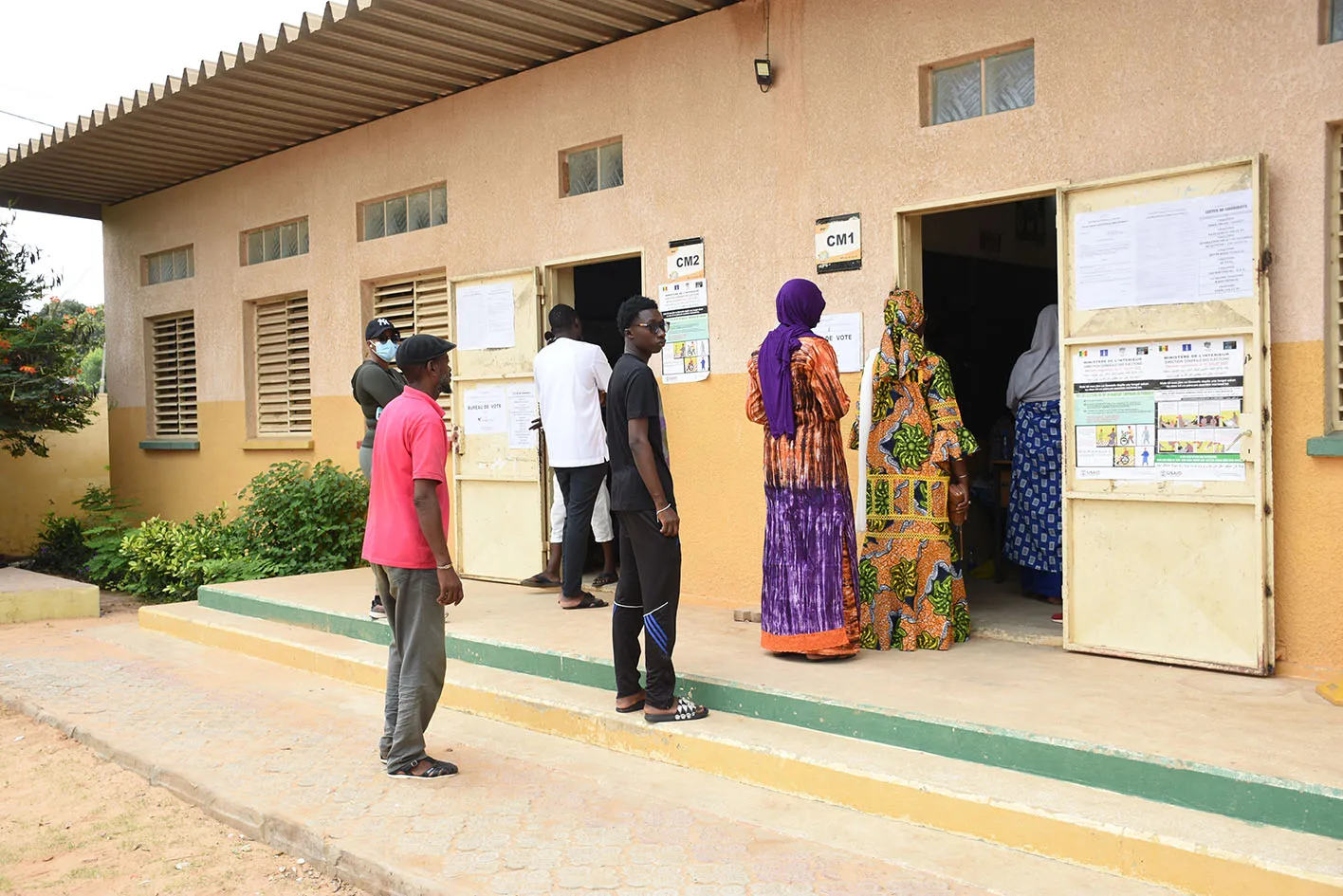
Sénégal: Report Élections Territoriales 2027 Looms, Decree Not Issued
Summary
- President Bassirou Diomaye Faye has not yet issued the decree to convoke electors for Senegal's 2027 territorial elections, raising concerns about potential delays.
- The mandates of current local officials expire on January 23, 2027, requiring the vote to be held within the preceding 30 days.
- Senegal has a history of at least five territorial election postponements since 1984, often justified by institutional reforms or political crises.
- Civil society groups threaten legal action if the electoral calendar remains unclear, while the Front for the Defense of Democracy demands immediate dialogue.
- Combining local and legislative elections is legally complex and would require significant modifications to the existing legal framework.
Looming Uncertainty for 2027 Territorial Elections
As the deadline for the 2027 territorial elections approaches, the absence of key preparatory steps raises concerns about another potential delay, echoing a long history of postponements in Senegal.
As the deadline for Senegal's next territorial elections approaches, significant preparatory steps remain unaddressed, raising concerns about potential delays. With just five months remaining until the critical period for organizing the vote, President Bassirou Diomaye Faye has not yet issued the necessary decree to convoke electors. Furthermore, the exceptional revision of electoral lists, a crucial preliminary step, has not been initiated.
The mandates of current local officials, including mayors, departmental council presidents, and municipal and departmental councilors, are set to expire on January 23, 2027. Legally, the vote must be organized within the thirty days immediately preceding this expiration date. The Minister of Interior, Mouhamadou Makhtar Cissé, has underscored that the entire electoral process cannot commence without a presidential decree formally setting the election date. This lack of official action fuels speculation about another postponement, prompting strong reactions from civil society and opposition groups. Civil society organizations have indicated they will pursue legal recourse if the current ambiguity persists, while the Front for the Defense of Democracy (FDR) has called for immediate dialogue with the government.
Legal Framework and Calendar Constraints
The legal requirement dictates that the upcoming local elections must be held before the current mandates conclude on January 23, 2027, specifically within the preceding 30-day window. Discussions have emerged regarding the possibility of combining these local polls with legislative elections; however, the existing calendars for these two types of elections do not align. Such a coupling would necessitate a prior modification of the current legal framework governing elections.
Further complicating any synchronization efforts, a dissolution of the National Assembly would only be legally permissible from late November 2026 onwards, significantly narrowing the window for coordinating both sets of elections. Electoral expert Ndiaga Sylla has reiterated the fundamental principle that elections must take place before the expiration of the terms of the incumbent local officials, emphasizing the legal imperative to adhere to the established timeline for the 2027 territorial elections.
A History of Postponements and 'Derogatory Legality'
Senegal has a long history of postponing its territorial elections, with at least five instances recorded since 1984. These delays have frequently been justified by institutional reforms or prevailing political crises. For example, the 1984 local elections were held after the generalization of full-fledged communes. The polls scheduled for 1995 were postponed by a year due to regionalization efforts, a similar institutional reorientation that continued after 1996.
Another significant delay occurred when elections anticipated in 2001 were pushed to 2002 following Abdoulaye Wade's ascent to the presidency and his desire to implement provincialization as a new decentralization model, a sequence that extended until 2009. The elections planned for 2007 were postponed twice, first to 2008 and then to 2009, amidst post-2007 presidential election disputes and an opposition boycott of legislative elections, eventually taking place on June 29, 2014, after a three-month delay. More recently, elections initially set for 2019 faced a first postponement to December, followed by a second, indefinite delay, ultimately being held in January 2022.
This recurring pattern of postponements has led civil society organizations, which have been examining this succession of events since 2019, to characterize the organization of these polls since 1984 as operating under a 'derogatory legality.' A memorandum on election postponements and local mandate extensions highlighted that this exceptional procedure, under various regimes, originated from texts that blended legal and political considerations, as noted by Moundiaye Cissé of ONG 3D. Notably, the jurisprudence of the Constitutional Council has not prevented the repetition of these delays.
Calls for Adherence to the Electoral Calendar
In light of the historical context and current uncertainties, both the opposition and civil society organizations are urgently demanding strict adherence to the electoral calendar for the upcoming 2027 territorial elections. They emphasize the importance of respecting the established legal deadlines to ensure democratic integrity and predictability.
Aminata Touré has publicly stated that while the head of state still has time to set the date for the ballot, every week that passes without the necessary decree diminishes the authorities' capacity to adequately prepare for the vote within the legally mandated timelines. The ongoing lack of official action risks further delays, potentially undermining public trust and necessitating proactive legal strategies for all stakeholders involved in the electoral process.
Practical Implications
Lawyers advising political parties, candidates, or civil society organizations in Senegal must closely monitor the government's adherence to the electoral calendar for the 2027 territorial elections. The current delay in issuing necessary decrees and revising voter lists creates a high risk of further postponements and potential legal challenges, requiring proactive legal strategy and advice.
Source
How does this affect you?
Get an AI analysis of this article grounded in your jurisdictions, practice areas, and any policy documents you've uploaded to Wansom.
Finish Reading the Full Story and the Expert Analysis.
Wansom is AI and can make mistakes.