
Senegal Private Sector Demands New PPP Local Subcontracting Quotas
Summary
- Senegal's private sector is concerned by only three PPP contracts signed in three years since the 2021 law came into effect.
- Employers' organizations are demanding local subcontracting quotas and capital participation requirements to boost national company involvement in major projects.
- Prime Minister Ahmadou Alhaminou Mouhamed Lô is scheduled to meet with private sector leaders on September 17, 2026, to discuss business obstacles and proposed solutions.
- The Unité Nationale d’Appui aux Partenariats Public-Privé (UNAPPP) plans awareness, training, and capacity-building initiatives for Senegalese firms.
- An estimated 18,000 billion CFA francs in financing is needed to achieve over 7% growth, with sectors like food sovereignty and "Gas-to-Power" identified for PPPs.
Senegal's PPP Landscape Under Scrutiny
Potential revisions to Senegal's 2021 PPP law, particularly the introduction of new local subcontracting quotas and capital participation requirements, could fundamentally alter project structuring, compliance obligations, and risk assessments for future investments in the country.
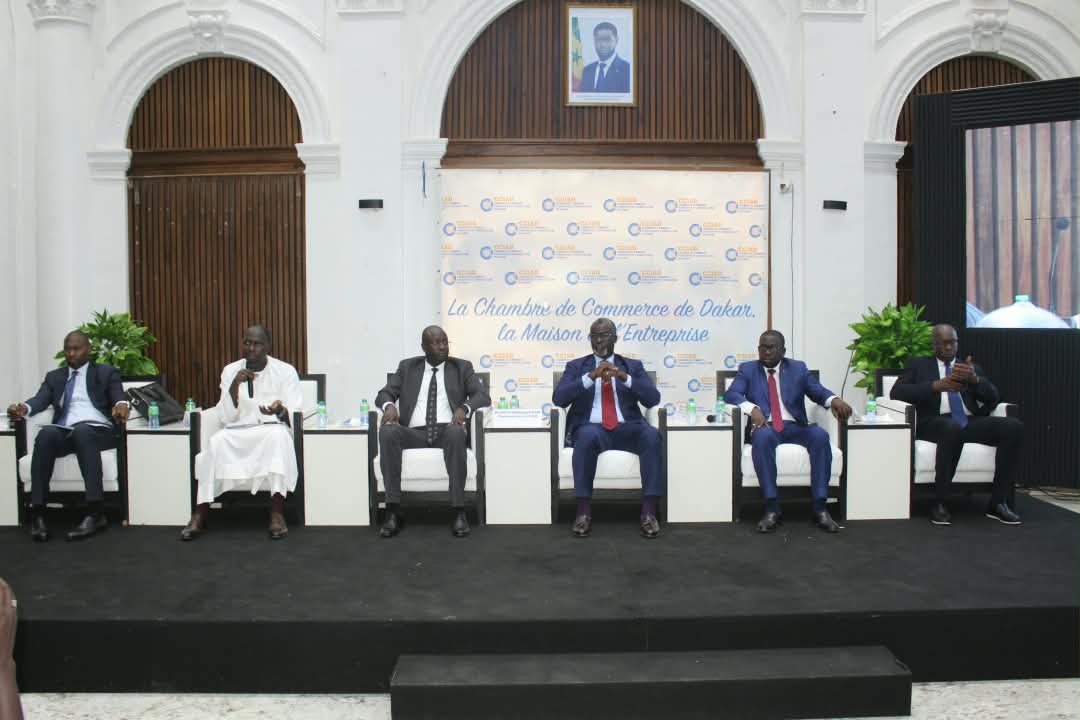
The Senegalese private sector has voiced significant apprehension regarding the current state of Public-Private Partnerships (PPPs) in the nation, particularly in light of the limited number of contracts awarded since the 2021 law's implementation. A recent "Grand Débat" on PPPs, held on Wednesday, September 16, 2026, at the Dakar Chamber of Commerce, Industry, and Agriculture, served as a platform for these concerns. Only three PPP contracts have been signed in the three years since the enabling legislation came into force, a figure that has fueled calls for greater local involvement in major state-led initiatives.
Representatives from various employers' organizations used this forum to demand a comprehensive revision of the existing regulations governing access to these significant public projects. This push reflects a broader desire among Senegalese enterprises to secure a more substantial role in the nation's economic development, moving beyond what they perceive as peripheral engagement. The discussions initiated at this debate are set to continue at the highest levels of government, signaling a critical juncture for the future of PPPs in Senegal.
Demands for Enhanced Local Participation
Central to the private sector's demands are new *Senegal PPP local subcontracting quotas* and mandatory *Senegal PPP local capital participation* requirements. These measures are advocated to ensure that national companies are not relegated to secondary roles when collaborating with international groups on large-scale projects. Baïdy Agne, President of the Conseil National du Patronat (CNP), articulated specific concerns regarding the stringent financial guarantees, equity capital, and critical size often demanded from prospective candidates, which can disproportionately disadvantage local firms.
Further underscoring the economic imperative for greater local integration, Abdoulaye Ly, Executive Director of the Club des Investisseurs Sénégalais, estimated that 18,000 billion CFA francs in financing are necessary to propel Senegal's economic growth beyond 7%. He highlighted sectors such as food sovereignty and the ambitious "Gas-to-Power" project as prime candidates for PPPs, noting that the latter could potentially reduce the cost of a kilowatt-hour from 110 to 60 CFA francs. These figures emphasize the significant economic stakes involved and the potential for local businesses to contribute meaningfully if given the opportunity.
Official Engagement and Regulatory Oversight
In response to these pressing concerns, the Primature is scheduled to extend these crucial discussions, with Prime Minister Ahmadou Alhaminou Mouhamed Lô slated to convene a meeting with major private sector organizations on Thursday, September 17, at the Building administratif Président Mamadou Dia. This session is intended to establish a structured consultation framework, addressing the obstacles hindering business activity and exploring solutions proposed by Senegalese enterprises. The Unité Nationale d’Appui aux Partenariats Public-Privé (UNAPPP), represented by its Secretary Papa Mamadou Gueye, affirmed that each PPP proposal undergoes rigorous evaluation across legal, financial, commercial, and environmental dimensions.
The UNAPPP has also committed to undertaking extensive awareness campaigns, training programs, and capacity-building initiatives aimed at strengthening Senegalese companies, preparing them for more active participation in PPPs. Echoing the sentiment for local empowerment, Abdoulaye Sow, President of the CCIAD, proposed the formation of local consortiums comprising industrialists, banks, and insurers, drawing inspiration from successful models observed in countries like Morocco, Ghana, Kenya, and Mauritania. Despite these calls for greater local integration, the Direction Centrale des Marchés Publics maintains that competitive tenders remain the primary method for public procurement, with direct agreements reserved for regulated exceptions.
The Path Forward for Senegal's PPPs
The ongoing dialogue surrounding *Senegal's 2021 PPP law review* underscores a critical moment for the nation's economic strategy. While the push for increased local content and capital participation is gaining momentum, the process of selecting private sector representatives for these high-level discussions has not been without controversy. An earlier audience granted by President Bassirou Diomaye Faye to the private sector sparked debate, with figures like Adama Gaye criticizing the perceived perpetuation of outdated practices in choosing who would represent the business community.
This internal debate raises questions about the true capacity of organizations like the *Conseil National du Patronat Senegal* to speak for the entirety of the nation's diverse economic fabric. For investors and legal professionals, these discussions are paramount. Potential revisions to Senegal's 2021 PPP law, particularly the introduction of new local subcontracting quotas and capital participation requirements, could fundamentally alter project structuring, compliance obligations, and risk assessments for future investments in the country. Monitoring these developments closely will be essential for navigating the evolving regulatory landscape.
Practical Implications
Lawyers and compliance officers should monitor ongoing discussions for potential revisions to Senegal's 2021 PPP law, as new local subcontracting quotas and capital participation requirements could significantly alter project structuring and compliance for investors.
Source
How does this affect you?
Get an AI analysis of this article grounded in your jurisdictions, practice areas, and any policy documents you've uploaded to Wansom.
Finish Reading the Full Story and the Expert Analysis.
Get the latest legal & regulatory intelligence in Senegal
Wansom is AI and can make mistakes.