
Sénégal Ahmadou Lô: Réformes PPP Investissements Pour Sécurité Juridique
Summary
- Premier Minister Ahmadou Al Aminou Lô committed to finalizing Senegal's domestic debt clearance and fostering a more predictable business environment.
- He announced that implementation texts for the 2025 Investment Code and a revised Public-Private Partnership framework will be ready by the end of 2026.
- These reforms aim to enhance legal security, protect against expropriation, and ensure capital transfer freedom for investors in Sénégal.
- The government seeks to boost local content in major projects and improve national companies' access to regional markets like UEMOA, CEDEAO, and ZLECAf.
- Only three PPP contracts have been signed in three years since the 2021 law, underscoring the urgency of the new framework to stimulate private sector engagement.
Government Pledges and Private Sector Dialogue
The Premier Minister also announced the finalization, before the close of 2026, of the implementation texts for the 2025 Investment Code and the updated framework for public-private partnerships.
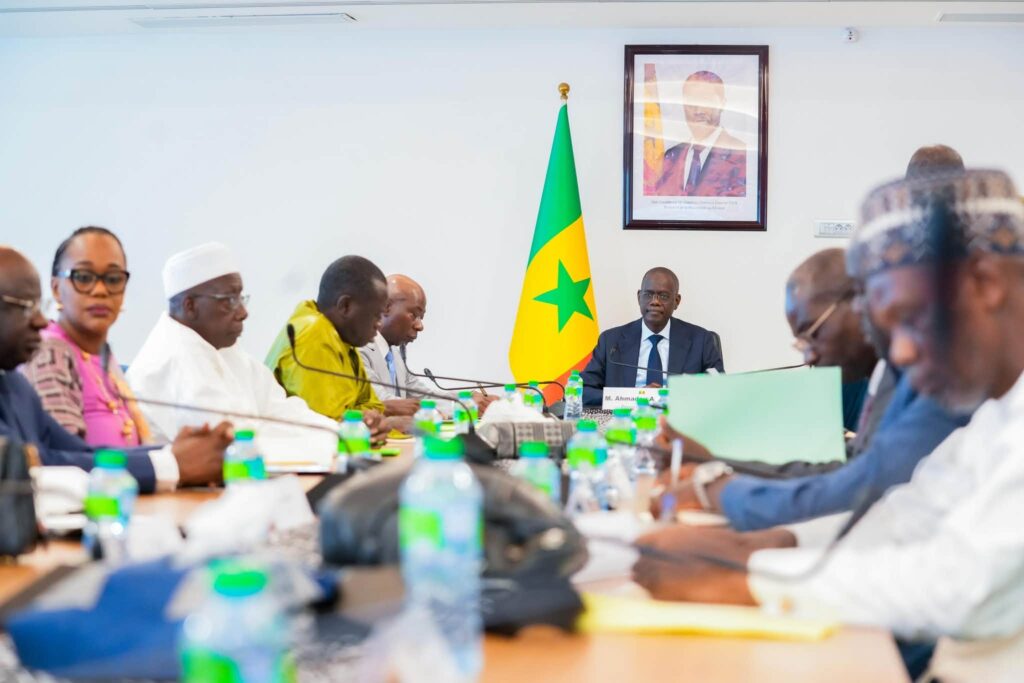
Sénégal's Premier Minister, Ahmadou Al Aminou Lô, recently engaged with representatives of the national private sector, assuring them of the government's commitment to fully clear the nation's domestic debt. This crucial meeting, held on Thursday, September 17, 2026, at the Building administratif Président Mamadou Dia, aimed to foster renewed trust and address long-standing concerns. It occurred just one week after the Premier Minister's General Policy Statement and against the backdrop of a new technical agreement with the International Monetary Fund (IMF) and the launch of Senegal's Debt Treatment Plan (PTDS).
During the discussions, Premier Minister Lô articulated a vision for public action centered on robust regulation, enhanced security for investments, and the systematic removal of administrative impediments. He emphasized that the state would not supplant private initiative, promising businesses greater predictability, administrative efficiency, and clear visibility regarding the payment of outstanding sums. For the private sector, the immediate priority remains the regularization of owed amounts, coupled with the restoration of a stable framework of confidence, particularly as the state undertakes significant financial rebalancing efforts. Reports from Rewmi underscored the sentiment that the national private sector should not be treated as a mere adjustment variable for the public treasury.
This renewed dialogue builds upon a historical relationship between the government and the private sector, though priorities have evolved. Under former President Abdoulaye Wade, public policy largely focused on private investment and improving the business environment, notably through the creation of APIX. The subsequent administration of Macky Sall saw the private sector actively involved in major infrastructure, energy, agriculture, and industrial projects under the Plan Sénégal émergent. The current government, however, is now prioritizing local content as a central pillar of this relationship, acknowledging the limited participation of Senegalese companies in major public works.
Advancing Key Legislative Reforms
A significant announcement from Premier Minister Ahmadou Al Aminou Lô concerned the accelerated finalization of critical legislative instruments. He confirmed that the implementation texts for the 2025 Investment Code and the renovated framework for Partenariats Public-Privé Sénégal (PPP) are slated for completion before the close of 2026. These forthcoming texts are designed to bolster the security juridique investissements Sénégal, providing essential guarantees such as protection against expropriation and ensuring the freedom of capital transfer, thereby creating a more attractive environment for both domestic and international investors.
Despite the strategic importance of the Partenariats Public-Privé Sénégal, the private sector has noted a slow uptake, with only three PPP contracts signed over the three years since the 2021 law came into effect. This highlights the urgent need for the new framework and its accompanying textes application Code investissements Sénégal to stimulate greater engagement. Beyond these legislative updates, the government also plans to act on recommendations stemming from the General States of Industry, Commerce, and Small and Medium-sized Enterprises (SMEs) and Small and Medium-sized Industries (SMIs).
Further demonstrating its commitment to a transparent and inclusive reform process, the government will also submit the Code général des impôts and the Code général des douanes for review and commentary by the national private sector. This consultative approach aims to ensure that fiscal and customs policies are aligned with the needs and concerns of businesses, contributing to a more predictable and favorable operating environment in Sénégal.
Fostering Local Participation and Economic Growth
A key focus of the government's economic strategy, as articulated by Premier Minister Ahmadou Al Aminou Lô, is to significantly enhance local content in major projects. Lô specifically highlighted the observed low presence of Senegalese companies in the state's large-scale works, alongside their limited access to broader regional markets such as the West African Economic and Monetary Union (UEMOA), the Economic Community of West African States (CEDEAO), and the African Continental Free Trade Area (ZLECAf).
This challenge extends beyond mere public procurement, touching upon the fundamental capacity of national enterprises to actively participate in projects funded or structured by the state and to effectively position themselves within these expansive regional economic blocs. The government's push for the finalization of the Code des investissements 2025 Sénégal and the Partenariats Public-Privé Sénégal framework is therefore intrinsically linked to empowering local businesses. By addressing these structural issues, the administration aims to unlock greater economic potential, ensuring that the benefits of national development and regional integration are more broadly distributed among Senegalese enterprises.
Source
Source: Original reporting via Rewmi
How does this affect you?
Get an AI analysis of this article grounded in your jurisdictions, practice areas, and any policy documents you've uploaded to Wansom.
Finish Reading the Full Story and the Expert Analysis.
Get the latest legal & regulatory intelligence in Senegal
Wansom is AI and can make mistakes.