
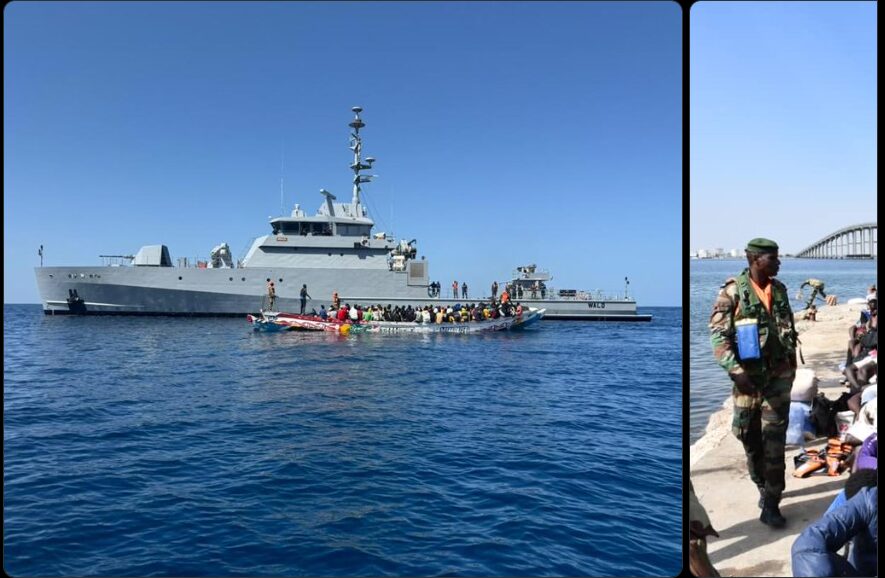
Senegal Navy Intercepts 104 Migrants, Rescues 1,424
In Senegal, between November 16 and 17, 2026, the National Navy intensified its operations, intercepting 104 individuals attempting irregular migration off the coast of Saint-Louis and rescuing 1,424 migrants from nine pirogues involved in irregular emigration operations. These actions underscore the Senegalese government's ongoing efforts to combat irregular migration and ensure maritime security along its coastline.
The legal significance of these events is profound, reflecting the complex interplay of national sovereignty, international maritime law, and human rights. For legal practitioners, it highlights the persistent challenges associated with irregular migration, including the legal status of intercepted individuals, potential charges for human trafficking, and the humanitarian obligations of states. The increased interdiction efforts signal a stricter enforcement posture, which can have significant implications for individuals seeking to migrate and for those who facilitate such journeys.
The legal context for these operations is grounded in Senegal's national laws concerning immigration, border control, and maritime security, as well as international conventions. As a signatory to various international instruments, Senegal has obligations under the United Nations Convention on the Law of the Sea (UNCLOS) regarding maritime jurisdiction and search and rescue (SAR) operations. Additionally, national criminal statutes likely address human trafficking and aiding irregular migration. The operations demonstrate the state's exercise of its sovereign right to control its borders while also fulfilling its humanitarian duty to rescue individuals in distress at sea.
Key parties involved include the Senegalese National Navy, the individuals attempting irregular migration, and the broader Senegalese government, which is responsible for implementing migration policies and ensuring maritime safety. For attorneys, particularly those specializing in immigration, human rights, or criminal law, the practitioner takeaway is to be aware of the heightened enforcement activities and their potential legal consequences. Businesses involved in maritime transport or coastal activities should also be cognizant of the increased surveillance and the legal risks associated with any involvement, direct or indirect, in irregular migration. The excerpt does not provide details on the legal proceedings or outcomes for the intercepted individuals, such as whether they faced deportation, charges, or were offered asylum, nor does it specify any legal actions against those who organized the irregular migration attempts.
How does this affect you?
Get an AI analysis of this article grounded in your jurisdictions, practice areas, and any policy documents you've uploaded to Wansom.
Finish Reading the Full Story and the Expert Analysis.
Get the latest legal & regulatory intelligence in Senegal
Wansom is AI and can make mistakes.