
Sénégal: Dianté: Liberté Syndicale Outil Régulation for Labor
Summary
- Senegalese Minister Mamadou Lamine Dianté affirmed trade union freedom as a key regulatory tool for labor relations on Monday, September 28, in Dakar.
- This right, enshrined in Articles 8 and 25 of the Constitution, encompasses the ability for workers and employers to form organizations, engage in collective bargaining, and exercise the right to strike under legal conditions.
- Senegal's commitment extends to international standards, including International Labour Organization Conventions 87 and 98.
- Dianté emphasized that the goal is to facilitate compromise and manage divergent interests through social dialogue, not to eliminate grievances or foster confrontation.
- The government plans to strengthen this regulatory approach by prioritizing prevention, conciliation, and mediation in labor disputes.
Affirming Labor Rights in Senegal
This fundamental right, according to Minister Dianté, is intended to serve as a mechanism for regulating professional relations, rather than a source of conflict.
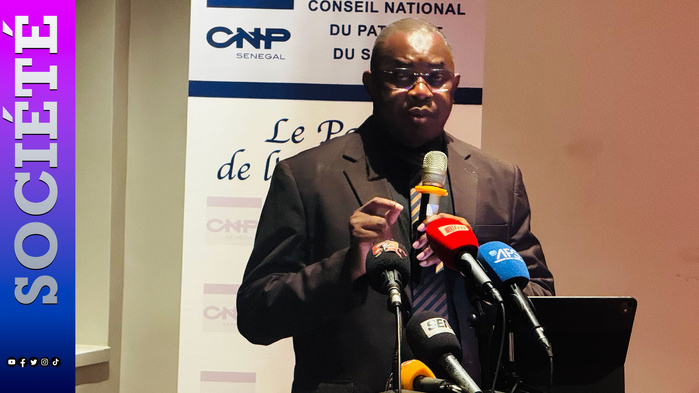
On Monday, September 28, Mamadou Lamine Dianté, Senegal's Minister of Public Service, Labor, and Public Service Reform, underscored the pivotal role of trade union freedom and collective bargaining in regulating professional relations. Speaking at the social symposium of the Conseil national du Patronat in Dakar, Minister Dianté articulated a vision where these fundamental rights serve as essential instruments for maintaining balance and order in the workplace.
His address highlighted the Senegalese government's commitment to fostering a structured environment for labor relations. This stance positions `liberté syndicale` not merely as an entitlement, but as a proactive `outil régulation` designed to manage the dynamic interplay between workers and employers across the nation. The Minister's remarks reinforce the importance of dialogue and established frameworks in navigating industrial matters.
Legal Framework and International Commitments
The foundation for `droit syndical Sénégal régulation` is firmly established within the nation's legal framework. Minister Dianté pointed out that trade union freedom is recognized as a fundamental right under Articles 8 and 25 of the Senegalese Constitution. This constitutional backing empowers both workers and employers to establish their own organizations, ensuring a robust landscape for representation.
Beyond national statutes, Senegal's dedication to these principles is further demonstrated by its adherence to international standards. The country is a signatory to key International Labour Organization (OIT) Conventions 87 and 98, which specifically address freedom of association and the right to organize and bargain collectively. These international agreements reinforce the domestic legal provisions, providing a comprehensive framework for labor rights.
A Tool for Regulation, Not Confrontation
Minister Dianté emphasized that `liberté syndicale` should not be perceived as a catalyst for conflict, but rather as a vital mechanism for regulating professional relations. He clarified that the ultimate objective is not to eradicate grievances entirely, but to provide a legitimate avenue for divergent interests to be expressed and for compromises to be diligently sought within a legal framework. This philosophy underpins the government's approach to `négociation collective Sénégal`.
In this model, trade unions play a crucial role by articulating the concerns of workers, while collective bargaining serves as the primary means to identify and implement solutions. The broader `dialogue social Conseil national Patronat` is instrumental in constructing these compromises, fostering a collaborative environment. To strengthen this regulatory paradigm, the government intends to prioritize preventive measures, notably through the conciliation and mediation services offered by the Labor Administration, ensuring that institutions are equipped to support parties in resolving disputes.
Broader Context of Labor Relations
The Minister's statements are situated within a dynamic and sometimes challenging landscape of labor relations in Senegal. For instance, on March 9, 2026, Mody Guiro, the Secretary General of the CNTS, issued a threat of a general strike, citing the state's failure to honor commitments made in the social stability pact. This incident highlights the ongoing need for effective dialogue and resolution mechanisms.
Other related developments include Minister Dianté's defense of balancing social protection with competitiveness within the Labor Code on June 22, 2026. Furthermore, on February 4, 2026, Amadou Mbengue drew attention to a financial paradox involving sanctions and payment delays, which he argued undermined the state's credibility with teachers. These events, alongside Dianté's call for public agents to national resurgence in Kolda on September 6, 2026, and the urgent call for social policy reform based on justice, transparency, and evaluation on June 18, 2026, underscore the continuous efforts required to maintain stable and equitable labor relations in Senegal.
Practical Implications
This statement by the Minister of Public Service, Labor, and Public Service Reform signals the Senegalese government's reinforced commitment to trade union freedom and collective bargaining as primary tools for regulating labor relations. Lawyers and compliance officers advising employers or unions in Senegal should emphasize preventive measures, conciliation, and mediation in labor disputes, aligning strategies with this official stance on dialogue and compromise to navigate potential conflicts and ensure compliance with national and international labor standards.
Source
How does this affect you?
Get an AI analysis of this article grounded in your jurisdictions, practice areas, and any policy documents you've uploaded to Wansom.
Finish Reading the Full Story and the Expert Analysis.
Get the latest legal & regulatory intelligence in Senegal
Wansom is AI and can make mistakes.