
PCQVP Senegal: Publiez Ce Que Vous Payez Zircon Ziguinchor Study on Community Rights
Summary
- The national coalition "Publiez ce que vous payez" conducted a study in Ziguinchor, Senegal, examining the region's critical mineral potential, particularly zircon, in partnership with the African Climate Foundation.
- The study advocates for local community participation in the benefits of mineral exploitation and for strengthening their capacity to negotiate with mining stakeholders.
- In Niafrang, a Gambian company named G-SAND continues zircon extraction despite the Supreme Court's annulment of its permit in December 2025 due to the absence of an environmental impact study.
- Local communities, represented by lawyer Bora Kanté, are demanding an immediate halt to G-SAND's operations and a presidential decree prohibiting mining in the environmentally sensitive area.
- The coalition promotes a national strategy for Senegal to develop an industrial value chain for critical minerals, focusing on local transformation, job creation, and national enterprise development rather than solely exporting raw materials.
Unveiling Ziguinchor's Mineral Potential and Community Concerns
The Supreme Court of Senegal revoked the company's permit in December 2025, citing the absence of a mandatory environmental impact study (EIA) as the primary reason for its decision.
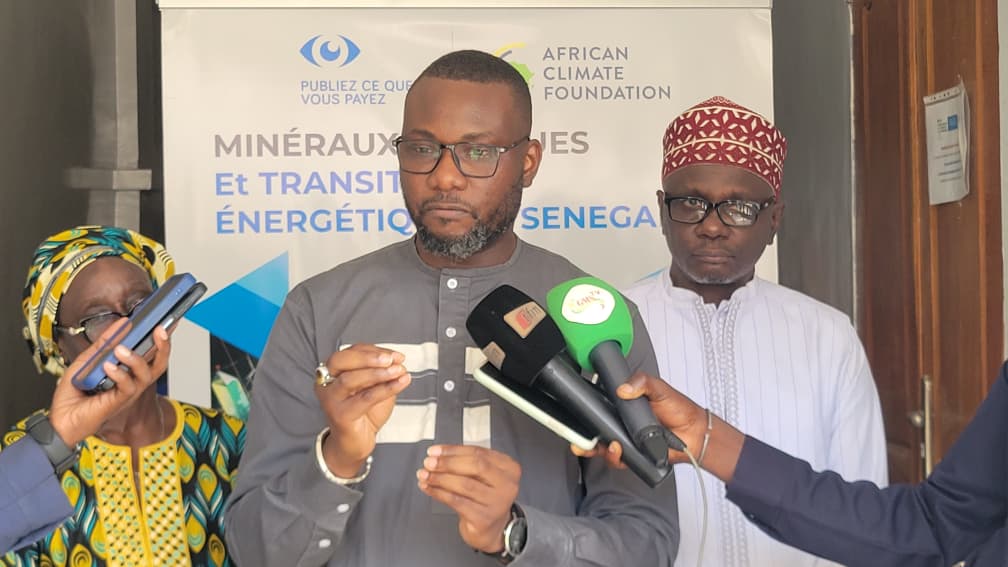
The national coalition "Publiez ce que vous payez" (PCQVP) has spearheaded a comprehensive study in Ziguinchor, focusing on the region's critical mineral resources, particularly the significant potential of zircon. This "Publiez ce que vous payez zircon Ziguinchor study," conducted in collaboration with the African Climate Foundation Senegal, was presented on a Saturday in the regional capital. Dr. Papa Fara Diallo, president of the coalition, indicated that the data concerning zircon relies on officially available information regarding the local mining potential.
Beyond merely assessing mineral reserves, the "Ziguinchor critical minerals study" also incorporated extensive consultations to gather the concerns of local inhabitants and explore avenues for enhancing the local value of these resources. The PCQVP emphasizes that while zircon offers considerable mining potential for Ziguinchor, it is imperative that local communities actively participate in and benefit from its exploitation. This approach aims to ensure that the economic gains from critical mineral extraction are shared equitably, rather than solely resulting in negative impacts for the host communities.
The Niafrang Precedent: Judicial Scrutiny and Environmental Rights
A stark illustration of the challenges and legal complexities surrounding mineral extraction in Senegal is the ongoing situation in Niafrang. There, G-SAND, a Gambian company backed by Chinese capital, continues its mining operations despite a critical legal setback: the "G-SAND Niafrang permit annulment." The Supreme Court of Senegal (`Cour suprême Sénégal permis minier`) revoked the company's permit in December 2025, citing the absence of a mandatory environmental impact study (EIA) as the primary reason for its decision.
Despite the judicial annulment, exploitation persists on a six-kilometer dune, alarmingly close to both a waterway and a designated protected marine ecosystem. This continued activity has galvanized local communities, who, through their legal representative, lawyer Bora Kanté, are demanding an immediate cessation of all operations. They are also advocating for a presidential decree that would permanently prohibit any mining activities within this environmentally sensitive zone. The Niafrang case underscores the heightened judicial scrutiny on environmental impact assessments and the critical importance of robust compliance for mining companies operating in Senegal.
Advocating for Equitable Development and Local Empowerment
The situation in Niafrang serves as a powerful example for the broader discourse on "Sénégal zircon mining community rights," highlighting that the sharing of benefits from mining cannot be detached from environmental safeguards and the ability of communities to assert their rights. Dr. Papa Fara Diallo of PCQVP stresses the necessity of strengthening the capacity of local populations to defend their interests and effectively negotiate with various stakeholders involved in mining projects. The demands emanating from Niafrang directly reflect the coalition's objective to halt contested exploitation and prevent its expansion into vulnerable areas.
Furthermore, the PCQVP advocates for a national strategy that prioritizes the creation of an industrial value chain within Senegal, moving beyond mere raw material export. This vision includes fostering local transformation of minerals, generating employment opportunities, and developing national enterprises around critical minerals. While zircon is already being exploited in certain parts of the region, and other areas may see new mining activities, this prospect raises significant concerns regarding the economic, social, environmental, and cultural rights of communities. The coalition's president concluded by calling for a strategic approach that enables Senegal to transform its resources more effectively, leveraging them as a catalyst for industrial development.
Practical Implications
Lawyers advising mining companies in Senegal should note the heightened judicial scrutiny on environmental impact assessments, as evidenced by the Supreme Court's annulment of G-SAND's permit. Compliance officers must ensure robust community engagement and benefit-sharing strategies to mitigate legal and reputational risks, given the strong advocacy for local rights and environmental protection in critical mineral exploitation.
Source
Source: Original reporting via Lesoleil
How does this affect you?
Get an AI analysis of this article grounded in your jurisdictions, practice areas, and any policy documents you've uploaded to Wansom.
Finish Reading the Full Story and the Expert Analysis.
Get the latest legal & regulatory intelligence in Senegal
Wansom is AI and can make mistakes.