
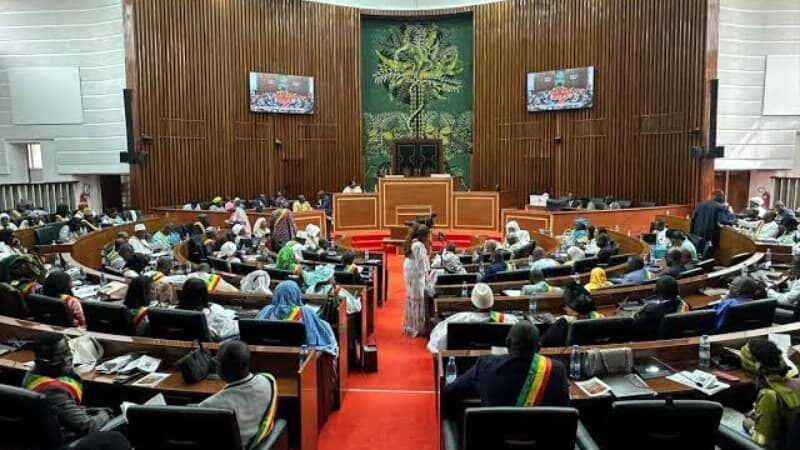
Sénégal Assemblée Nationale: LFR 2026 Examen Prioritaire Demandé
Summary
- President Bassirou Diomaye Faye has requested priority review for the Loi de Finances Rectificative 2026 in the National Assembly.
- President of the National Assembly Ousmane Sonko announced the request, which invokes Article 84 of the Constitution for expedited parliamentary consideration.
- The LFR 2026 includes fiscal measures required as prerequisites for a $2.2 billion financing agreement with the IMF.
- The Pastef parliamentary group, holding 130 seats, plans to propose numerous article-by-article amendments despite not opposing the entire bill.
- Ousmane Sonko, who served as Prime Minister until May 2026, has publicly expressed concerns about the FMI program's effects and his disagreement with President Faye on national governance.
Presidential Mandate for Priority Review
Lawyers and compliance officers in Senegal are advised to closely monitor the ongoing parliamentary debate and any potential amendments to the LFR 2026.
President Bassirou Diomaye Faye has formally requested that the Loi de Finances Rectificative 2026 (LFR 2026) receive priority consideration within the National Assembly. This directive underscores the urgency attributed to the legislative package. The request was publicly announced by President of the National Assembly Ousmane Sonko during the inauguration of the 2026-2027 single parliamentary session, signaling a critical phase for the nation's financial legislation.
The written communication, dated October 2, specifically invoked Article 84 of the Constitution of Sénégal to mandate the expedited inclusion of the LFR 2026 in the parliamentary agenda. Following this, President of the National Assembly Sonko convened the conference of presidents, a key parliamentary body, to establish the definitive calendar for the ongoing session. This procedural step is crucial for organizing the legislative work and ensuring the timely progression of the proposed rectifying finance law. The LFR 2026 had already been transmitted to the general secretariat of the Assemblée nationale on September 18, setting the stage for its legislative journey.
Fiscal Reforms Tied to International Financing
The impetus behind the urgent call for a Sénégal LFR 2026 examen prioritaire stems directly from a significant international financing agreement. Senegal recently concluded negotiations for a substantial $2.2 billion (approximately 1,245 billion FCFA) financial package with the International Monetary Fund (FMI). This agreement, finalized on September 1 after several months of discussions, is structured to span a 36-month period, providing crucial economic support to the nation.
A fundamental condition of this Sénégal FMI accord is the integration of specific fiscal measures into national law. Consequently, the Loi de Finances Rectificative 2026 is designed to incorporate these negotiated fiscal reforms, which are prerequisites for the full implementation of the program. While the FMI's Board of Directors still needs to grant its final approval for the financing agreement, the legislative process in Senegal is moving forward to fulfill these preliminary requirements.
Parliamentary Scrutiny and Political Divergence
Despite the presidential push for priority, the legislative path for the LFR 2026 is not without potential challenges. The Pastef parliamentary group, which commands 130 of the 165 seats in the Assemblée nationale, has indicated that its members do not intend to vote against the entirety of the proposed bill. However, the group has expressed significant reservations regarding certain aspects of the legislation. This stance suggests a likelihood of numerous article-by-article amendments being proposed during the parliamentary debates, potentially prolonging the review process.
Adding another layer of complexity, Ousmane Sonko, who served as Prime Minister from 2024 to May 2026 and is now President of the National Assembly, has publicly voiced his profound disagreement with President Bassirou Diomaye Faye concerning the overall direction of the country's governance. Furthermore, Sonko has openly shared his concerns regarding the potential impacts and effects of the FMI program itself. These political dynamics within the executive and legislative branches highlight the intricate environment surrounding the passage of the Loi de Finances Rectificative 2026.
Implications for Senegal's Economic Landscape
The expedited review of the Loi de Finances Rectificative 2026, driven by the presidential request and the FMI agreement, carries significant implications for Senegal's economic framework. The mandated fiscal measures embedded within this legislation are poised to introduce new tax obligations and compliance requirements for businesses operating across various sectors in the country. This makes the Sénégal LFR 2026 examen prioritaire a critical event for legal and compliance professionals.
Lawyers and compliance officers in Senegal are advised to closely monitor the ongoing parliamentary debate and any potential amendments to the LFR 2026. The final form of this legislation will directly shape the regulatory environment, potentially necessitating adjustments in corporate financial planning and operational strategies. Understanding these changes will be crucial for ensuring adherence to the evolving legal and fiscal landscape.
Practical Implications
Lawyers and compliance officers in Senegal should closely monitor the parliamentary debate and potential amendments to the LFR 2026, especially regarding the IMF-mandated fiscal measures. These legislative changes could introduce new tax obligations or compliance requirements for businesses operating in the country.
Source
How does this affect you?
Get an AI analysis of this article grounded in your jurisdictions, practice areas, and any policy documents you've uploaded to Wansom.
Finish Reading the Full Story and the Expert Analysis.
Get the latest legal & regulatory intelligence in Senegal
Wansom is AI and can make mistakes.