
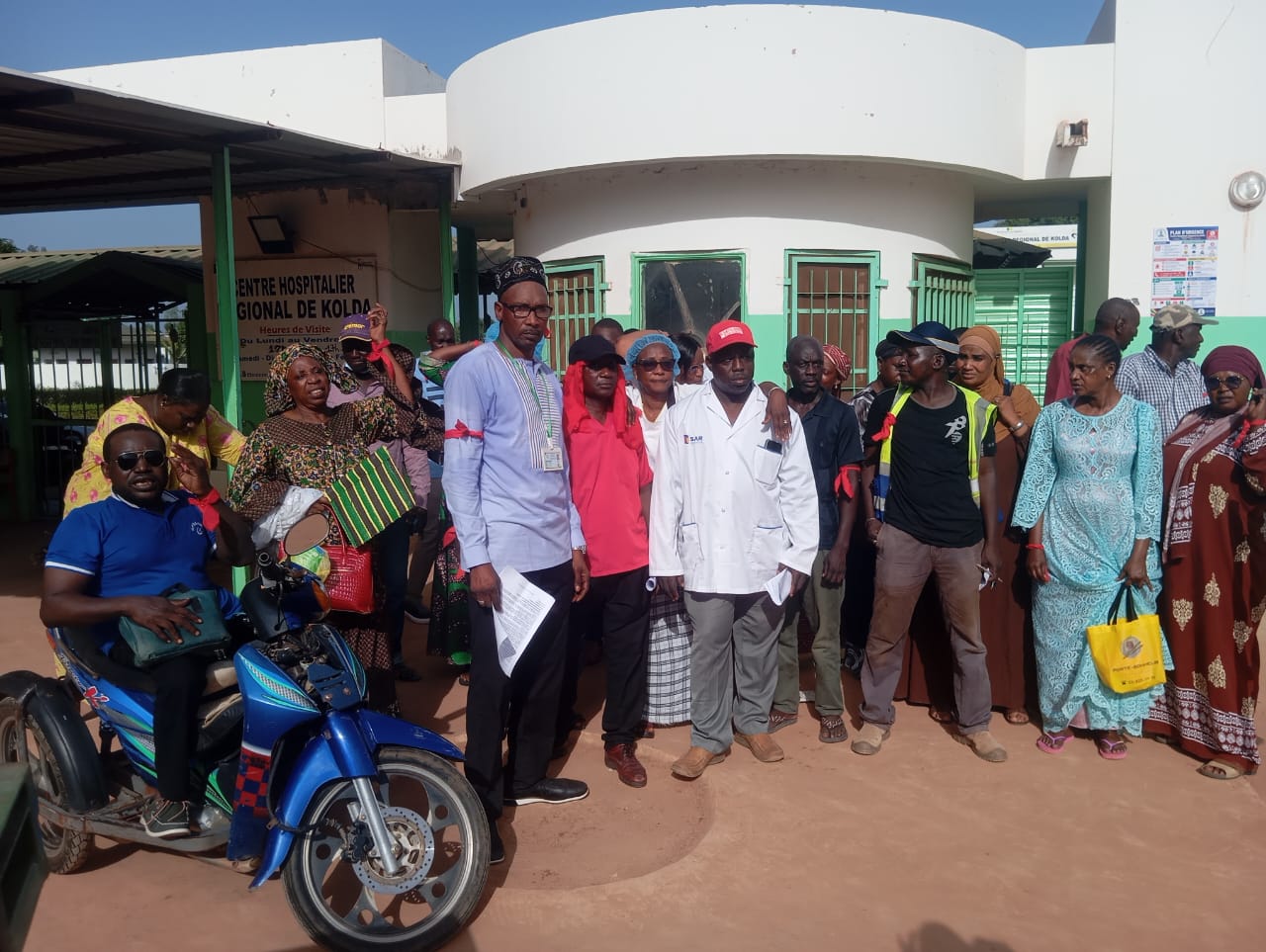
Senegal Kolda: Health Agents Strike for Housing Allowance Equity
Summary
- Contractual health agents in Kolda, Senegal, have launched a 72-hour strike from October 28-30.
- They are demanding the same housing allowance granted to health workers recruited directly by the supervisory ministry.
- Alassane Mballo of SACSASS stated this disparity is unjust and called for universal application of the allowance.
- The strike is part of broader tensions in Senegal's health sector, following previous actions by ASAS/And Gueusseum.
- Union leaders criticized Minister Mamadou Lamine Dianté for comments perceived as threats against protesting workers.
Escalating Labor Dispute in Kolda
For public sector health institutions in Senegal, this ongoing labor dispute in Kolda signals a potential for wider industrial action and legal challenges concerning equitable compensation and benefits for contractual health workers across the country.
Contractual health agents in Kolda, Senegal, have initiated a 72-hour strike to demand equitable housing allowances, highlighting a significant disparity in compensation within the public health sector. The industrial action, which commenced on Wednesday, October 28, and is scheduled to conclude on Friday, October 30, involves personnel directly recruited by public health establishments. These workers are seeking the same housing benefits currently provided to their counterparts who were recruited directly by the supervisory ministry, a difference they deem fundamentally unjust. This specific "Senegal Kolda health agents housing allowance strike" underscores a growing frustration among a critical segment of the healthcare workforce.
Alassane Mballo, the Secretary General of the Syndicat des Agents Contractuels de la Santé et de l’Action Sociale (SACSASS) at the Kolda Regional Hospital Center, publicly articulated the union's position during a press conference. Mballo asserted that the current two-tiered system for housing allowances creates an unfair distinction among workers who, in his view, perform similar roles and should be afforded the same professional status and benefits. He emphasized the imperative for this housing allowance to be universally extended to all health workers, irrespective of their recruitment channel. The "SACSASS Kolda strike" at the "Kolda hôpital grève" is a direct response to this perceived inequity, aiming to rectify a long-standing grievance.
Systemic Inequities and Broader Health Sector Tensions
The current "Senegal health worker housing allowance" dispute in Kolda is not an isolated incident but rather a localized manifestation of wider, persistent tensions within Senegal's public health system. The demand for fair housing allowances by contractual agents reflects a deeper concern regarding the "droit du travail agents contractuels Sénégal," specifically the rights and equitable treatment of contract workers compared to permanent staff or those recruited through different administrative channels. This issue has fueled repeated social conflicts and work stoppages across the sector, indicating a systemic challenge in how contractual health personnel are compensated and integrated into the national healthcare framework.
Previous months have seen significant unrest, with the Alliance of Autonomous Health Unions (ASAS) / And Gueusseum orchestrating 48-hour strikes in both July and August. These earlier actions were aimed at compelling the state to honor prior commitments made to health workers, demonstrating a pattern of unfulfilled promises contributing to labor dissatisfaction. Furthermore, in August, the same union alliance boycotted a crucial dialogue on health system reforms, citing the proposed framework as inadequate to address the fundamental issues facing healthcare professionals. While the Kolda action specifically targets housing allowances, it resonates with this broader discontent over working conditions and the overall treatment of health agents across the country.
Ministerial Criticism and Implications for Public Sector Labor
The ongoing labor action in Kolda has also brought forth sharp criticism directed at high-ranking government officials. Alassane Mballo specifically called out Mamadou Lamine Dianté, the Minister of Public Service, Labor, and Public Service Reform, for recent comments that health workers interpreted as threats against those participating in protest movements. Mballo underscored the irony of the situation by pointing out that Minister Dianté himself has a background as a worker and a former trade unionist, suggesting a disconnect between his past and current stance on labor rights. This public rebuke highlights the deep mistrust that has developed between health sector unions and government authorities.
The "Mamadou Lamine Dianté comments" have further inflamed an already volatile situation, potentially exacerbating the challenges in resolving the "Senegal Kolda health agents housing allowance strike" and similar disputes. The visual display of some protesters wearing red scarves and armbands symbolizes their solidarity and resolve in the face of perceived official intimidation. For public sector health institutions in Senegal, this ongoing labor dispute in Kolda signals a potential for wider industrial action and legal challenges concerning equitable compensation and benefits for contractual health workers across the country. Lawyers advising these institutions should closely monitor developments, while compliance officers should review internal policies for contractual staff to mitigate similar risks and ensure adherence to fair labor practices.
Practical Implications
Lawyers advising public sector health institutions in Senegal should monitor this ongoing labor dispute in Kolda, as it signals potential for wider industrial action and legal challenges regarding equitable compensation and benefits for contractual health workers across the country. Compliance officers should review internal policies for contractual staff to mitigate similar risks.
Source
How does this affect you?
Get an AI analysis of this article grounded in your jurisdictions, practice areas, and any policy documents you've uploaded to Wansom.
Finish Reading the Full Story and the Expert Analysis.
Wansom is AI and can make mistakes.