
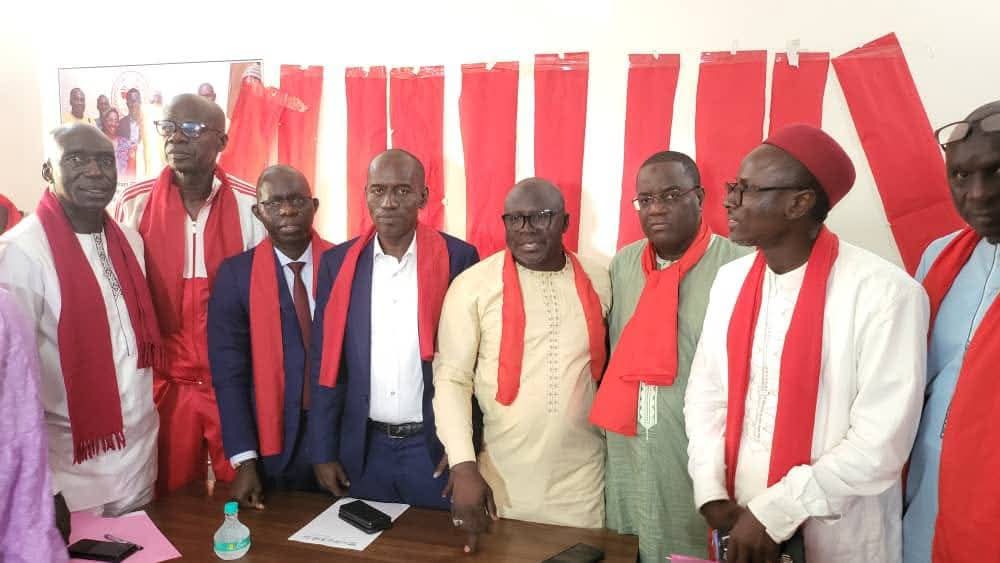
G7 Rejects Special Recruitment of 2,527 Teachers in Senegal
Summary
- The G7 has opposed the special recruitment of 2,527 teachers announced by the government for the 2026-2027 school year.
- The move was made unilaterally, without prior consultation with representative organizations in the sector.
- Critics argue that the decision undermines the professionalism of teaching as a career and creates a two-tiered system.
G7 Rejects Special Recruitment of Teachers in Senegal
The G7's opposition is rooted in concerns over the lack of transparency and accountability in the recruitment process.
The G7, a coalition of major education unions, has opposed the special recruitment of 2,527 teachers announced by the government for the 2026-2027 school year. This decision was made unilaterally, without prior consultation with representative organizations in the sector. The move has sparked controversy, with some arguing that it undermines the professionalism of teaching as a career.
The G7's opposition is rooted in concerns over the lack of transparency and accountability in the recruitment process. Critics argue that the government's decision was made without considering the long-term implications for the education system or the needs of students. The special recruitment program has been met with skepticism, with some questioning its fairness and equity.
The G7's stance is likely to have significant implications for the education sector in Senegal. If implemented, the special recruitment program could lead to a two-tiered system, where some teachers are hired outside of the normal competitive process. This could create resentment among existing teachers and undermine morale within the profession.
Legal Context
The G7's rejection of the special recruitment program raises important questions about the role of unions in education policy-making. In Senegal, as in many other countries, trade unions play a crucial role in advocating for teachers' rights and interests. However, the government's decision to proceed with the special recruitment program without consulting the unions has been criticized as an overreach of executive power.
The move also highlights the tension between the need for flexibility in education policy-making and the importance of transparency and accountability. While some argue that the special recruitment program is necessary to address staffing shortages, others contend that it undermines the principles of meritocracy and fairness.
The G7's opposition to the special recruitment program may ultimately be subject to legal challenge. If the government proceeds with the program despite the unions' objections, it could lead to a test case for the constitutionality of unilateral decision-making in education policy.
Why It Matters
The G7's rejection of the special recruitment program has significant implications for the education sector in Senegal. If implemented, the program could lead to a two-tiered system, where some teachers are hired outside of the normal competitive process. This could create resentment among existing teachers and undermine morale within the profession.
The move also highlights the importance of transparency and accountability in education policy-making. The G7's opposition to the special recruitment program is a reminder that unilateral decision-making can have far-reaching consequences for the education sector and its stakeholders.
As the debate over the special recruitment program continues, it is essential to consider the long-term implications for the education system and the needs of students. By prioritizing transparency, accountability, and fairness, policymakers can ensure that education policy-making serves the greater good.
Practical Implications
This development may require lawyers and compliance officers to advise clients on the implications of the G7's rejection, particularly if their clients are involved in the education sector or have interests affected by the decision.
Source
How does this affect you?
Get an AI analysis of this article grounded in your jurisdictions, practice areas, and any policy documents you've uploaded to Wansom.
Wansom is AI and can make mistakes.