
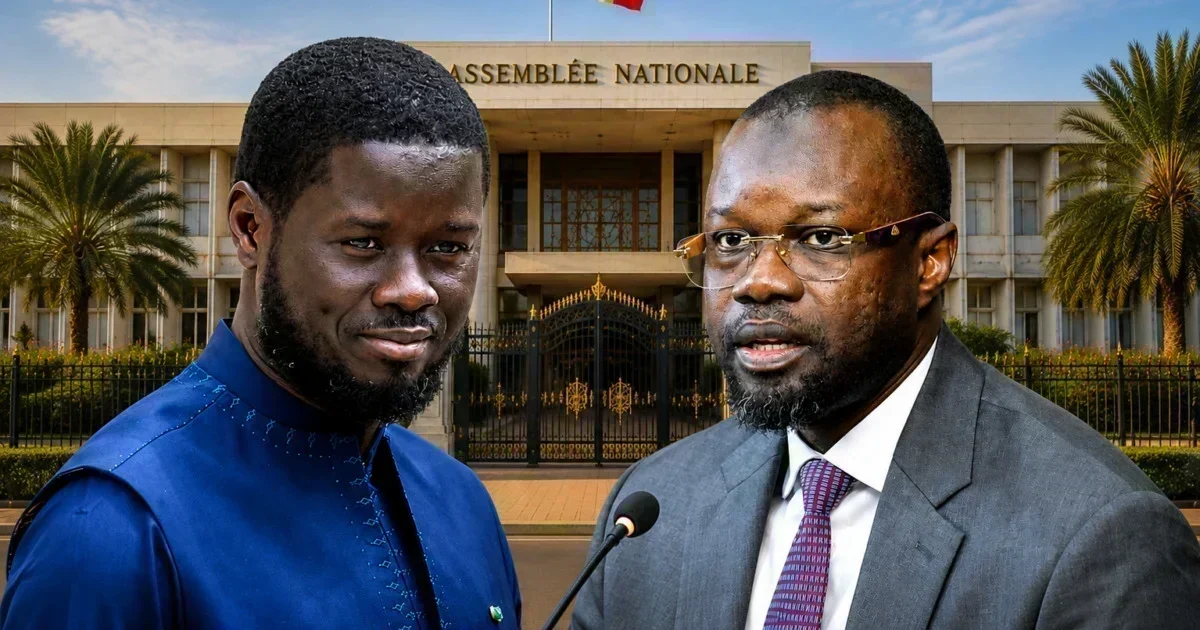
Sénégal: LFR 2026 Exécutif Assemblée Conflit Deepens Over Budget Delay
Summary
- Sénégal's 2026 Supplementary Finance Law (LFR 2026) was submitted to the National Assembly three days late, on September 18, missing the Primature's September 15 deadline.
- This delay exposed tensions between the Executive and the Assembly, with public statements revealing a disconnect between instructions and execution regarding the LFR's transmission.
- The transmission required re-initiation with a new presidential decree, signed by Bassirou Diomaye Faye, after an earlier decree from June 29, 2026, was not acted upon.
- Constitutional articles and Organic Law n° 2020-07 of February 26, 2020, govern the budget process, requiring specific timelines for parliamentary review, which cannot commence without formal receipt of the LFR.
- This situation is part of a broader institutional power struggle, linking the executive's adherence to its calendar with the legislature's ability to perform its essential oversight duties.
Delayed Submission Sparks Institutional Tensions
This unfolding situation transcends a mere administrative oversight, representing a significant Sénégal bras de fer institutionnel budgétaire that extends beyond the simple receipt of a document.
The 2026 Supplementary Finance Law (LFR 2026) in Sénégal has become the focal point of a significant institutional disagreement between the Executive and the National Assembly. The legislative body formally received the document on Friday, September 18, three days beyond the deadline initially established by the Primature for its submission. This delay immediately underscored existing procedural tensions.
Prime Minister Ahmadou Alhaminou Mohamed Lô had, on September 10, specifically instructed Minister Cheikh Diba to ensure the project's transmission by September 15. However, a public statement from Ousmane Sonko, denying any notification of the LFR's receipt, brought to light a clear discrepancy between the executive's stated directive and its actual implementation. This procedural misstep required a re-initiation of the transmission process.
A new decree, specifically Decree n° 2026-1645, signed by President Bassirou Diomaye Faye, was issued to replace an earlier decree dated June 29, 2026, which had evidently not been acted upon. This replacement was essential to formally seize the Assembly with the budget proposal, marking a critical step in the **procédure budgétaire Sénégal** and highlighting the initial challenges in the **Sénégal LFR 2026 Exécutif Assemblée conflit**.
Legal Framework for Budgetary Scrutiny
The legal and regulatory framework governing financial legislation in Sénégal is robust, yet it has become central to the current institutional friction. Article 68 of the Constitution explicitly grants the National Assembly the authority to vote on finance bills, stipulating that this process must adhere to conditions set forth by an organic law. Complementing this, Article 42 of the Constitution empowers the President of the Republic to define the nation's policy direction. Within this constitutional structure, the government holds the initiative for budgetary matters, tasked with preparing the finance project before its formal transmission to deputies via a decree of referral, which must be signed by the head of state.
The specific procedural steps for the preparation, presentation, and examination of finance laws are meticulously detailed in Organic Law n° 2020-07, enacted on February 26, 2020. This law outlines that, following its deposit, a **Loi de finances rectificative 2026 Sénégal** should generally be distributed to deputies a minimum of ten days prior to its examination in a plenary session, unless an urgent procedure is invoked. Subsequently, the Finance and Budget Control Commission is mandated to conduct hearings with the relevant minister, thoroughly review the articles of the bill, and compile a comprehensive report. Crucially, this entire sequence of parliamentary control cannot commence until the LFR has been officially received by the General Secretariat of the Assembly. This intricate process underscores the direct link between the governmental calendar for submission and the time required for thorough parliamentary scrutiny.
Furthermore, a proposal to revise this organic framework, specifically concerning the transparency of state special funds, was declared admissible by the Bureau of the National Assembly earlier in September, indicating ongoing efforts to refine budgetary oversight. In a related development, the Constitutional Council, on August 25, 2026, ruled a proposed law on special credits inadmissible, a decision that aligned with the government's position. This highlights the role of judicial review in the broader **conflit constitutionnel Sénégal budget**.
Implications of the Institutional Standoff
This unfolding situation transcends a mere administrative oversight, representing a significant **Sénégal bras de fer institutionnel budgétaire** that extends beyond the simple receipt of a document. The core of the **Sénégal LFR 2026 Exécutif Assemblée conflit** lies in the executive's obligation to adhere to its established budgetary calendar and the legislative branch's fundamental right to exercise its oversight responsibilities. Deputies are unable to initiate their crucial control functions until the finance project has been formally transmitted and received.
The direct consequence of such delays is a potential impediment to effective parliamentary scrutiny, as the governmental timeline for submission is inextricably linked to the legislative body's capacity for thorough review. This dynamic highlights the critical importance of procedural adherence for both branches of government. The ongoing tensions underscore the need for clear communication and strict compliance with established legal frameworks to ensure the smooth functioning of the state's financial processes and to uphold the principles of checks and balances inherent in the nation's constitutional order.
Practical Implications
Lawyers advising on public finance or government contracts in Senegal should monitor the resolution of this institutional conflict, as delays in the LFR 2026 adoption could impact budgetary allocations and legislative certainty. This situation highlights the critical importance of adhering to constitutional and organic law procedures for budget approval.
Source
Source: Original reporting via Senenews
How does this affect you?
Get an AI analysis of this article grounded in your jurisdictions, practice areas, and any policy documents you've uploaded to Wansom.
Finish Reading the Full Story and the Expert Analysis.
Get the latest legal & regulatory intelligence in Senegal
Wansom is AI and can make mistakes.