
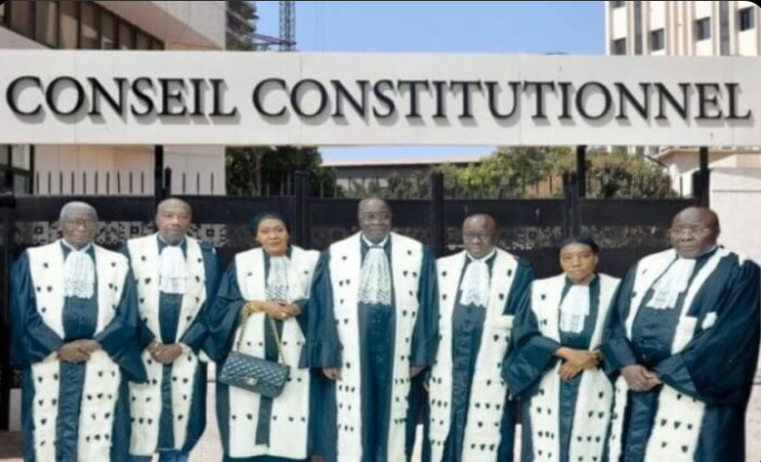
Senegal Constitutional Council: Rules on Special Funds Law Framework
Summary
- Babacar Ba, President of the Forum du Justiciable, called on Senegalese political figures to learn from a recent Constitutional Council decision.
- The ruling by the Senegal Constitutional Council concerned a proposed law designed to establish a framework for special funds.
- Ba emphasized that statutory frameworks should not be utilized as tools for political discord or adversarial engagements.
What Happened
He emphasized that statutory frameworks should not serve as tools for political discord or adversarial engagements.
Babacar Ba, who leads the Forum du Justiciable, recently issued a public appeal to Senegal's political class. His message underscored the importance of reflecting on the implications of a recent ruling by the nation's Constitutional Council. This significant decision pertained to a legislative proposal specifically designed to regulate special funds, a critical area of public finance. Ba's intervention highlights a moment of political tension surrounding the legislative process and the role of judicial review in Senegal.
The call from the president of the Forum du Justiciable was not merely an observation but a direct admonition. He emphasized that statutory frameworks should not serve as tools for political discord or adversarial engagements. Instead, Ba advocated for a constructive approach, urging all stakeholders to view the Constitutional Council's pronouncement as an opportunity for collective learning and adherence to established legal principles. This perspective aims to steer political discourse away from confrontation and towards a more unified understanding of legal governance.
Legal and Regulatory Context
The Constitutional Council, or Conseil constitutionnel, plays a pivotal role in Senegal's legal architecture, acting as the ultimate arbiter of constitutional matters. Its recent decision concerning the proposed law on the framework for special funds (loi encadrement fonds spéciaux) underscores its authority in reviewing legislative initiatives before their full enactment. Special funds, often managed with a degree of discretion, have historically been a subject of scrutiny regarding transparency and accountability in public administration, not just in Senegal but across many jurisdictions.
The proposed legislation, referred to as a "proposition de loi," indicates that the initiative originated from within the legislative body rather than the executive. The Council's review of such a bill is a standard part of the Senegalese constitutional process, ensuring that new laws align with the fundamental principles enshrined in the nation's constitution. This particular ruling on the Senegal Constitutional Council special funds law therefore carries significant weight for the future of public financial management and legislative oversight.
Why It Matters
Babacar Ba's statement, urging political actors to "learn lessons" from the Constitutional Council's decision, points to the broader implications of this ruling for democratic governance in Senegal. His admonition that "the law must not become an instrument of confrontation" suggests an underlying political climate where legislative processes could be perceived as battlegrounds rather than mechanisms for consensus-building. The Council's intervention in the matter of special funds (fonds spéciaux) provides a crucial check on legislative power and reinforces the principles of droit constitutionnel sénégalais.
This decision sets a precedent for how future legislative efforts concerning public finances will be scrutinized and interpreted. It reinforces the idea that even laws aimed at regulating sensitive areas like special funds must withstand rigorous constitutional review. For those involved in gouvernance fonds publics, the ruling signals a continued emphasis on accountability and the rule of law, potentially influencing future policy debates and legislative drafting. The outcome of this review by the Conseil constitutionnel fonds spéciaux is therefore not just a legal technicality but a foundational moment for the country's institutional stability and the integrity of its financial oversight mechanisms.
Practical Implications
Lawyers and compliance officers in Senegal should monitor the full text and reasoning of the Constitutional Council's decision on special funds, as it sets a precedent for legislative oversight of public finances and constitutional interpretation, potentially impacting future governance and accountability frameworks.
Source
How does this affect you?
Get an AI analysis of this article grounded in your jurisdictions, practice areas, and any policy documents you've uploaded to Wansom.
Wansom is AI and can make mistakes.