
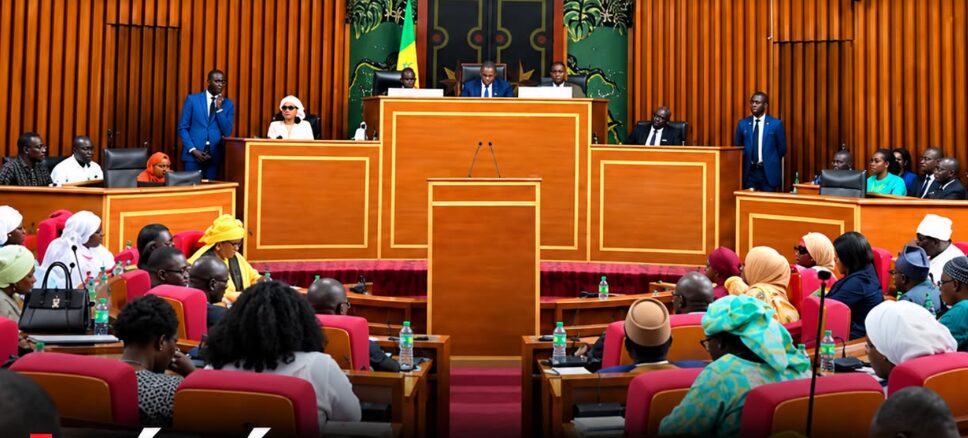
Sénégal Assemblée Nationale: Rejects PLFR 2026, Demands 2027 Budget
Summary
- The Senegalese National Assembly strongly reacted to budgetary tensions with the government.
- This reaction was formalized in a communiqué on November 5, 2026, by Alphonse Mané Sambou, President of the Finance and Budget Control Committee.
- The Assembly's stance follows its rejection of the PLFR 2026 (Loi de Finances Rectificative 2026).
- The legislative body has adopted a confrontational posture against the Minister of Finance.
- The National Assembly is demanding the withdrawal of the proposed 2027 budget.
Escalating Budgetary Dispute
The core of the National Assembly's current offensive is a clear and unequivocal demand for the withdrawal of the proposed 2027 budget.
The National Assembly of Senegal has issued a forceful response to the ongoing fiscal disagreements with the government, marking a significant escalation in the country's budgetary tensions. This strong reaction was formally communicated on November 5, 2026, through an official statement released by Alphonse Mané Sambou, who serves as the President of the influential Finance and Budget Control Committee. The legislative body's current stance represents a critical juncture in the relationship between the executive and legislative branches, particularly concerning financial oversight.
This decisive move by the Assemblée nationale follows directly from its recent rejection of the Loi de Finances Rectificative 2026, commonly referred to as the PLFR 2026. In the wake of this rejection, the Assembly has adopted a confrontational posture towards the Minister of Finance, signaling its deep dissatisfaction with the executive's financial proposals. The legislative body's firm position underscores a growing conflit budgétaire Sénégal, emphasizing the Assembly's determination to assert its constitutional prerogatives in matters of national finance and expenditure.
Legislative Actions and Demands
The core of the National Assembly's current offensive is a clear and unequivocal demand for the withdrawal of the proposed 2027 budget. This unprecedented call for the budget 2027 Sénégal retrait highlights the depth of the disagreement and the legislative body's determination to compel a re-evaluation of the government's financial blueprint for the upcoming year. The initial rejection of the PLFR 2026, a supplementary finance law intended to adjust the current year's budget, served as the catalyst for this more aggressive posture, indicating a fundamental disagreement beyond mere technicalities.
Alphonse Mané Sambou, as the head of the powerful Commission Finances Contrôle Budgétaire Sénégal, is at the forefront of this legislative push. His official communiqué on November 5, 2026, not only confirmed the rejection of the Sénégal Assemblée nationale PLFR 2026 but also articulated the Assembly's firm stance against the Minister of Finance. This public declaration signifies a critical moment in the ongoing fiscal standoff, indicating that the Assembly is prepared to use its full legislative powers to influence the government's financial planning and ensure greater accountability.
Broader Implications of the Standoff
The rejection of the Sénégal Assemblée nationale PLFR 2026 and the subsequent demand for the withdrawal of the 2027 budget carry substantial implications for the nation's governance and economic stability. Such a direct challenge from the legislative branch to the executive over financial legislation is a rare occurrence and points to a significant breakdown in consensus regarding national fiscal priorities. The legislative body's insistence on the budget 2027 Sénégal retrait could lead to considerable delays in the approval process for the upcoming year's financial framework, potentially impacting public spending and economic planning.
This ongoing dispute, characterized by the Assemblée nationale's strong reaction and the specific actions taken by the Commission Finances Contrôle Budgétaire Sénégal under Alphonse Mané Sambou, underscores the critical checks and balances inherent in the country's political system. The firm opposition to the Minister of Finance following the rejection of the Loi de Finances Rectificative 2026 suggests that the Assembly is not merely seeking minor amendments but a fundamental re-evaluation of the government's financial strategy. The resolution of this profound conflit budgétaire Sénégal will be crucial for the effective functioning of public services, the predictability of the economic environment, and the overall stability of the nation's financial landscape.
Practical Implications
Lawyers and compliance officers in Senegal should closely monitor the escalating budgetary dispute between the National Assembly and the government. This legislative instability could lead to delays in the approval of the 2027 budget, potentially impacting public procurement, fiscal policy, and the regulatory environment for businesses, necessitating proactive client advice on potential operational and compliance adjustments.
Source
How does this affect you?
Get an AI analysis of this article grounded in your jurisdictions, practice areas, and any policy documents you've uploaded to Wansom.
Wansom is AI and can make mistakes.