
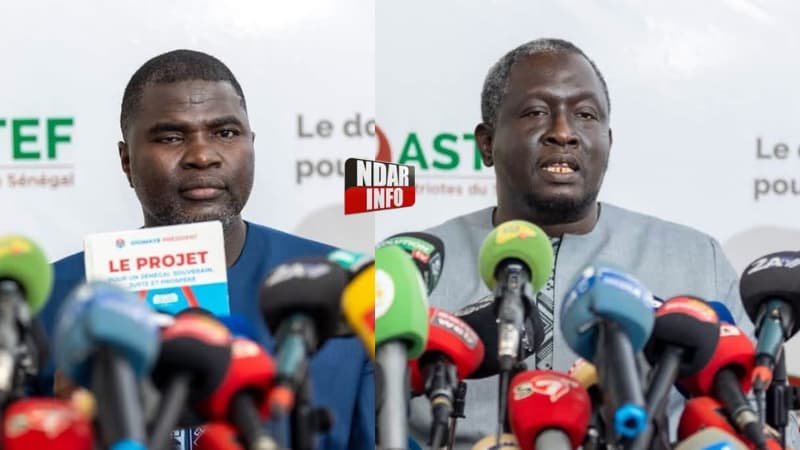
Amadou Ba: Sénégal Government Lacks Fonds Spéciaux Transparency
Summary
- Pastef deputies expressed strong disapproval after their proposals on oil contracts, prison mental health, and special funds oversight were rejected in a parliamentary commission.
- Deputy Amadou Ba accused the government of abandoning transparency commitments, particularly concerning special funds, and criticized its referral of the issue to the Constitutional Council.
- The government, through Justice Minister Me Moussa Sarr, defended executive discretion for special funds, citing the "soutoureu" principle for social actions.
- Pastef sought to require parliamentary review of oil contracts before signing and to integrate mental health into correctional facility health policies.
- The dispute, which saw Pastef reject government amendments in commission, is expected to continue in a plenary session, potentially involving a "blocked vote" procedure.
Legislative Standoff Over Transparency
Deputy Amadou Ba has been particularly vocal, accusing the government of abandoning its commitment to transparency regarding these critical financial mechanisms.
Deputies from the Pastef party recently voiced strong objections following an extraordinary parliamentary session in Senegal, where several of their key proposals were rejected in commission. The core of the disagreement centers on issues of transparency and parliamentary oversight, particularly concerning government contracts and financial mechanisms. Among the rejected initiatives were proposals related to oil contracts, the integration of mental health services within correctional facilities, and, most notably, the strengthening of controls over special government funds.
This dispute highlights a broader struggle for parliamentary control over government actions and the extent of executive accountability in Senegal. Deputy Amadou Ba, a prominent Pastef figure, has been particularly vocal, accusing the government of abandoning its commitment to transparency regarding these critical financial mechanisms. His statements underscore a growing tension between the legislative and executive branches over fiscal scrutiny and public disclosure.
The Battle for Special Funds Oversight
At the heart of the contention lies the issue of `fonds spéciaux`, or special government funds, with Pastef advocating for enhanced parliamentary scrutiny to ensure `transparence dépenses gouvernementales Sénégal`. However, Justice Minister Me Moussa Sarr defended the executive's need for discretionary spending, especially for social initiatives, invoking the principle of "soutoureu," which implies a degree of privacy or discretion.
Amadou Ba challenged this argument, asserting that the state already possesses established bodies tasked with social missions, thereby questioning the necessity of maintaining broad executive discretion over these funds. He further criticized the government's decision to refer the control of these special funds to the `Conseil constitutionnel fonds spéciaux Sénégal`, interpreting it as a deliberate attempt to circumvent the National Assembly's oversight role. Ba linked this move to an alleged refusal by the government to enact a constitutional amendment concerning asset declarations, framing both actions as a retreat from pledges of transparency and accountability. The `contrôle parlementaire fonds spéciaux Sénégal` debate, following the Constitutional Council's invalidation of Pastef's bill on special funds in August 2026, underscores a fundamental disagreement on the limits of executive power and legislative oversight.
Broader Legislative Push for Accountability
Beyond the special funds, Pastef deputies sought to mandate the presentation of `contrats pétroliers Assemblée nationale Sénégal` to the National Assembly *before* their signing by the President. While this proposal would not grant the Assembly approval or rejection power, it aimed to inform elected officials and the public about significant state commitments. This initiative reflects a desire for greater public awareness and accountability in major economic dealings.
Another significant proposal championed by Pastef, and highlighted by parliamentary group president Ayib Daffé, was the integration of `santé mentale milieu carcéral Sénégal` into the broader health policy for correctional facilities. Daffé presented this as an example of the legislative initiative the National Assembly can undertake. The rejection of these amendments in commission, as reported by Ndarinfo, indicates that the disagreement is likely to escalate to a plenary session. There, a "blocked vote" procedure could potentially be invoked, allowing the government to force a single vote on a text, accepting only its preferred amendments. This `Pastef dénonciation gouvernement Sénégal` signals a persistent tension over the extent of parliamentary influence and executive accountability.
Practical Implications
This article highlights an ongoing political and legal dispute in Senegal over parliamentary oversight of government spending (special funds) and major contracts (oil). Lawyers advising clients on public procurement, government contracts, or legislative compliance in Senegal should monitor this debate for potential shifts in transparency requirements, parliamentary approval processes, or challenges to executive discretion, which could impact contractual validity or public disclosure obligations.
Source
How does this affect you?
Get an AI analysis of this article grounded in your jurisdictions, practice areas, and any policy documents you've uploaded to Wansom.
Finish Reading the Full Story and the Expert Analysis.
Get the latest legal & regulatory intelligence in Senegal
Wansom is AI and can make mistakes.