
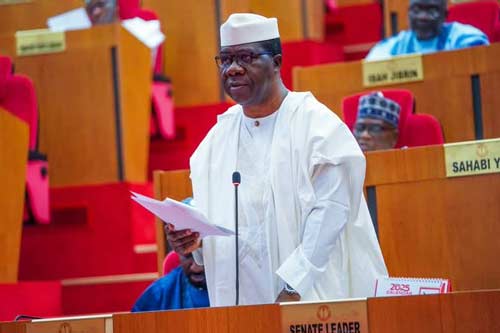
Senate Leader Bamidele: National Assembly to Regulate State Police
Summary
- Senate Leader Opeyemi Bamidele announced a new operational bill for state police.
- The National Assembly is collaborating with the executive arm on this legislation.
- The bill aims to prevent the abuse of state police by governors and other political authorities.
- It will establish clear rules, safeguards, and institutional structures for state police regulation.
- The legislation also seeks to define the powers between federal and state governments concerning policing.
Legislative Initiative Unveiled
Lawyers should closely monitor the development and eventual content of this proposed legislation, as it will redefine the operational scope and oversight of state police in Nigeria.
Senator Opeyemi Bamidele, who serves as the Senate Leader, has publicly announced a significant legislative undertaking by the National Assembly. This effort involves a collaborative partnership with the executive arm of government, focused on developing a new operational bill. The primary objective of this forthcoming legislation is to establish a robust framework for state police, specifically designed to curtail potential misuse by political authorities.
This initiative underscores a concerted drive to enhance the governance and accountability of law enforcement at the state level. The proposed bill is expected to introduce a comprehensive set of guidelines and operational parameters, addressing concerns about the autonomy and oversight of state police forces. The collaboration between the legislative and executive branches signals a unified approach to reforming the security architecture within Nigeria.
Defining Operational Standards and Powers
A core tenet of the planned legislation, as articulated by Senator Bamidele, is the prevention of abuse of state police by governors and other political figures. The Senate Leader emphasized that the bill would meticulously establish clear rules, robust safeguards, and well-defined institutional structures. These measures are intended to ensure that state police operations remain within their designated scope and are not subject to arbitrary influence or deployment for partisan interests.
Furthermore, the legislative effort aims to precisely delineate the powers vested in both federal and state entities regarding policing. This clarification of jurisdictional boundaries is crucial for effective governance and for preventing conflicts of authority. By setting explicit standards and rules, the National Assembly seeks to create a predictable and accountable environment for state police, thereby strengthening the overall security framework across Nigeria.
Implications for Nigerian Governance
The introduction of this bill represents a pivotal moment for the regulation of state police in Nigeria, with far-reaching implications for the balance of power between different tiers of government. By defining federal and state powers more clearly in the context of law enforcement, the legislation could reshape inter-governmental relations and the operational landscape for security agencies. Lawyers should closely monitor the development and eventual content of this proposed legislation, as it will redefine the operational scope and oversight of state police in Nigeria.
This legislative move is poised to significantly impact how law enforcement interacts with citizens and political structures, potentially leading to a more standardized and less politicized approach to state-level policing. The establishment of stringent rules and safeguards is critical for fostering public trust and ensuring that state police forces serve their intended purpose of maintaining peace and order, rather than becoming tools for political leverage. The ongoing discussions and eventual passage of this Nigeria state police bill will be a key development for the nation's legal and political future.
Practical Implications
Lawyers should closely monitor the development and eventual content of this proposed legislation, as it will redefine the operational scope and oversight of state police in Nigeria. This could significantly impact advice on law enforcement interactions, constitutional law, and inter-governmental relations for clients operating within the country.
Source
How does this affect you?
Get an AI analysis of this article grounded in your jurisdictions, practice areas, and any policy documents you've uploaded to Wansom.
Finish Reading the Full Story and the Expert Analysis.
Get the latest legal & regulatory intelligence in Nigeria
Wansom is AI and can make mistakes.