
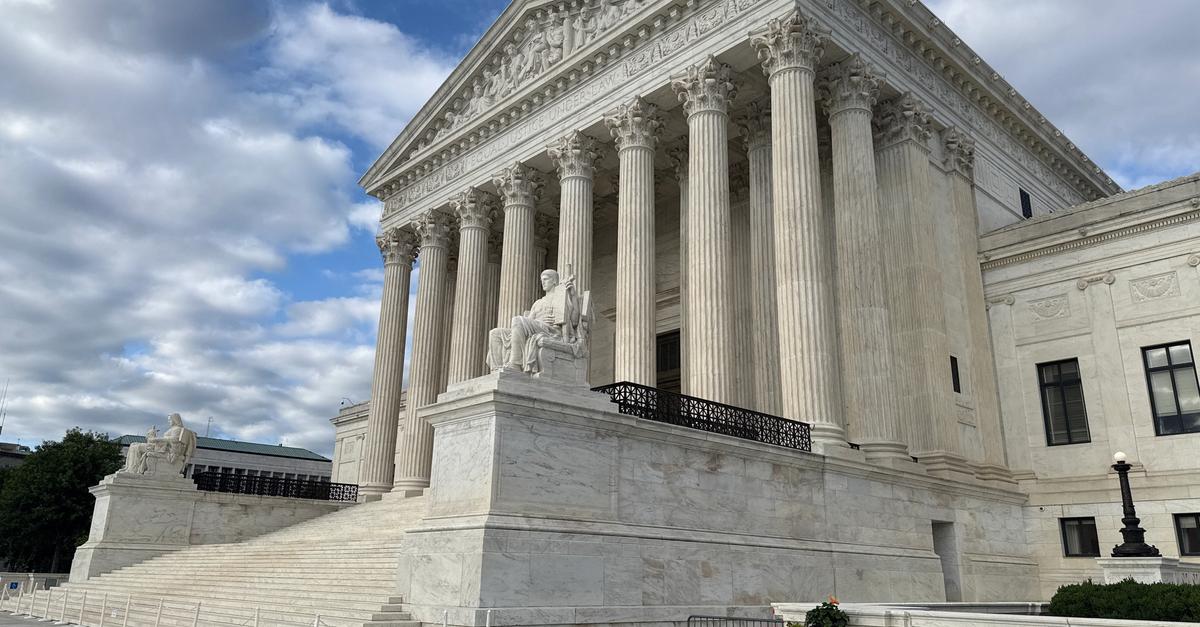
SCOTUSblog: Announces Supreme Court Forecasting Contest
Summary
- SCOTUSblog has launched a new contest for predicting Supreme Court case outcomes.
- The "SCOTUSblog Good Judgment challenge" is a collaboration with Good Judgment Inc.
- Participants will use the GJ Open platform to forecast decisions for the 2026-27 Supreme Court term.
- A key feature involves comparing human predictions against artificial intelligence models.
- Top forecasters will be recognized on SCOTUSblog in July and may receive merchandise.
A New Forecasting Challenge
This direct comparison, central to the GJ Open SCOTUSblog collaboration, is designed to answer a crucial question: have machines now surpassed human judgment in the complex domain of Supreme Court outcome prediction?
SCOTUSblog has announced an innovative new initiative, inviting its readership to participate in a unique SCOTUSblog Supreme Court forecasting contest. This endeavor, undertaken in collaboration with Good Judgment Inc., aims to provide a formal platform for individuals to predict the outcomes of significant cases before the nation's highest court. For years, readers have frequently expressed strong convictions regarding not only how the Supreme Court *should* rule on pivotal issues but also how it *will* decide them, often communicating these confident predictions directly to SCOTUSblog. This new challenge offers a structured environment to test the accuracy of such insights.
The "SCOTUSblog Good Judgment challenge" represents a significant opportunity for those keenly interested in Supreme Court jurisprudence to engage directly with the predictive aspects of legal analysis. It moves beyond mere speculation, establishing a framework for participants to formally log their expectations for upcoming decisions. This collaborative effort seeks to harness the collective wisdom of a dedicated audience, providing a fascinating real-world experiment in legal prognostication.
Participating in the Prediction
Participation in this Supreme Court case prediction contest is designed to be straightforward and accessible. Prospective forecasters can register by visiting the dedicated sign-up page at https://www.gjopen.com/users/sign_up. The only prerequisites for entry are a valid email address, a Google account, or a Facebook account. Upon successful registration, users will be automatically directed to the specific challenge page, officially titled the "SCOTUSblog 2026-27 Supreme Court Forecasting Challenge."
On this platform, which is part of GJ Open, a free forecasting site developed by the renowned team behind the "Superforecasting" concept, participants will be tasked with assigning likelihoods to various potential outcomes for each case. This allows for nuanced predictions, moving beyond simple binary choices. Furthermore, the system permits forecasters to update their predictions as new information emerges or their understanding evolves, reflecting the dynamic nature of legal analysis. The top three most accurate forecasters will be publicly recognized on SCOTUSblog in July, with the added incentive of potentially receiving some exclusive merchandise.
Humans Versus AI in Legal Prediction
A particularly compelling aspect of this initiative is its innovative comparative element. Good Judgment Inc. will undertake a rigorous analysis, pitting the collective predictive accuracy of the SCOTUSblog forecasters against that of advanced artificial intelligence models. This direct comparison, central to the GJ Open SCOTUSblog collaboration, is designed to answer a crucial question: have machines now surpassed human judgment in the complex domain of Supreme Court outcome prediction?
This unique experiment extends beyond simply identifying the best human predictors; it serves as a real-time assessment of the current capabilities of AI in legal forecasting. By evaluating how well both human and artificial intelligence models anticipate the Court's rulings, the challenge aims to provide valuable insights into the evolving landscape of predictive analytics within the legal sphere. The results, to be revealed in July, will offer a fascinating glimpse into whether the confidence often expressed by human observers, or the computational power of AI, proves more reliable in anticipating the intricate decisions of the Supreme Court.
Practical Implications
This article announces a contest for predicting Supreme Court outcomes and does not present a direct practical implication for legal practice, compliance, or client advice. It is an engagement piece for those interested in the Court's decisions.
Source
How does this affect you?
Get an AI analysis of this article grounded in your jurisdictions, practice areas, and any policy documents you've uploaded to Wansom.
Finish Reading the Full Story and the Expert Analysis.
Get the latest legal & regulatory intelligence in United States
Wansom is AI and can make mistakes.