
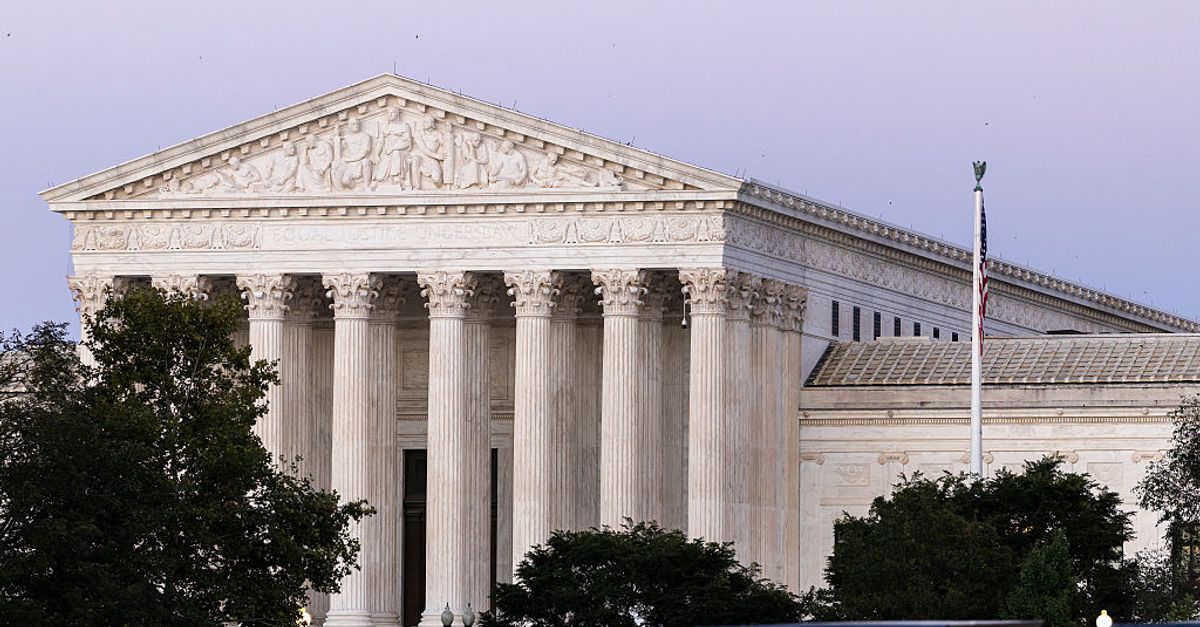
SCOTUS Denies 'Let's Go Brandon' Felon Second Amendment Review
Summary
- The Supreme Court denied hundreds of petitions for review on October 5, marking the start of its 2026-27 term.
- High-profile denials included cases on 'Let's Go Brandon' student sweatshirts, felons' Second Amendment rights, and two COVID-19 vaccine mandates.
- These denials mean lower court rulings on these issues remain the current legal standard, without new national precedent from the Supreme Court.
- The Court also requested the Solicitor General's views on several cases and remanded others, including *Mullin v. National TPS Alliance*, for reconsideration based on prior rulings.
Supreme Court Issues Orders for New Term
By denying review, the Court effectively leaves intact the decisions rendered by federal appeals courts on issues such as student free speech, the scope of Second Amendment rights for felons, and the legality of COVID-19 vaccine mandates.
The United States Supreme Court commenced its 2026-27 term by releasing a comprehensive list of orders on Monday, October 5. These directives followed a private conference held on September 28, where the justices deliberated on numerous petitions for review that had accumulated over the summer recess. This initial gathering, often referred to as the "long conference," is a customary annual event that typically results in a substantial number of denied requests for certiorari.
Indeed, the Court declined to hear hundreds of cases during this session. Among these were several high-profile disputes that had garnered significant public and legal attention. These included a challenge concerning the permissibility of students wearing "Let's Go Brandon" sweatshirts in schools, a contentious debate over the Second Amendment rights of individuals with felony convictions, and two distinct cases involving COVID-19 vaccine mandates. The Court's decision not to grant certiorari in these matters means that the lower court rulings in these specific instances will stand, without a definitive national precedent being established by the highest court.
Key Certiorari Denials and Their Impact
The Supreme Court's refusal to grant certiorari in these prominent cases carries significant implications for the legal landscape. By denying review, the Court effectively leaves intact the decisions rendered by federal appeals courts on issues such as student free speech, the scope of Second Amendment rights for felons, and the legality of COVID-19 vaccine mandates. This means that, for now, the existing circuit court precedents will continue to govern these areas of law, rather than a new, overarching national standard from the US Supreme Court.
Specifically, the denial of certiorari in the case involving "Let's Go Brandon" sweatshirts means that the lower court's stance on student expression in schools remains unchallenged at the federal level. Similarly, the ongoing debate regarding felons' Second Amendment rights SCOTUS has chosen not to address directly, leaving the current interpretations of those rights by appellate courts as the prevailing law. The two COVID-19 vaccine mandate Supreme Court cases also saw their petitions for review rejected, solidifying the lower court outcomes and avoiding a broad ruling on vaccine requirements.
Other Judicial Actions and Remands
Beyond the numerous denials, the Supreme Court also took other procedural steps during its recent orders for the 2026-27 SCOTUS term. The justices formally requested the United States Solicitor General to provide the government's perspective on several pending cases. This is a common practice when the Court seeks additional legal analysis from the executive branch before deciding whether to grant certiorari or to rule on a case.
Furthermore, the Court remanded several cases back to lower federal courts for reconsideration. These remands were specifically instructed to be reviewed in light of rulings issued by the Supreme Court during its previous term. A notable example of this action is *Mullin v. National TPS Alliance*, which was sent back to a federal appeals court. The appeals court is now tasked with re-evaluating its decision concerning the participation of Venezuelan and Haitian nationals in the Temporary Protected Status (TPS) program. This reconsideration follows the Supreme Court's June ruling, which determined that the federal statute establishing the TPS program generally restricts judicial review of the administration's decisions related to the program.
Why These Denials Matter for Legal Practice
The recent wave of US Supreme Court certiorari denials underscores a crucial aspect of the Court's role: it chooses which cases to hear, and its silence often speaks volumes. For legal practitioners, the absence of a Supreme Court ruling on these high-profile matters means that the existing legal framework, as established by circuit courts, remains the authoritative guide. There is no new national precedent to cite or challenge regarding student free speech, the Second Amendment rights of convicted felons, or the legality of vaccine mandates.
Lawyers advising clients on issues related to the 'Let's Go Brandon' free speech SCOTUS context, felons' Second Amendment rights, or COVID-19 vaccine mandates must continue to rely on the specific rulings and interpretations from their respective federal circuits. For those involved in cases concerning the Temporary Protected Status program, particularly in the wake of the *Mullin v. National TPS Alliance* remand, close monitoring of the appeals court's reconsideration is essential, as the legal landscape for TPS beneficiaries could evolve based on the Supreme Court's earlier guidance.
Practical Implications
The Supreme Court's denial of certiorari on these high-profile cases means that the lower court rulings on issues like student free speech, felons' Second Amendment rights, and vaccine mandates remain the current legal standard, providing no new national precedent for practitioners to cite or challenge. Lawyers advising clients on these matters should continue to rely on existing circuit law, while those involved in TPS cases should monitor the appeals court's reconsideration of *Mullin v. National TPS Alliance*.
Source
How does this affect you?
Get an AI analysis of this article grounded in your jurisdictions, practice areas, and any policy documents you've uploaded to Wansom.
Finish Reading the Full Story and the Expert Analysis.
Get the latest legal & regulatory intelligence in United States
Wansom is AI and can make mistakes.