
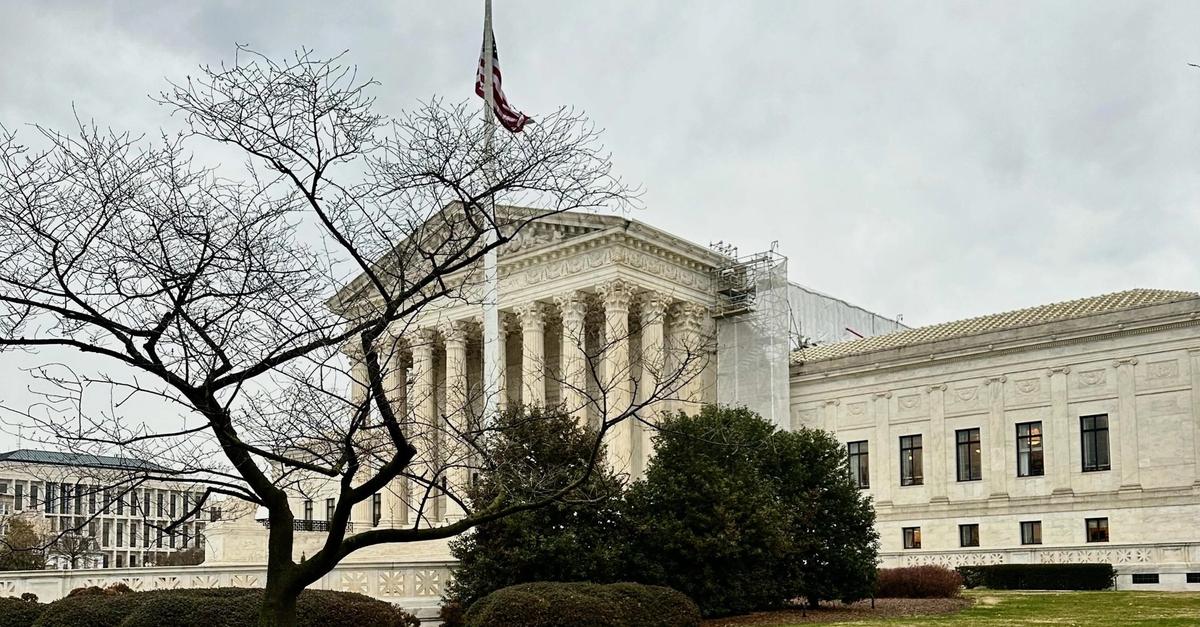
SCOTUS: New Term Features 11 Criminal Cases, High Focus
Summary
- The US Supreme Court's upcoming term includes 11 criminal law or related cases out of 25 granted reviews, representing 40% of its current docket.
- Key cases involve challenges to AR-15 bans, the requirement for 12-person criminal juries, and whether seizing a plane for a small amount of beer constitutes an excessive fine.
- More cases may be added to the US Supreme Court criminal docket after the Court's September 28 "long conference."
- A Congressional Research Service report identified nearly 100 lower court disagreements from 2025, which the Supreme Court has jurisdiction to resolve.
- Supreme Court Rules 10(a) and (b) explicitly cite lower court splits on federal questions as grounds for review.
A Busy Criminal Docket Ahead
The significant number of SCOTUS criminal cases new term, coupled with the ongoing presence of circuit splits, holds profound implications for the practice of federal law.
The US Supreme Court's upcoming term is poised to feature a substantial number of criminal law cases, signaling a significant focus on federal criminal justice issues. Out of the 25 cases already granted review by the high court, a notable 11 fall under the umbrella of criminal law or related matters. This constitutes a robust 40% of the current US Supreme Court criminal docket, indicating a busy period for legal practitioners and scholars monitoring constitutional and statutory interpretations in this area.
This substantial allocation of the docket to criminal cases underscores the potential for new precedents to be established across various facets of federal law. While not all will command national headlines, the sheer volume suggests a concerted effort by the justices to address pressing questions. Furthermore, the Court is expected to grant additional cases for review following its "long conference" scheduled for September 28, which could further expand the number of criminal matters on its calendar.
Key Cases on the Horizon
Among the cases already accepted for review are several high-profile disputes that could redefine fundamental rights and government powers. One prominent area involves challenges to bans on specific types of firearms, including AR-15 and similar semi-automatic rifles, which will bring "AR-15 ban cases SCOTUS" into sharp focus. These cases delve into the Second Amendment's scope and its application to modern weaponry.
Another significant question before the justices concerns the composition of juries in criminal proceedings. The Court will consider whether juries in criminal cases must invariably consist of 12 persons, a ruling that could impact trial procedures nationwide and address the "12-person jury Supreme Court" debate. Additionally, the justices will examine the Eighth Amendment's prohibition against excessive fines, specifically in a case questioning whether the seizure of an aircraft for the unlawful transport of a six-pack of beer constitutes an unconstitutional "excessive fines unconstitutional SCOTUS" violation.
Addressing Circuit Splits
Beyond the cases already on the docket, there is a broader discussion about the Supreme Court's potential to resolve more disagreements among lower courts. The Court possesses statutory jurisdiction to address "Supreme Court circuit splits," which arise when different federal or state courts disagree on significant points of federal statutory or constitutional law. This mechanism is explicitly recognized in the Supreme Court's own Rules 10(a) and 10(b), which highlight such splits as a primary reason for granting review.
A recent Congressional Research Service report, spanning 68 pages, detailed nearly 100 instances of lower court disagreements from 2025 alone. This little-reported document underscores the prevalence of these legal divergences across the country. While the Court has a substantial criminal docket for the upcoming term, the existence of so many unresolved circuit splits suggests an opportunity for the justices to take on even more cases to provide clarity and uniformity in federal law.
Implications for Federal Law
The significant number of SCOTUS criminal cases new term, coupled with the ongoing presence of circuit splits, holds profound implications for the practice of federal law. Lawyers advising clients or litigating in federal courts must closely monitor these developments, as the Court's decisions could establish new precedents impacting constitutional rights, criminal procedure, and the interpretation of federal statutes. The resolution of these cases will shape the legal landscape for years to come, affecting everything from gun rights to property forfeiture and jury composition.
The Court's engagement with such a diverse array of criminal matters reinforces its role as the ultimate arbiter of federal law. The potential for the Court to address even more circuit splits, as identified by the CRS report, further emphasizes the dynamic nature of federal jurisprudence. This upcoming term promises to be a critical period for understanding the evolving boundaries of criminal law in the United States.
Practical Implications
Lawyers practicing or advising on US federal criminal law should closely monitor the upcoming Supreme Court term, as a significant portion of the docket involves criminal cases that could establish new precedents on constitutional rights, statutory interpretation, and resolve existing circuit splits.
Source
How does this affect you?
Get an AI analysis of this article grounded in your jurisdictions, practice areas, and any policy documents you've uploaded to Wansom.
Finish Reading the Full Story and the Expert Analysis.
Get the latest legal & regulatory intelligence in United States
Wansom is AI and can make mistakes.