
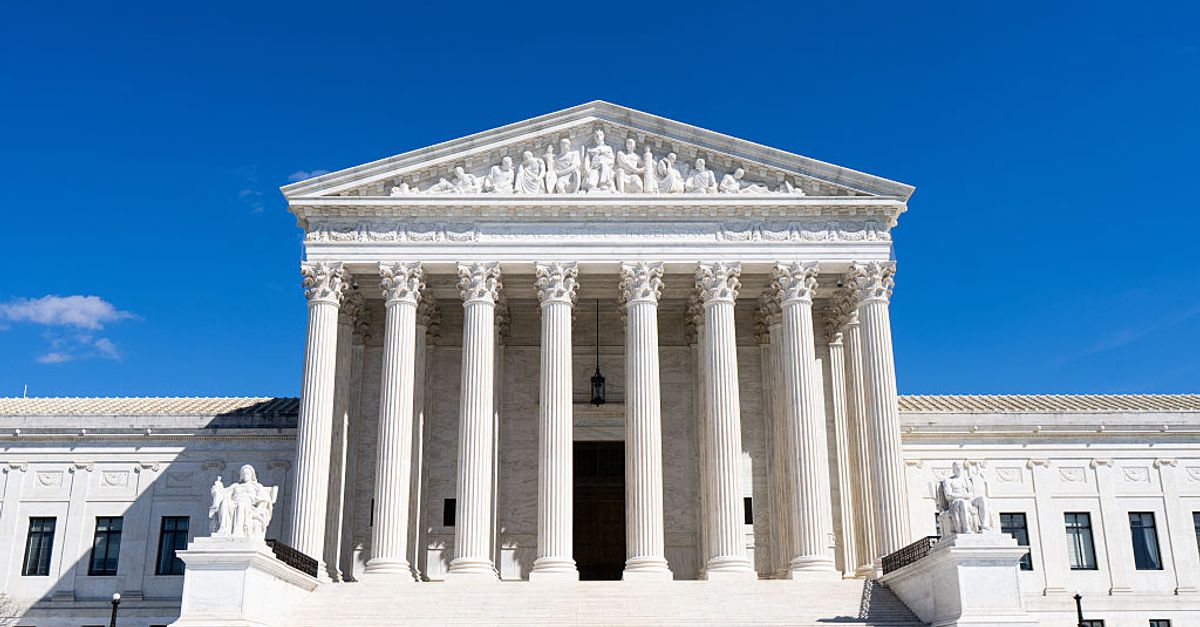
SCOTUS: Administrative Closure Immigration Regulation Stays Blocked
Summary
- The Supreme Court declined to restore a Biden-era regulation that allowed immigration judges to suspend deportation proceedings.
- The Court's brief, unsigned order rejected a request from three cities and an immigrant legal services group to pause a Texas-DOJ agreement.
- This agreement, reached after Texas sued, had effectively nullified the "administrative closure" rule.
- The administrative closure rule, adopted by the Executive Office for Immigration Review in 2024, permitted judges to suspend cases for reasons like allowing crime victims to seek asylum.
- Texas argued the EOIR lacked authority to adopt the rule, claiming federal law requires a final decision on removability.
What Happened
For immigration lawyers and compliance officers, this outcome means that a key procedural tool for managing client cases, especially those seeking forms of relief like asylum, remains unavailable or severely restricted.
The Supreme Court recently opted not to reinstate a regulation from the Biden administration that would have permitted immigration judges to temporarily halt certain deportation proceedings. In a concise, unsigned order issued on Tuesday, the nation's highest court rejected an appeal from three municipalities and an immigrant legal services organization. These entities had sought to suspend an existing agreement between the state of Texas and the U.S. Department of Justice, an accord that effectively nullified the contested rule. No dissenting opinions were recorded by the justices.
This decision by the Supreme Court leaves in place the current situation where immigration judges' discretion to pause deportation cases is significantly limited. The request to the high court aimed to reverse the impact of the Texas-DOJ agreement, which had previously eliminated the mechanism for administrative closure. The outcome means that the ability to suspend proceedings, a tool that could offer crucial time for individuals to pursue other forms of immigration relief, remains unavailable.
The Administrative Closure Mechanism
At the core of this legal contention is a provision known as “administrative closure,” which was formally adopted by the Executive Office for Immigration Review (EOIR) in 2024. The EOIR, an agency operating under the Department of Justice, had established this rule to empower immigration judges to suspend specific deportation cases. This suspension was intended to facilitate various processes, such as allowing a victim or witness of a crime to pursue avenues for relief, including asylum, through the U.S. Citizenship and Immigration Services (USCIS), a distinct federal agency.
The regulation provided a procedural pathway for judges to manage their dockets and offer flexibility in complex immigration scenarios. By temporarily closing a case, it allowed individuals to address other legal or administrative requirements without the immediate pressure of an ongoing deportation proceeding. This mechanism was designed to integrate with other parts of the immigration system, ensuring that individuals could access the full range of available remedies.
The Legal Challenge from Texas
The administrative closure rule faced a direct legal challenge from the state of Texas, which initiated a federal lawsuit in June of this year. The case was filed in Wichita Falls and subsequently assigned to Chief U.S. District Judge Reed O’Connor of the U.S. District Court for the Northern District of Texas. Texas characterized the administrative-closure rule as a component of the “Biden-Harris Administration’s campaign to undermine our immigration laws,” asserting that the EOIR lacked the proper authority to implement such a regulation.
Texas's legal argument contended that federal statutes mandate an immigration judge to render a definitive decision at the conclusion of a proceeding, specifically determining “whether an alien is removable from the United States.” This interpretation suggested that the administrative closure rule, by allowing for suspension rather than a final determination, contravened existing federal law. Remarkably, within mere hours of the lawsuit's submission, the Department of Justice and Texas jointly requested Judge O’Connor to issue a final judgment, indicating a swift resolution to the dispute that ultimately led to the rule's invalidation.
Implications for Immigration Proceedings
The Supreme Court's decision to not intervene in the Texas-DOJ agreement carries significant implications for the landscape of immigration law and practice. With the administrative closure regulation effectively sidelined, immigration judges no longer possess the broad discretion to suspend deportation proceedings that the Biden-era rule had sought to restore. This curtailment directly impacts the strategic options available to individuals facing removal, particularly those who might benefit from a temporary pause to gather evidence, pursue alternative relief, or address other legal matters.
For immigration lawyers and compliance officers, this outcome means that a key procedural tool for managing client cases, especially those seeking forms of relief like asylum, remains unavailable or severely restricted. The absence of this mechanism necessitates a re-evaluation of case strategies, as the ability to secure a suspension of proceedings to allow for applications to U.S. Citizenship and Immigration Services is now limited. The ruling underscores the ongoing legal battles over immigration policy and the procedural avenues available within the U.S. immigration system.
Practical Implications
Immigration lawyers and compliance officers should be aware that the Supreme Court's decision not to restore the Biden-era administrative closure regulation means that immigration judges' ability to suspend deportation proceedings remains curtailed. This impacts strategic options for clients, particularly those seeking relief like asylum, as the mechanism for pausing proceedings is currently unavailable or significantly restricted.
Source
How does this affect you?
Get an AI analysis of this article grounded in your jurisdictions, practice areas, and any policy documents you've uploaded to Wansom.
Finish Reading the Full Story and the Expert Analysis.
Wansom is AI and can make mistakes.