
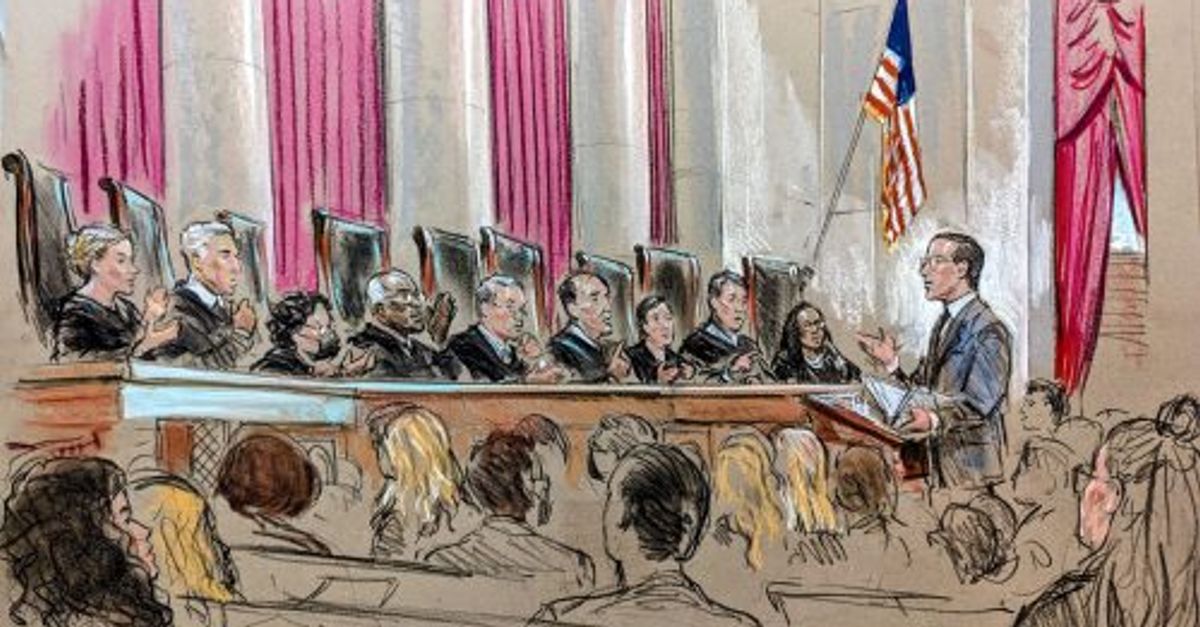
SCOTUS 2026-27 Term First Oral Arguments Analysis: Judicial Intervention Key
Summary
- Justice Ketanji Brown Jackson, typically a frequent speaker, began the 2026-27 term quietly in Suncor Energy v. Boulder County.
- She quickly resumed her dominant speaking role, leading three of the next four arguments and speaking significantly more than her colleagues.
- A key theme of the 2026-27 Supreme Court October session was the availability and conditions of judicial intervention.
- Cases heard included climate litigation, veterans' claims, retirement investments, and environmental review.
- Justices Jackson, Sotomayor, and Gorsuch showed patterns of focusing on the same litigating side, despite ideological differences.
Initial Observations from the October Session
The cases themselves, encompassing areas like climate litigation, veterans' constitutional claims, retirement-plan investments, and environmental review, collectively underscored a central inquiry: the precise conditions under which judicial intervention is appropriate and available.
The initial oral arguments of the Supreme Court's 2026-27 term offered a fascinating glimpse into the court's dynamics, particularly concerning Justice Ketanji Brown Jackson's participation. Typically recognized as the most vocal justice during oral arguments, Jackson commenced the term with an uncharacteristically subdued presence. In the first case heard, Suncor Energy v. Boulder County, her contributions accounted for only 12.1% of the court's total words, placing her fourth among the participating justices.
However, this period of relative quietude proved to be short-lived. Justice Jackson quickly reasserted her customary speaking style, taking the lead in three of the subsequent four arguments. By the conclusion of the six-case sitting, her total word count reached 6,254, significantly surpassing that of any of her colleagues. This rapid shift from an initial quiet phase to her characteristic dominance became a notable pattern in the early days of the 2026-27 Supreme Court October session.
Emerging Thematic Patterns in Key Cases
A crucial aspect of the SCOTUS 2026-27 term first oral arguments analysis was the overarching thematic thread connecting the diverse cases presented. Disputes spanning critical areas such as climate litigation, veterans' constitutional claims, the intricacies of retirement-plan investments, and environmental review all converged on a singular, fundamental question. This central inquiry revolved around the precise conditions under which judicial intervention is appropriate and available.
Indeed, the question of when, where, and under what circumstances courts should intercede became the de facto theme of the entire October session. For lawyers and compliance officers, this focus on judicial intervention conditions Supreme Court cases suggests a heightened scrutiny on jurisdictional boundaries, standing, and the limits of judicial power across a broad spectrum of legal challenges. Understanding these 2026-27 Supreme Court October session themes is vital for anticipating potential legal outcomes and advising clients effectively.
Judicial Dynamics and Cross-Ideological Alignments
Beyond individual speaking patterns, the Supreme Court 2026-27 oral argument patterns also revealed intriguing alignments among the justices. Justice Ketanji Brown Jackson and Justice Sonia Sotomayor consistently directed their questioning and attention towards the same litigating side. More unexpectedly, Justice Neil Gorsuch exhibited a similar pattern of focusing on a particular litigating party, despite his well-documented ideological differences from Justices Jackson and Sotomayor.
It is important to note that while these patterns of focused questioning emerged, they did not necessarily predetermine identical legal outcomes. The specific nature of their inquiries, even when directed at the same side, could stem from different legal philosophies or concerns. This nuanced interplay highlights the complex dynamics at play during oral arguments, where cross-ideological alignments on procedural or thematic issues can arise even when substantive disagreements persist.
Practical Implications
Lawyers and compliance officers should review this analysis of the Supreme Court's initial 2026-27 oral arguments to identify emerging themes, such as judicial intervention in climate litigation, veterans' claims, retirement investments, and environmental review. This insight can help anticipate potential legal outcomes and inform strategic advice for clients with cases touching on these areas.
Source
How does this affect you?
Get an AI analysis of this article grounded in your jurisdictions, practice areas, and any policy documents you've uploaded to Wansom.
Finish Reading the Full Story and the Expert Analysis.
Wansom is AI and can make mistakes.