
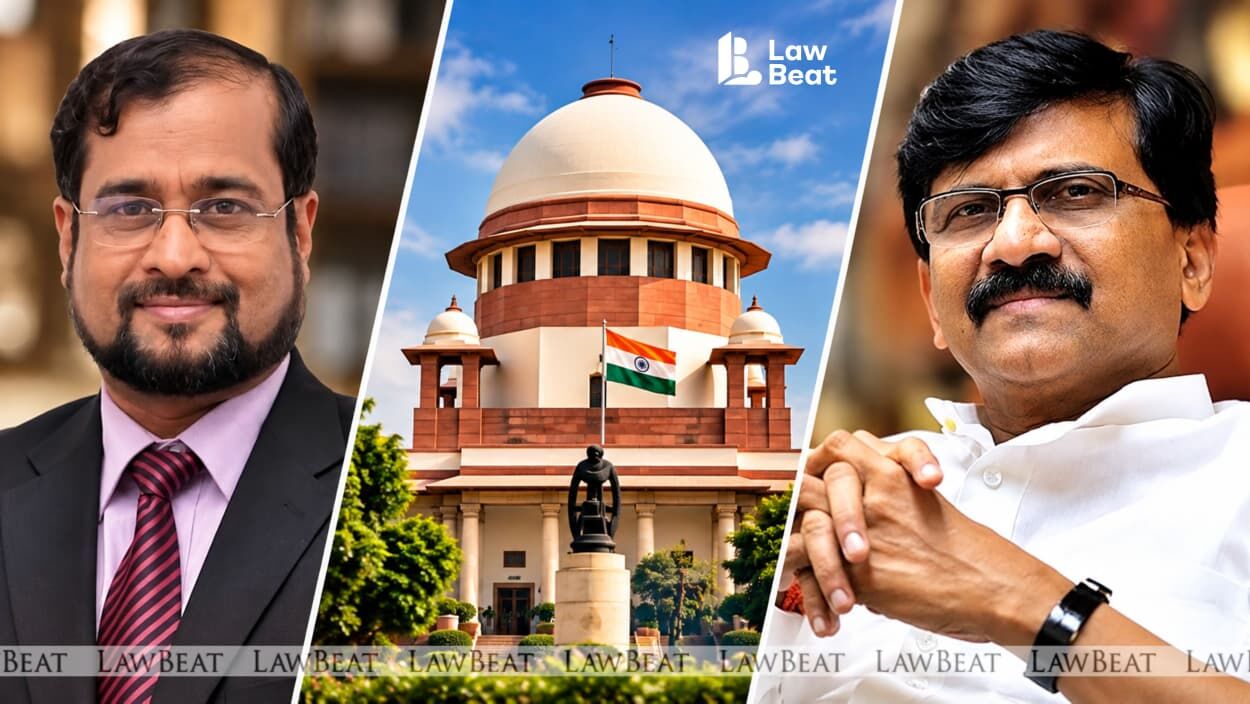
SCBA: Criminal Contempt Filed Against Sanjay Raut, Nikhil Wagle
Summary
- The Supreme Court Bar Association has filed a criminal contempt petition against journalist Nikhil Wagle and Rajya Sabha MP Sanjay Raut.
- The Attorney General R Venkataramani has granted consent for the initiation of these criminal contempt proceedings.
- Wagle's alleged contempt stems from an 'X' post stating 'F*** you CJI!', while Raut is accused of making false allegations about judges attending political events and accepting dinners.
- The petition invokes Article 129 of the Constitution and Sections 2(c)(i) and 15(1)(b) of the Contempt of Courts Act, 1971.
- The case highlights the strict legal boundaries for public commentary on the judiciary, especially concerning the Chief Justice of India.
What Happened
This case serves as a critical reminder of the strict boundaries surrounding public commentary on the judiciary in India, particularly concerning the Chief Justice.
The Supreme Court Bar Association (SCBA) has initiated criminal contempt proceedings before the Supreme Court against journalist Nikhil Wagle and Rajya Sabha MP Sanjay Raut. The petition alleges that both individuals made disparaging remarks concerning Chief Justice of India (CJI) Surya Kant and the Supreme Court itself, constituting gross criminal contempt.
Crucially, the Attorney General for India, R Venkataramani, has granted the necessary consent for these proceedings to move forward. This action underscores the seriousness with which the judiciary views public commentary that could be perceived as undermining its authority or scandalizing its members. The case, titled SUPREME COURT BAR ASSOCIATION Vs NIKHIL WAGLE, highlights the strict boundaries surrounding public discourse when it pertains to the highest judicial office.
Context of the Remarks
The contempt plea specifically cites a post made by Nikhil Wagle on his X account, @waglenikhil, which contained the phrase "F*** you CJI!" This comment was reportedly made in response to the Chief Justice of India declining a request to meet with a delegation of political parties, including Rahul Gandhi.
Separately, Sanjay Raut is accused of making deliberate and intentionally scandalous statements and false allegations against the CJI. These remarks, disseminated via IANS on the X platform with an accompanying video, claimed that judges participate in political events of the ruling party and accept dinners hosted by Chief Ministers. Raut also allegedly referenced photographs of judges playing badminton with political figures in London, using these images to impute allegations against the CJI and other judges. The SCBA contends that these statements are false, contrary to official records, and were knowingly made to scandalize and diminish the Supreme Court's authority.
The CJI's decision not to meet the political delegation was based on the principle of separation of powers, as the issues they wished to discuss were already sub judice before the Supreme Court. The Chief Justice emphasized that convening such a meeting would contravene this fundamental constitutional doctrine and be incompatible with established judicial ethics and propriety. Furthermore, the CJI clarified that the Supreme Court lacks administrative powers to address the specific issues raised by the delegation within India's constitutional framework.
Regarding the badminton controversy, the SCBA clarified that the All India Judges Badminton Championship, where Justice Vikram Nath and two Union Ministers played a token inaugural match, occurred in New Delhi in 2025. The 2nd International Bar & Bench Badminton Championship, a private event, took place in London in June 2026. Social media content falsely linked the London event to the CJI, numerous judges, and Union Ministers, using photographs from the 2025 New Delhi event as purported evidence. Both the Press Information Bureau (PIB) Fact Check Unit and the Ministry of Law & Justice officially debunked these claims, confirming the photographs were from the 2025 event and not the London gathering.
Legal Framework and Implications
The criminal contempt petition has been instituted under Article 129 of the Constitution of India, which grants the Supreme Court the power to punish for contempt of itself. This is read in conjunction with Sections 2(c)(i) and 15(1)(b) of the Contempt of Courts Act, 1971, and Rule 3(c) of the Rules to Regulate Proceedings for Contempt of the Supreme Court, 1975. Section 2(c)(i) defines criminal contempt to include the publication of any matter or the doing of any other act whatsoever which scandalizes or tends to scandalize, or lowers or tends to lower the authority of, any court.
The requirement for the Attorney General R Venkataramani's consent to initiate criminal contempt proceedings against Sanjay Raut and Nikhil Wagle under Section 15(1)(b) of the Contempt of Courts Act 1971 is a critical procedural safeguard. This provision ensures that such serious actions are not taken lightly and have been vetted by the highest law officer of the country. This case serves as a critical reminder of the strict boundaries surrounding public commentary on the judiciary in India, particularly concerning the Chief Justice.
Lawyers should advise clients on the potential for criminal contempt proceedings under the Contempt of Courts Act, 1971, if their statements are perceived to scandalize or diminish the Supreme Court's authority, noting the Attorney General's role in granting consent for such actions. The outcome of this petition will further delineate the permissible limits of free speech when it intersects with the need to protect the integrity and authority of the judicial system.
Practical Implications
This case serves as a critical reminder of the strict boundaries surrounding public commentary on the judiciary in India, particularly concerning the Chief Justice. Lawyers should advise clients on the potential for criminal contempt proceedings under the Contempt of Courts Act, 1971, if their statements are perceived to scandalize or diminish the Supreme Court's authority, noting the Attorney General's role in granting consent for such actions.
Source
How does this affect you?
Get an AI analysis of this article grounded in your jurisdictions, practice areas, and any policy documents you've uploaded to Wansom.
Finish Reading the Full Story and the Expert Analysis.
Get the latest legal & regulatory intelligence in India
Wansom is AI and can make mistakes.