
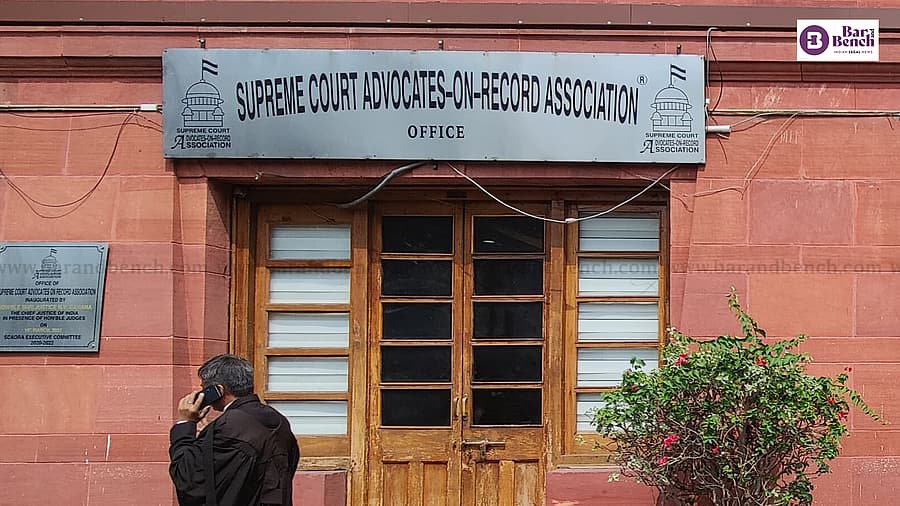
SCAORA: Supreme Court Petition on Police Action Against Protesting Lawyers
Summary
- The Supreme Court Advocates-on-Record Association (SCAORA) has petitioned the Supreme Court regarding alleged police misconduct against protesting lawyers.
- SCAORA seeks an independent, impartial, and time-bound inquiry into the detention and alleged manhandling of advocates by Delhi Police on October 10.
- Allegations include Senior Advocate Shadan Farasat being physically carried and women advocates Anna Oomen and Anne Mathew being manhandled by police without name tags.
- SCAORA argues that such police actions could create a chilling effect on lawyers' fundamental rights to protest and obstruct the administration of justice.
- The Union government, Delhi Police Commissioner, and Lieutenant Governor of Delhi are named as respondents in the case, titled SCAORA v. Union of India.
What Happened
Any interference with their ability to access courts or effectively represent their clients directly impacts not only the legal professionals themselves but also the litigants they serve and, ultimately, the fair administration of justice in India.
On October 10, a group of lawyers embarked on a protest march in Delhi, intending to proceed from the MC Setalvad Chambers Block, situated near the Supreme Court, towards Jantar Mantar. During their procession, these advocates were reportedly intercepted by Delhi Police personnel. Instead of allowing them to continue their march, the police diverted them to the Yamuna Sports Complex, located in Surajmal Vihar.
The Supreme Court Advocates-on-Record Association (SCAORA) has brought forth serious allegations regarding the conduct of the Delhi Police during this incident. Among the claims is that Senior Advocate Shadan Farasat was physically carried by police officers, held by his arms and legs, an action that allegedly resulted in his shirt being torn. Furthermore, the petition details instances of alleged manhandling involving women advocates, specifically naming Anna Oomen and Anne Mathew. These women were reportedly handled by female police officers who, according to the allegations, were not displaying their official name tags. Another advocate involved in the protest is said to have sustained a dislocated shoulder during the events.
The Legal Challenge
In response to these events, the Supreme Court Advocates-on-Record Association (SCAORA) has formally approached the Supreme Court of India. The association has filed a petition, titled SCAORA v. Union of India, seeking judicial intervention to address the alleged misconduct by law enforcement. Central to their plea is a demand for an independent, impartial, and time-bound inquiry into the detention and alleged manhandling of advocates by the Delhi Police during the October 10 protest.
The legal action initiated by SCAORA specifically names several key entities as respondents in the case. These include the Union government, the Commissioner of the Delhi Police, and the Lieutenant Governor of Delhi. By identifying these parties, SCAORA aims to ensure accountability and a thorough investigation into the circumstances surrounding the police's actions against the protesting lawyers. The association's petition underscores the gravity of the situation, framing the police's conduct as a potential infringement on the rights of legal professionals.
Why It Matters
SCAORA contends that such actions by the police—including arbitrary detention, physical assault, and intimidation—could severely undermine the fundamental rights of lawyers. The association argues that if advocates face such repercussions for expressing grievances or participating in peaceful assemblies, it could create a "chilling effect," discouraging them from exercising their constitutional freedoms. This perspective highlights a crucial concern for the legal community regarding the protection of lawyers' rights to protest.
Beyond the individual rights of advocates, SCAORA emphasizes the broader implications for the justice system. The association asserts that lawyers must be able to perform their professional duties without facing unlawful obstruction or coercion. Any interference with their ability to access courts or effectively represent their clients directly impacts not only the legal professionals themselves but also the litigants they serve and, ultimately, the fair administration of justice in India. This case, therefore, touches upon the core principles of an independent legal profession and the rule of law.
Practical Implications
Lawyers and compliance officers should monitor this case as it directly addresses the fundamental rights of advocates to protest and the potential for legal recourse against alleged police misconduct, including assault and obstruction. The outcome could set important precedents regarding the protection of legal professionals during public demonstrations and their ability to perform duties without unlawful interference.
Source
How does this affect you?
Get an AI analysis of this article grounded in your jurisdictions, practice areas, and any policy documents you've uploaded to Wansom.
Finish Reading the Full Story and the Expert Analysis.
Get the latest legal & regulatory intelligence in India
Wansom is AI and can make mistakes.