
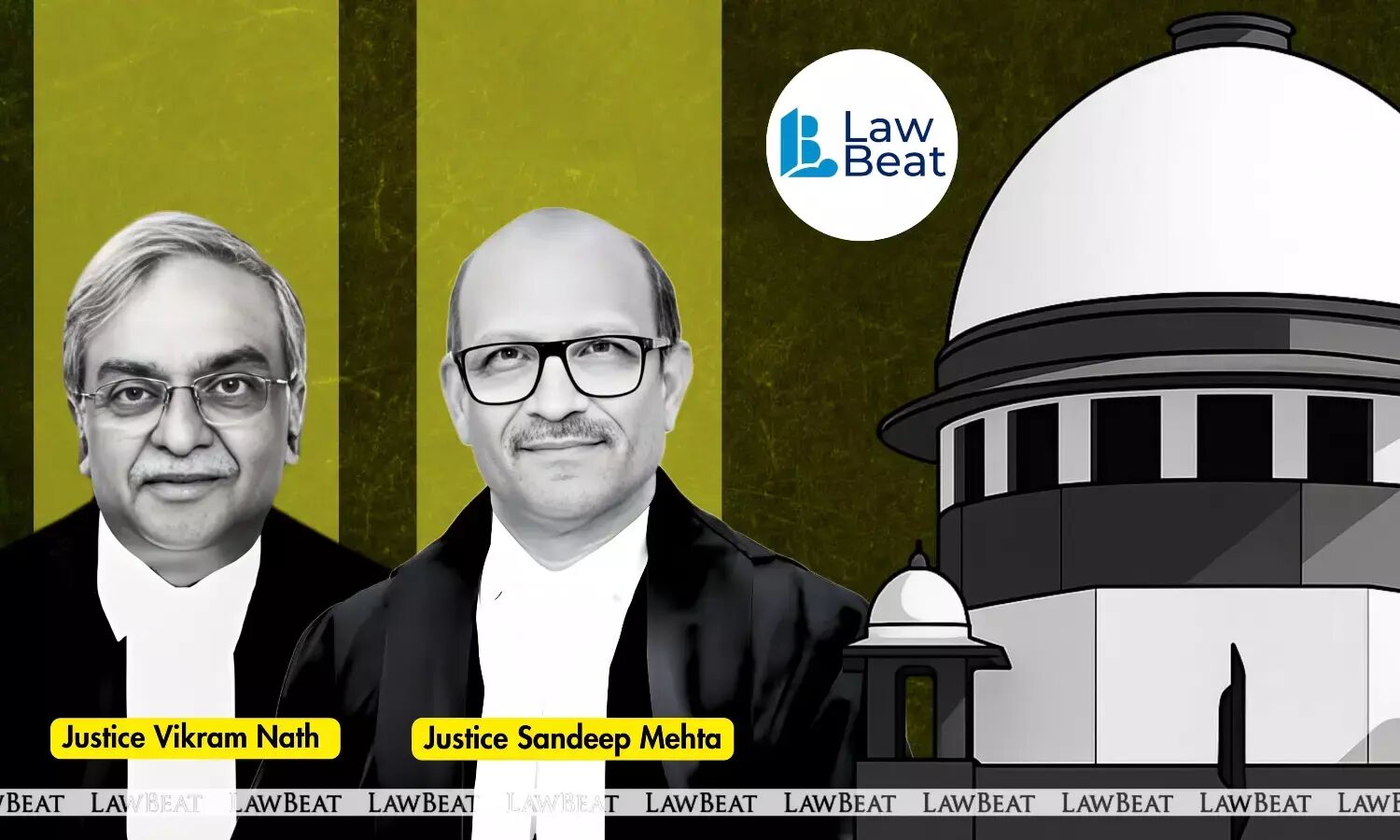
SC: Refuses To Stop Demolition Of Lawyers' Chambers On Lucknow Road
Summary
- The Supreme Court dismissed a plea to halt the demolition of lawyers' chambers built on a public road in Lucknow.
- Justice Vikram Nath stated that unauthorized construction cannot be justified by occupants holding elected positions in their Bar Association.
- The case originated as a criminal writ petition that was later converted into a Public Interest Litigation by the Allahabad High Court.
- The Allahabad High Court had previously ordered the Lucknow Nagar Nigam to issue eviction notices for 72 chambers and proceed with their demolition if occupants failed to vacate.
- The Bar Association argued that the encroachment issue was civil in nature and should have been addressed via specific state statutory remedies.
Supreme Court Upholds Demolition Order for Lucknow Lawyers' Chambers
Justice Nath firmly stated that unauthorized construction could not be justified by the occupants holding elected positions within their Bar Association, declaring that all such demolitions must proceed.
India's Supreme Court recently dismissed a plea seeking to halt the demolition of lawyers' chambers constructed on a public thoroughfare in Lucknow. A bench comprising Justices Vikram Nath and Sandeep Mehta firmly rejected the petition, which was filed by a Central Bar Association representing practicing advocates in District Lucknow. The apex court's decision underscores a strong stance against unauthorized constructions, particularly those encroaching on public land.
Justice Vikram Nath, who presided over the bench, was unequivocal in his questioning of the petitioner's counsel. He challenged the notion that unauthorized structures could be justified, especially when built on a main road. Justice Nath highlighted that merely holding an elected position within a Bar Association did not grant a right to perpetuate illegal construction. He asserted that all such demolitions must proceed, emphasizing the principle of upholding legal urban planning.
During the proceedings, Senior Advocate Adish Aggarwala, representing the petitioners, proposed exploring options for alternate space for the affected advocates and suggested referring the matter to mediation. However, Justice Nath was unreceptive to these suggestions, questioning the appropriateness of mediation in such a clear-cut case of encroachment. He further noted his personal familiarity with the situation, having served as a Senior Judge in the region for two years, and confirmed that the constructions significantly obstructed traffic flow on the roads.
Legal Challenge and High Court Directives
The Special Leave Petition brought before the Supreme Court challenged an order issued by the Lucknow Bench of the Allahabad High Court on August 4, 2026. This High Court order stemmed from a Public Interest Litigation (PIL) that had originated as a criminal writ petition (Crl. Misc. Writ Petition No. 713 of 2026) seeking to quash an FIR, before being converted into a PIL on April 7, 2026. The High Court had directed the Lucknow Nagar Nigam to issue eviction notices to 72 individuals, predominantly practicing advocates, who occupied chambers on public land. The order mandated the demolition of these structures if the occupants failed to vacate, with a compliance report due by September 10, 2026.
The petitioner, through AoR Mohd. Fuzail Khan, informed the Supreme Court that over 100 chambers had already been demolished following earlier High Court orders dated April 7 and May 25, 2026, while the remaining 72 chambers specified in the August 4 order were still standing. The Bar Association further alleged procedural irregularities, claiming that on August 19, 2026, the Nagar Nigam simultaneously pasted a demolition notice and a public advertisement, scheduling the demolition drive for August 29, 2026, without issuing the fresh notices that the High Court had directed. This, the petitioner argued, indicated a 'pre-decided view' by the authorities.
The core argument presented by the Bar Association was that the issue of encroachment on public land was fundamentally a matter of 'civil nature.' They contended that the High Court, while operating under its criminal roster, should have deferred to the statutory remedies available under specific state laws, including the U.P. Public Premises (Eviction of Unauthorized Occupants) Act, 1972, the U.P. Municipal Corporation Act, 1959, and the U.P. Urban Planning and Development Act, 1973.
Principle of Public Land Protection
Justice Nath's firm stance during the hearing underscored a broader principle regarding the protection of public spaces from encroachment. He questioned who would safeguard court premises from similar intrusions, recalling an incident where a lawyer had converted a District Judge's designated parking space into a personal chamber during a visit to a district court. This anecdote highlighted the systemic issue of unauthorized occupation, even within the legal fraternity.
The Supreme Court's refusal to intervene sends a clear message that unauthorized constructions, regardless of the occupants' profession or status, will not be tolerated on public land. The conversion of the initial criminal writ petition into a Public Interest Litigation was also affirmed by Justice Nath, who remarked that there was 'no other way to deal with this' type of issue. This ruling reinforces the judiciary's commitment to ensuring public access and proper utilization of public infrastructure, rejecting any claims of entitlement based on professional standing or association leadership.
Source
Source: Original reporting via Live Law
How does this affect you?
Get an AI analysis of this article grounded in your jurisdictions, practice areas, and any policy documents you've uploaded to Wansom.
Wansom is AI and can make mistakes.