
Supreme Court: High Court Cannot Reappreciate Evidence Under Article 226
Summary
- The Supreme Court clarified that High Courts' certiorari jurisdiction under Article 226 is supervisory, not appellate.
- High Courts cannot re-evaluate evidence or interfere with factual findings unless there is a jurisdictional error, patent illegality, or manifest legal error.
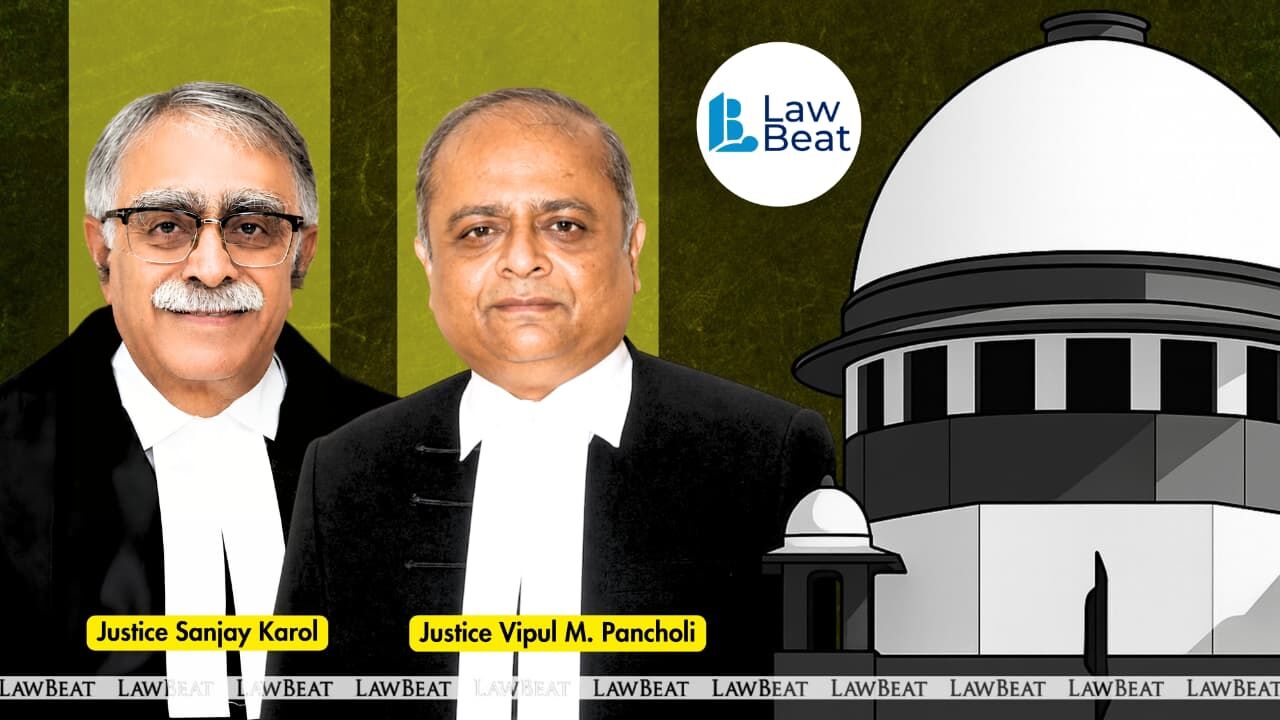
- A bench of Justices Sanjay Karol and Vipul M Pancholi found the Karnataka High Court exceeded its jurisdiction by setting aside factual findings without adequate grounds.
- The High Court violated natural justice principles by deciding the matter ex parte, without notice to parties whose rights were directly affected.
- The case originated from a partition suit where the High Court invalidated sale deeds while affirming ownership, prompting a challenge by an aggrieved purchaser.
Supreme Court Clarifies Certiorari Limits
By overturning the Karnataka High Court's decision, the Supreme Court has reaffirmed that the power to issue a writ of `certiorari` is a supervisory tool designed to correct errors of jurisdiction or manifest legal flaws, not to act as a second appellate forum for re-evaluating factual evidence.
The Supreme Court has issued a significant clarification regarding the scope of High Courts' certiorari jurisdiction under Article 226 of the Constitution, emphasizing its supervisory rather than appellate nature. This ruling establishes that a High Court is generally precluded from re-evaluating evidence or overturning factual determinations made by subordinate courts. Interference is permissible only under specific, narrow circumstances: where there is a clear jurisdictional error, a patent illegality, or a manifest error of law evident on the record.
A bench comprising Justices Sanjay Karol and Vipul M Pancholi specifically found that the Karnataka High Court had overstepped these defined boundaries. The High Court, in the case under review, had set aside factual findings made by the first appellate court without sufficient justification, thereby exercising a jurisdiction akin to an appellate body, which is contrary to the principles governing certiorari writs. This decision underscores the critical distinction between the roles of supervisory and appellate courts in the Indian judicial system.
The Genesis of the Dispute
The Supreme Court's intervention stemmed from an appeal challenging a Karnataka High Court order dated February 22, 2023. This order had allowed a writ petition filed by Goparappa, who was defendant no. 5 in the original proceedings, and consequently nullified certain findings of the first appellate court. The underlying legal battle originated from a partition suit concerning specific properties.
In this suit, the plaintiffs asserted a claim over the properties, which was contested by Basamma (defendant no. 1) and several subsequent purchasers. While Basamma acknowledged her familial connection to the plaintiffs' father, Basalingaiah, she maintained that the properties were her self-acquired assets and that the plaintiffs held no share in them. The initial trial court, in its judgment on April 20, 2015, dismissed the partition suit, affirming Basamma's ownership, her right to alienate the properties, and the purchasers' possession, as the plaintiffs had failed to substantiate their claims.
Upon appeal, the first appellate court concurred with the trial court that the plaintiffs had not proven the properties to be ancestral or family assets. However, it introduced a new finding, declaring the sale deeds executed by Basamma in favor of the purchasers to be invalid, even while simultaneously confirming Basamma's continued ownership and possession of the properties. It was these specific findings regarding the invalidity of the sale deeds that prompted Goparappa, one of the aggrieved purchasers, to file a writ petition, arguing that these determinations were made without a proper assessment of the pleadings, issues, and evidence presented. The High Court subsequently allowed Goparappa's petition, setting aside the contested findings.
Upholding Principles of Natural Justice
A critical aspect of the Supreme Court's decision revolved around the fundamental principle of `audi alteram partem`, which mandates that no individual should be condemned or adversely affected without a fair opportunity to be heard. The Court stressed that the non-observance of this principle, a cornerstone of natural justice, inevitably causes prejudice to the party denied a hearing. Furthermore, it clarified that parties whose rights are directly impacted are essential participants in writ proceedings that could affect those rights.
The Supreme Court found that the Karnataka High Court had proceeded `ex parte` in the matter, effectively dispensing with the requirement to issue notice to parties whose ownership and property rights were directly challenged by the writ petition. This procedural lapse, according to the Supreme Court, constituted a clear violation of the principles of natural justice. Basamma and other appellants had specifically raised this point before the Supreme Court, contending that their rights were directly affected, yet they were not afforded the opportunity to present their case before the High Court's decision.
Reinforcing Jurisdictional Boundaries
Article 226 of the Constitution grants every High Court the authority to issue various directions, orders, or writs, including `habeas corpus`, `mandamus`, `prohibition`, `quo warranto`, and `certiorari`. These powers are intended for the enforcement of fundamental rights and other legal entitlements. The Supreme Court's latest pronouncement serves to reinforce the precise boundaries within which High Courts must operate when exercising their `certiorari` jurisdiction.
By overturning the Karnataka High Court's decision, the Supreme Court has reaffirmed that the power to issue a writ of `certiorari` is a supervisory tool designed to correct errors of jurisdiction or manifest legal flaws, not to act as a second appellate forum for re-evaluating factual evidence. This ruling is crucial for maintaining the hierarchical integrity of the judicial system and ensuring that High Courts adhere strictly to their constitutional mandate, preventing them from encroaching upon the fact-finding domain of lower courts without compelling legal grounds.
Source
How does this affect your business?
Get an AI analysis of this article grounded in your jurisdictions, practice areas, and any policy documents you've uploaded to Wansom.
Wansom is AI and can make mistakes.