
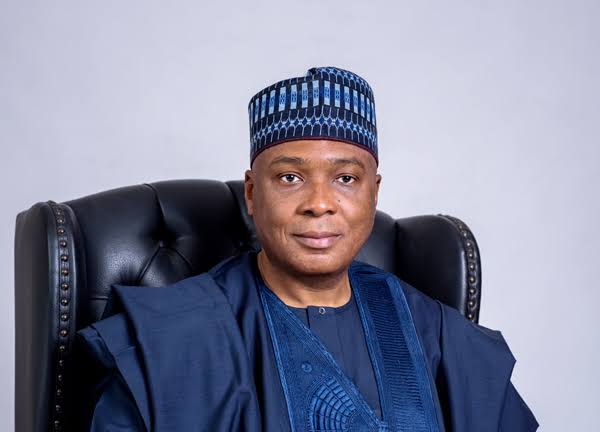
Saraki Cautions Kwara Gov: Allow Traditional Rulers Meet All Political Leaders
Summary
- Former Senate President Dr. Abubakar Bukola Saraki urged Kwara Governor Abdulrahman Abdulrazaq to respect traditional rulers.
- Saraki called for traditional rulers to be allowed to receive political leaders from all parties without reprisal.
- His appeal followed allegations that Governor Abdulrazaq threatened to suspend rulers who met with opposition Peoples Democratic Party leaders.
- The governor reportedly summoned some traditional rulers to Ilorin to issue these warnings.
What Happened
This situation highlights a concerning trend where traditional rulers, who are expected to remain apolitical, face pressure regarding their interactions with political figures.
Dr. Abubakar Bukola Saraki, who previously served as Nigeria's Senate President, has publicly called upon Kwara State Governor Abdulrahman Abdulrazaq to demonstrate respect for the state's traditional rulers. Saraki's appeal specifically urged the Kwara Governor to permit these traditional leaders to engage with political figures from across the entire spectrum of political parties without fear of repercussions. This intervention by Bukola Saraki highlights a significant concern regarding the autonomy and treatment of traditional institutions within the state.
The former Senate President's statement was prompted by serious allegations circulating within the state. According to these claims, Governor Abdulrahman Abdulrazaq had reportedly summoned a number of traditional rulers to Ilorin, the state capital. During this alleged meeting, the governor is said to have issued threats of suspension against any traditional ruler who chose to receive or interact with leaders of the opposition Peoples Democratic Party (PDP). This alleged directive has raised questions about political interference in the affairs of traditional institutions.
Context of the Dispute
The controversy surrounding the alleged threats against traditional rulers by the Kwara Governor underscores a broader tension concerning the role of Nigerian traditional institutions in contemporary politics. Traditional rulers are often seen as custodians of culture and community, expected to maintain a degree of neutrality while also serving as a bridge between the government and the populace. The expectation that they should be accessible to all Kwara State political leaders, irrespective of party affiliation, is a long-standing convention.
This situation highlights a concerning trend where traditional rulers, who are expected to remain apolitical, face pressure regarding their interactions with political figures. Saraki's intervention, therefore, can be viewed as a defense of the traditional institution's independence and its right to engage with various stakeholders without fear of punitive action from the state government. The alleged Ilorin traditional rulers meeting, where threats were reportedly issued, represents a direct challenge to this established understanding of their role.
Why It Matters
The former Senate President's intervention underscores a critical tension between political authority and the traditional institutions that serve as custodians of community values and heritage. If traditional rulers are indeed being coerced or threatened over their interactions with opposition figures, it could severely undermine their perceived impartiality and effectiveness within their communities. Such actions could also set a dangerous precedent, potentially eroding the respect and autonomy traditionally afforded to these revered figures.
For Kwara State, the implications extend beyond mere political posturing. The ability of traditional rulers to freely engage with all political actors is vital for fostering dialogue, maintaining peace, and ensuring that diverse community perspectives are heard. Any attempt to restrict these interactions risks alienating segments of the population and could lead to increased political polarization, ultimately affecting governance and stability within the state.
Practical Implications
This story highlights a political dispute regarding the treatment of traditional rulers in Kwara State. While it touches upon governance and the role of traditional institutions, it does not present a direct legal or compliance implication for lawyers or compliance officers, as there is no new law, regulation, or actionable legal development discussed.
Source
How does this affect you?
Get an AI analysis of this article grounded in your jurisdictions, practice areas, and any policy documents you've uploaded to Wansom.
Finish Reading the Full Story and the Expert Analysis.
Get the latest legal & regulatory intelligence in Nigeria
Wansom is AI and can make mistakes.