
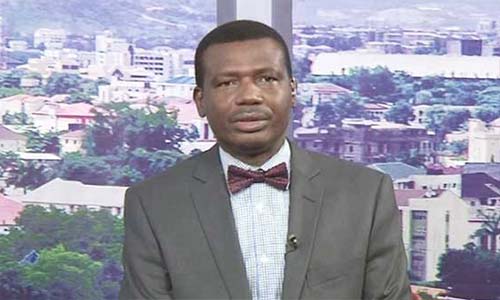
SAN Adegboruwa Urges Tinubu to Review Coastal Highway Realignment
In Nigeria, on October 12, 2026, Senior Advocate of Nigeria, Ebun Adegboruwa, called on President Bola Tinubu to urgently review the reported realignment of the Lagos-Calabar Coastal Highway, warning that the changes could undermine the original development objectives of the project by diverting it away from coastal communities in Ondo and Delta States. This intervention by a prominent legal professional highlights significant concerns regarding transparency, equitable development, and the potential socio-economic and environmental impacts of major national infrastructure projects.
The legal significance of Adegboruwa's statement lies in its challenge to the perceived lack of due process and equitable consideration in the planning and execution of a critical national project. Such realignments, if not properly justified and communicated, can lead to accusations of favouritism, neglect of specific regions, and a failure to adhere to established project parameters. For practitioners, this underscores the importance of robust governance frameworks for public works, including adherence to environmental impact assessments and stakeholder consultation, to mitigate legal and reputational risks for government and contractors alike.
The legal context for this issue involves several layers of Nigerian law and policy. Major infrastructure projects are typically subject to the Environmental Impact Assessment Act, which mandates comprehensive assessments for projects likely to have significant environmental and social effects. Principles of administrative law dictate that government decisions must be rational, transparent, and in the public interest. The call to the President invokes the executive's constitutional oversight role and responsibility for national development projects, particularly those with multi-state implications. The issue also touches on the equitable distribution of federal projects and the potential for inter-state disputes arising from perceived imbalances.
Key parties involved in this unfolding situation include Ebun Adegboruwa, SAN, who issued the call; President Bola Tinubu, to whom the appeal was directed; and implicitly, the Minister of Works, David Umahi, whose ministry would be responsible for the project's execution and any realignments. The Federal Government of Nigeria is the project owner, with the states of Lagos, Ondo, and Delta, along with their respective coastal communities, being directly affected by the highway's route. The excerpt does not report any specific legal action or outcome, but rather a public call for intervention.
Practitioners advising clients involved in large-scale infrastructure projects, particularly those with multi-state implications, should closely monitor public discourse and government responses regarding project realignments. This situation underscores the critical importance of conducting thorough environmental and social impact assessments, ensuring transparent decision-making processes, and engaging effectively with all affected stakeholders. Attorneys representing communities or businesses potentially impacted by such changes should be prepared to advise on avenues for challenging decisions that appear to deviate from established plans without proper justification or consultation, including potential litigation or advocacy efforts.
How does this affect you?
Get an AI analysis of this article grounded in your jurisdictions, practice areas, and any policy documents you've uploaded to Wansom.
Finish Reading the Full Story and the Expert Analysis.
Get the latest legal & regulatory intelligence in Nigeria
Wansom is AI and can make mistakes.