
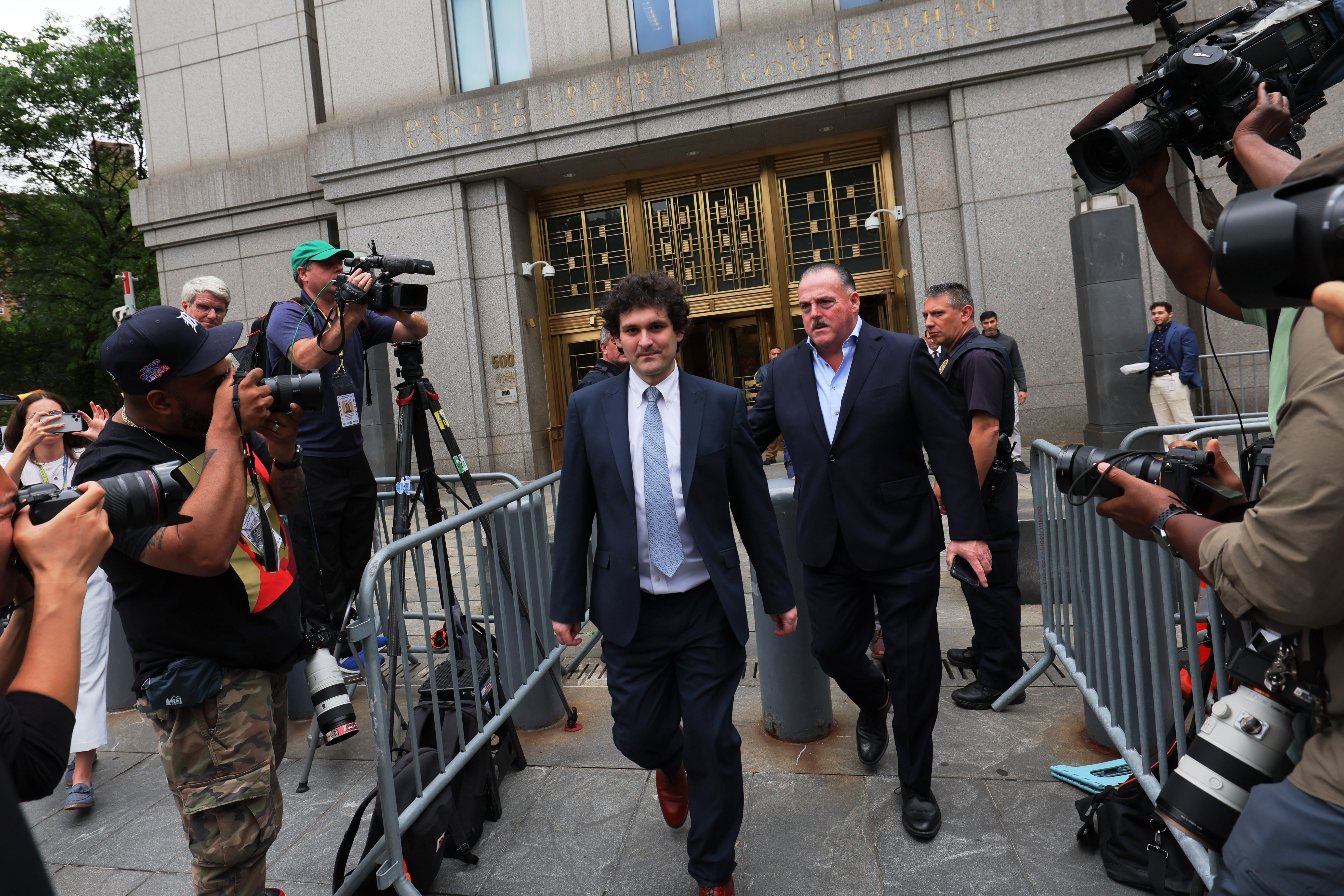
Samuel Bankman-Fried Supreme Court Appeal: Challenges Conviction, $11B Forfeiture
Summary
- Samuel Bankman-Fried has filed an appeal with the U.S. Supreme Court to overturn his conviction and vacate an $11 billion forfeiture order.
- He is currently serving a 25-year prison sentence after being found guilty in 2023 of defrauding investors through the FTX cryptocurrency exchange.
- His appeal argues that evidence of customer losses was improperly admitted during his trial, given the prosecution's "fraudulent inducement" theory.
- Bankman-Fried's legal team also contends that the $11 billion forfeiture is excessive and violates the Eighth Amendment's prohibition against excessive fines.
- Separately, Bankman-Fried has requested a pardon from President Donald Trump.
What Happened: Samuel Bankman-Fried's Supreme Court Appeal
The Supreme Court's consideration of this case, particularly the SBF conviction overturn SCOTUS effort, holds significant implications for legal professionals specializing in white-collar crime defense, especially those dealing with financial fraud and cryptocurrency-related matters.
Samuel Bankman-Fried, the figure behind the collapsed FTX cryptocurrency exchange, has formally petitioned the U.S. Supreme Court in a bid to overturn his conviction and nullify an $11 billion forfeiture order. The former "Crypto King" is currently serving a 25-year prison sentence, having been found guilty in 2023 on multiple charges of fraud and money laundering. These convictions stemmed from accusations that he orchestrated a scheme defrauding investors of billions of dollars. His legal team's recent filing marks a critical juncture in his ongoing legal battle, aiming to challenge both the jury's verdict and the substantial financial penalty imposed.
This Samuel Bankman-Fried Supreme Court appeal seeks to address fundamental questions about the conduct of his trial and the constitutionality of his sentence. The petition was filed on a recent Thursday, signaling a determined effort to pursue all available legal avenues. Bankman-Fried's legal representatives are pushing for the nation's highest court to weigh in on specific aspects of his case, which they argue were handled improperly during the initial proceedings.
Key Legal Arguments Presented
The appeal advances two main legal arguments. Firstly, Bankman-Fried's attorneys contend that the trial court erred by allowing evidence of FTX customers' financial losses to be presented to the jury. They assert that since the prosecution's theory of the case relied on "fraudulent inducement," the actual monetary losses suffered by customers were not directly relevant to proving the elements of that specific charge. The legal team's petition emphasizes the need for the Supreme Court to establish clear and equitable rules for how such complex financial fraud cases are presented to juries, arguing that without such clarity, defendants may be deprived of fair trials. This challenge could significantly influence future interpretations of fraudulent inducement evidence appeal standards.
Secondly, the appeal directly targets the $11 billion forfeiture order, characterizing it as "crushing and excessive." This FTX founder forfeiture challenge invokes the Eighth Amendment of the U.S. Constitution, specifically its prohibition against excessive fines. Bankman-Fried's lawyers argue that the forfeiture violates the constitutional safeguard, which, they note, has historical roots dating back to the Magna Carta, ensuring that fines do not entirely strip a wrongdoer of their livelihood. This argument seeks to define the constitutional limits of financial penalties in white-collar crime cases.
Broader Implications for Legal Practice
The Supreme Court's consideration of this case, particularly the SBF conviction overturn SCOTUS effort, holds significant implications for legal professionals specializing in white-collar crime defense, especially those dealing with financial fraud and cryptocurrency-related matters. A ruling on the admissibility of evidence in "fraudulent inducement" cases could reshape prosecutorial strategies and defense tactics, potentially making it more difficult for the government to introduce victim impact evidence when it's not strictly necessary to prove the elements of the crime. This could lead to a re-evaluation of how evidence is presented and challenged in high-stakes financial trials.
Moreover, the Eighth Amendment excessive fines SBF argument offers a crucial opportunity for the Supreme Court to provide definitive guidance on the constitutional boundaries of asset forfeiture. A decision clarifying what constitutes an "excessive" fine could establish new precedents, empowering defendants to more effectively challenge disproportionately large forfeiture orders. Such a ruling would be particularly impactful in cases involving vast sums, like those often seen in cryptocurrency fraud. Separately, Bankman-Fried has also sought a pardon from President Donald Trump, indicating a multi-pronged approach to his post-conviction relief efforts.
Practical Implications
Lawyers involved in white-collar crime defense, particularly those dealing with financial fraud or cryptocurrency-related cases, should closely monitor this Supreme Court appeal. The Court's decision could establish significant precedents regarding the admissibility of evidence in fraud cases (specifically 'fraudulent inducement') and the constitutional limits of asset forfeiture under the Eighth Amendment, impacting future trial strategies and sentencing challenges.
Source
How does this affect you?
Get an AI analysis of this article grounded in your jurisdictions, practice areas, and any policy documents you've uploaded to Wansom.
Finish Reading the Full Story and the Expert Analysis.
Get the latest legal & regulatory intelligence in United States
Wansom is AI and can make mistakes.