
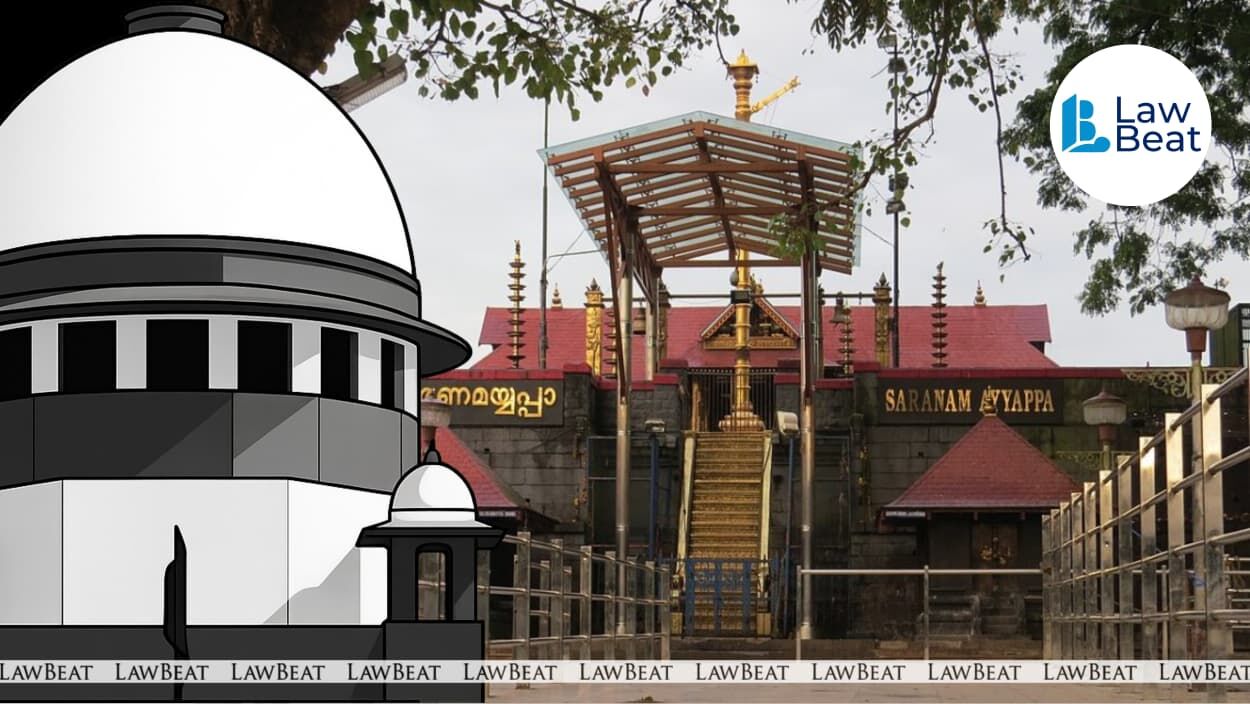
Supreme Court India: Sabarimala Temple Verdict by First Week October
Summary
- The Supreme Court is expected to deliver its verdict on the Sabarimala temple entry issue by the first week of October.
- A 9-judge bench has been examining wider questions affecting multiple faiths, making the case a landmark in constitutional and religious jurisprudence.
- The case raises questions about the balance between religious freedom and gender equality, with implications for Muslim women's entry into mosques and Parsi women's religious rights.
Sabarimala Temple Verdict Nears Completion
The court has chosen to examine wider questions affecting multiple faiths, making the case a landmark in constitutional and religious jurisprudence.
The Supreme Court of India is expected to deliver its verdict on the Sabarimala temple entry issue by the first week of October. The review petitions, which have been pending for over five years, were taken up by a 9-judge bench in May this year. The court has chosen to examine wider questions affecting multiple faiths, making the case a landmark in constitutional and religious jurisprudence.
The issue dates back to 2006, when Indian Young Lawyers Association filed a Writ Petition challenging the validity of Rule 3(b) of the Kerala Hindu Places of Public Worship (Authorisation of Entry) Rules, 1965. The petition sought to permit female devotees between the ages of 10 to 50 years to enter the Sabarimala temple without any restrictions.
In September 2018, a 5-judge Constitution Bench delivered a verdict by a 4:1 majority, holding that the exclusion of women between the ages of 10 to 50 years from entry into the temple is violative of Article 25 of the Constitution of India. The court also declared Rule 3 (b) of the Kerala Hindu Places of Public Worship (Authorisation of Entry) Rules, 1965 as violative of Article 25 (1) and ultra vires Section 3 of the Kerala Hindu Places of Public Worship (Authorisation of Entry) Act, 1965.
Legal Context: Balancing Religious Freedom with Gender Equality
The Sabarimala review petitions before the Supreme Court are presently one of the most important constitutional debates in India. The court has expanded the issue beyond Sabarimala to include Muslim women's entry into mosques, Parsi women's religious rights, and Dawoodi Bohra excommunication practices along with other similar issues.
The case raises questions about the balance between religious freedom and gender equality. On one hand, devotees argue that the court interfered with essential religious practices by allowing women to enter the temple. On the other hand, advocates of gender equality argue that the exclusion of women from the temple is a form of discrimination.
The Supreme Court's decision will have significant implications for the rights of women in India, particularly in cases involving Muslim women's entry into mosques and Parsi women's religious rights.
Why It Matters: Implications for Religious Freedom and Gender Equality
The Sabarimala temple verdict is not just about a single temple or issue. It has far-reaching implications for the balance between religious freedom and gender equality in India.
If the court upholds its 2018 decision, it will reinforce the idea that women's rights are fundamental to the Constitution of India. On the other hand, if the court reverses its decision, it may set back the progress made towards gender equality in India.
The case also raises questions about the role of the judiciary in balancing competing interests and values in a democratic society.
Practical Implications
Lawyers should watch for the potential implications on religious freedom vs gender equality, particularly in cases involving Muslim women's entry into mosques and Parsi women's religious rights.
Source
How does this affect you?
Get an AI analysis of this article grounded in your jurisdictions, practice areas, and any policy documents you've uploaded to Wansom.
Wansom is AI and can make mistakes.