
Sénégal: Réforme Protection Sociale Santé Lance Dispositif Intégré
Summary
- Sénégal is advancing its health social protection reform through a workshop in Dakar to design an integrated national system.
- The initiative, supported by the World Bank and the International Labour Office, seeks to define guaranteed care, sustainable financing, and beneficiary tracking.
- A $135 million World Bank financing package, including $100 million IDA credit and $35 million in grants under the NAATANGUE 2030 program, underpinning the reform.
- The new Social Security Code provides a legal foundation, aiming to extend mandatory health coverage to independent and informal sector workers.
- Key areas of focus include defining a comprehensive care basket, establishing a common IT architecture, and ensuring the long-term financial viability of universal health coverage.
Sénégal Advances Integrated Health Protection System
The adoption of the new Social Security Code provides a crucial legal framework for this evolution, aiming to extend coverage to independent workers and those in the informal economy while upholding principles of universality, solidarity, non-discrimination, and mandatory affiliation.
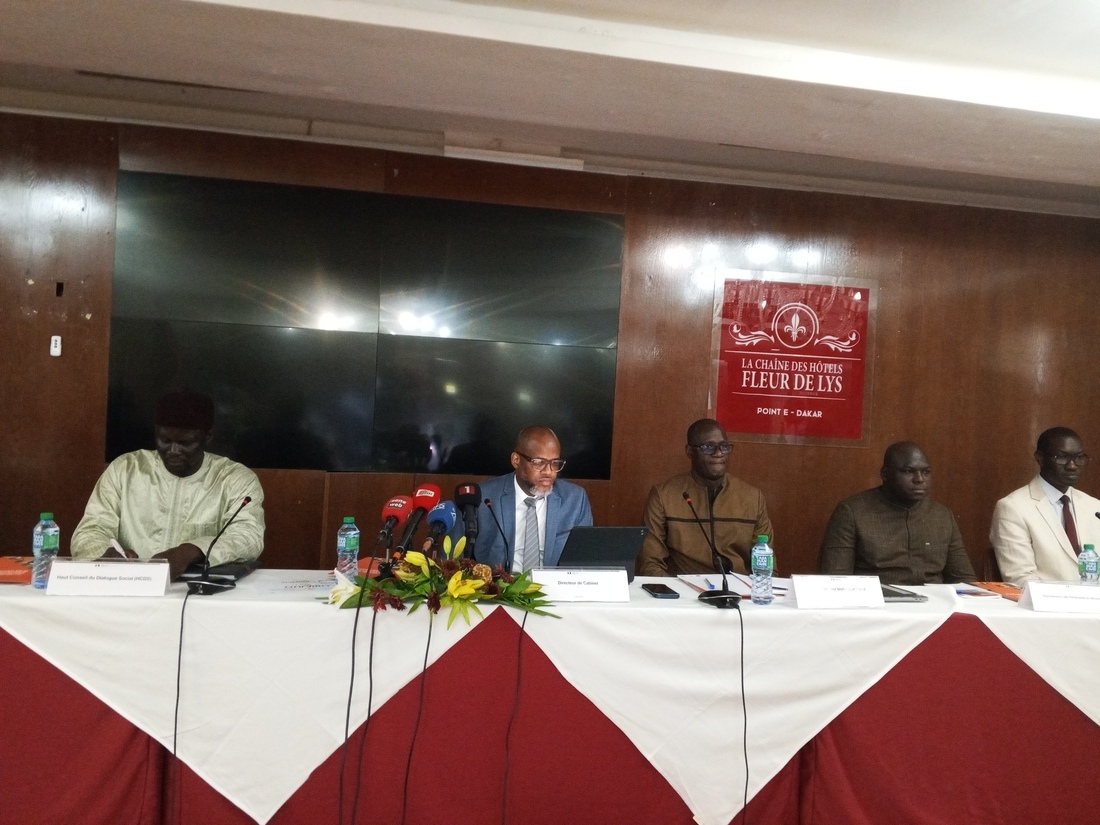
Sénégal has initiated a significant phase in its health social protection reform, convening a workshop in Dakar focused on establishing an integrated national health system. The gathering, which commenced on a Wednesday and is scheduled to conclude on September 4, aims to transition national dialogue recommendations into concrete technical and operational decisions. Dr. Amadou Diaw, Director of Cabinet for the Ministry of Family, Social Action, and Solidarity, launched the event, emphasizing the nation's commitment to ensuring better protected access to care for all citizens, a critical need given the current fragmented coverage mechanisms.
This pivotal workshop brings together a diverse group of stakeholders, including representatives from various ministries, public institutions, health coverage organizations, mutuals, insurers, social partners, and local authorities, alongside technical and financial partners. Participants are tasked with addressing three fundamental questions: identifying the specific healthcare services to be guaranteed to the population, determining how their long-term financing can be secured, and establishing an effective tool for monitoring insured individuals' rights. These discussions build upon previous engagements, extending a national dialogue initiated in November 2025 and a subsequent workshop held in February 2026.
Financial Backing and Legal Framework
The ambitious reform efforts in Sénégal are bolstered by substantial international support, with the World Bank and the International Labour Office (BIT) providing assistance. The World Bank has approved a significant financing package totaling $135 million to accelerate these reforms, comprising a $100 million credit from the International Development Association (IDA) and $35 million in grants. This funding is allocated under the broader NAATANGUE 2030 program, offering crucial financial leverage as participants work to define the precise contours of the future integrated system.
Further underpinning this evolution is the recent adoption of the new Social Security Code. This legal instrument provides a modern framework for the reform, notably paving the way for the extension of health coverage to independent workers and those operating within the informal economy. The Code explicitly affirms core principles of universality, solidarity, non-discrimination, and mandatory affiliation, signaling a shift towards detaching health risk protection from solely professional status. However, the implementation necessitates further clarification regarding the financing, governance, and organizational structures of these expanded schemes.
Key Pillars of the New System
Central to the workshop's agenda is the definition of the 'care basket,' which will specify the level of coverage guaranteed to each individual. This crucial element must consider the population's health needs, the capacities of existing healthcare structures, and mechanisms to protect households from excessive out-of-pocket expenses. Discussions also encompass the initial findings of an actuarial study, financial projections, the organizational structure of a future integrated information system, the minimum benefits package, and the institutional ramifications of the reform.
Dr. Amadou Diaw underscored the importance of aligning social commitments with available resources, stating that "What we guarantee must be financeable. What we finance must meet real population needs." The reform also envisions a common information technology architecture designed to enhance beneficiary identification, track their rights, streamline benefits management, and ensure data availability for effective system oversight. Stakeholders are tasked with assessing current systems, defining a target architecture, and prioritizing its deployment, with the Ministry identifying the care package, financing, institutional organization, and information management as four interconnected workstreams requiring simultaneous advancement.
Commitment to Universal Health Coverage
Sénégal's reform initiative is deeply rooted in its commitment to achieving universal health coverage (CSU). This national effort directly translates the country's broader engagement, as evidenced by its participation in the High-Level Ministerial Dialogue on Sustainable Financing for Universal Health Coverage held in Addis Ababa in August 2026. During this international forum, Health Minister Ibrahima Sy reiterated Sénégal's dedication to CSU, emphasizing the need for national mechanisms capable of ensuring the long-term financial sustainability of such coverage.
The question of sustainability extends beyond the immediate scope of the current workshop, representing a fundamental challenge that the reform seeks to address comprehensively. By integrating financing mechanisms, a robust care package, and an efficient information system, Sénégal aims to build a resilient and equitable health social protection system that can deliver on its promise of universal access to care for all its citizens.
Practical Implications
Lawyers and compliance officers in Senegal should closely monitor the ongoing development and implementation of the new integrated national health social protection system and the new Social Security Code. This reform will introduce new obligations for employers, expand health coverage to independent and informal workers, and redefine financing mechanisms, necessitating a review of current compliance strategies and employee benefit structures.
Source
How does this affect you?
Get an AI analysis of this article grounded in your jurisdictions, practice areas, and any policy documents you've uploaded to Wansom.
Finish Reading the Full Story and the Expert Analysis.
Wansom is AI and can make mistakes.