
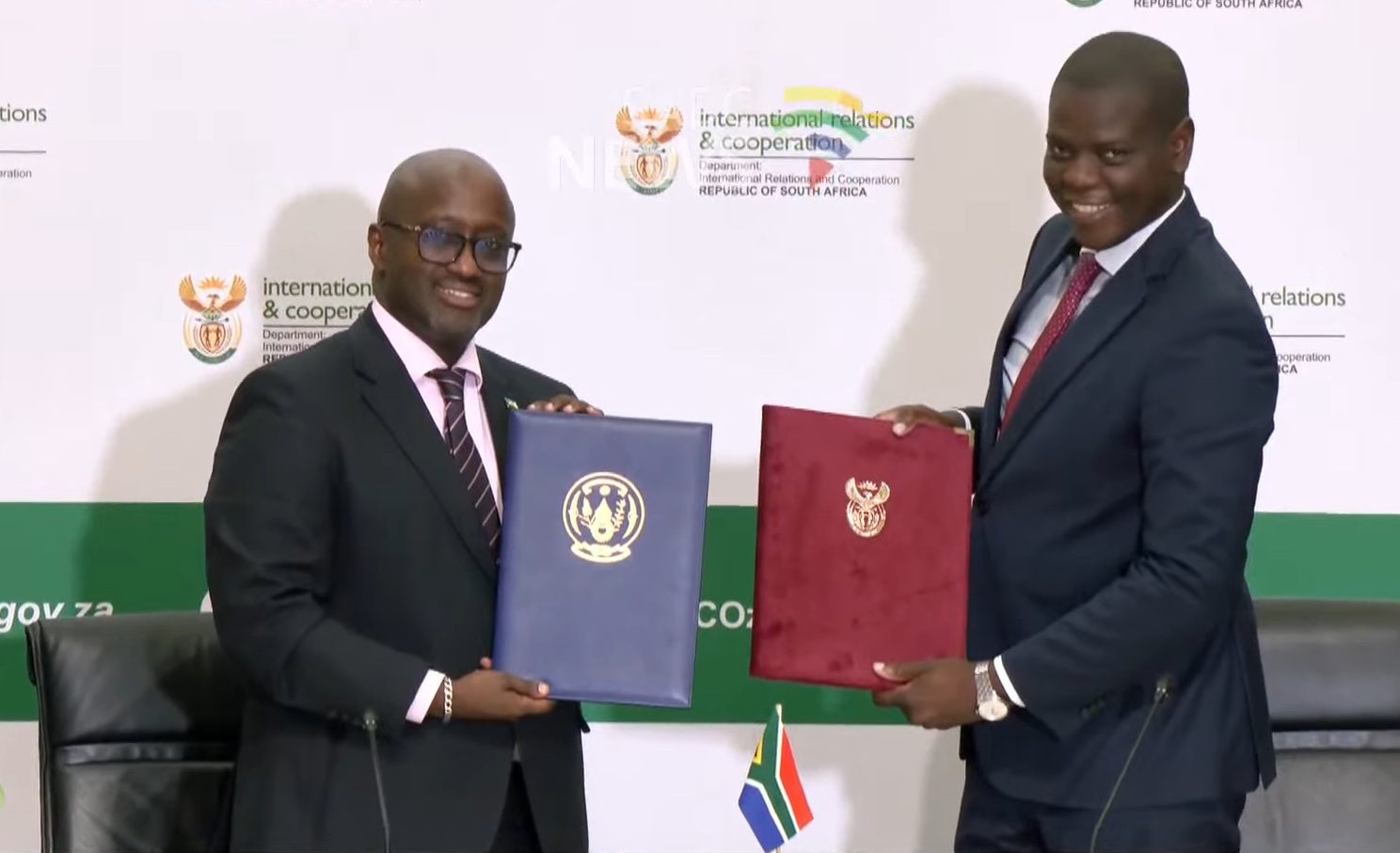
Rwandans To Start Getting South African Visas By Mid-2027
Abstract
Rwanda and South Africa have formally agreed to restore visa access for ordinary Rwandan passport holders by mid-2027, marking a significant milestone in the normalization of diplomatic relations. This development follows over a decade of strained ties, which led to severe visa restrictions impacting travel and bilateral engagement. The agreement, announced after high-level talks, signals a commitment from both nations to foster cooperation across various sectors, including trade, tourism, and security. Legal professionals should anticipate forthcoming regulatory adjustments and a more streamlined process for cross-border movement, reflecting a renewed diplomatic and economic partnership between the two African states.
Introduction
A pivotal diplomatic breakthrough has been achieved between Rwanda and South Africa, with the two nations agreeing to commence the restoration of visa access for ordinary Rwandan passport holders by mid-2027. This announcement, made following high-level bilateral talks in Pretoria on June 17, 2026, represents a crucial step in normalizing relations that have been significantly strained for over a decade. The re-establishment of full visa access is expected to unlock substantial opportunities for trade, tourism, education, and broader regional cooperation, moving beyond the political tensions that previously hampered bilateral engagement. This article will delve into the legal and diplomatic underpinnings of this agreement, examining the historical context of the visa restrictions, the relevant legal frameworks governing immigration in both countries, and the practical implications for legal practitioners and citizens alike.
Background
The diplomatic relationship between Rwanda and South Africa has endured a tumultuous period, particularly since 2013. The strain intensified in 2014 when South Africa expelled Rwandan diplomats, alleging their involvement in the assassination of former Rwandan intelligence chief Patrick Karegeya and attempts on the life of General Kayumba Nyamwasa, both living in exile in South Africa. Rwanda, in turn, retaliated by expelling South African diplomats, leading to a significant downturn in bilateral ties. These diplomatic expulsions resulted in severe visa restrictions, effectively halting travel for ordinary Rwandan citizens to South Africa, with only government officials holding diplomatic or service passports being granted visas.
From a legal standpoint, immigration in South Africa is primarily governed by the Immigration Act 13 of 2002, which regulates the admission, residence, and departure of persons from the Republic. This Act mandates that all non-exempt foreigners must possess a valid visa to enter and sojourn in South Africa. Similarly, Rwanda's immigration framework is established by Law N°57/2018 of 13/08/2018 on Immigration and Emigration, which outlines the procedures and requirements for obtaining visas and residence permits. While Rwanda generally maintains a more liberal visa policy, offering visa-on-arrival for citizens of many countries, including African Union members, the diplomatic fallout with South Africa had created a specific impediment for Rwandan ordinary passport holders seeking entry into South Africa.
Analysis
The agreement to restore visa access is a direct outcome of high-level bilateral talks, culminating in a joint communiqué signed by the respective Ministers of International Relations and Cooperation. This communiqué outlines a comprehensive roadmap for revitalizing bilateral cooperation and institutional engagement mechanisms, signaling a strong political commitment from both President Cyril Ramaphosa and President Paul Kagame to guide the renewed diplomatic process. The phased resumption of visa issuance for ordinary Rwandan passport holders, with a target of mid-2027 for full access, indicates a structured and deliberate approach to implementation, likely involving technical committees to iron out the operational details.
For South Africa, the implementation will necessitate adjustments within the framework of the Immigration Act 13 of 2002. The Act grants the Director-General the authority to issue visas under prescribed terms and conditions. Therefore, the agreement will likely translate into a policy directive or an amendment to existing visa regulations, potentially moving Rwandan citizens from a visa-required category to a more facilitated entry status, such as an e-visa or, eventually, visa-free entry, aligning with South Africa's broader efforts to streamline travel for certain nationalities. This shift will require careful legislative and administrative coordination within the Department of Home Affairs.
Conversely, while Rwanda's visa policy is generally accommodating, the agreement reinforces the principle of reciprocity and facilitates smoother outbound travel for its citizens. The Rwandan Directorate General of Immigration and Emigration, operating under Law N°57/2018, will likely work in tandem with its South African counterpart to ensure a seamless process. The practical implications for Rwandan applicants, who currently face a detailed application process for South African visas, including requirements for valid passports, flight itineraries, and hotel reservations, are significant. The restoration of access is expected to simplify these requirements, reducing administrative burdens and processing times.
Beyond individual travel, the normalization of visa access is poised to have broader legal and economic ramifications. The joint communiqué highlighted discussions on enhancing cooperation in trade, tourism, health, education, and security. This expansion of collaboration will inevitably lead to the negotiation and implementation of new bilateral agreements and memoranda of understanding, creating a fertile ground for legal work in international trade law, investment law, and cross-border regulatory compliance. The move also aligns with the broader African Union agenda for the free movement of people and goods, potentially serving as a model for resolving similar diplomatic impasses on the continent.
Conclusion
The agreement between Rwanda and South Africa to restore visa access for ordinary passport holders by mid-2027 marks a profound diplomatic achievement, signaling an end to a protracted period of strained relations and ushering in an era of renewed cooperation. This development is not merely a procedural change but a strategic move towards deeper regional integration and economic collaboration.
For legal practitioners, this presents a dynamic landscape. Immigration lawyers will need to closely monitor the specific regulatory changes implemented by both the South African Department of Home Affairs and the Rwandan Directorate General of Immigration and Emigration. Furthermore, attorneys specializing in international trade, investment, and corporate law should anticipate an increase in bilateral business activities and be prepared to advise clients on new legal frameworks and opportunities arising from improved relations. The phased implementation leading up to mid-2027 provides a critical window for businesses and individuals to prepare for enhanced cross-border mobility and engagement, underscoring the importance of proactive legal counsel in navigating these evolving diplomatic and regulatory shifts.
Citations
- 1.Immigration Act 13 of 2002 (South Africa)
- 2.Law N°57/2018 of 13/08/2018 on Immigration and Emigration in Rwanda
- 3.KT Press Rwanda, 'Rwandans To Start Getting South African Visas By Mid-2027', June 17, 2026
- 4.Wikipedia, 'Rwanda–South Africa relations'
- 5.ISS Africa, 'Rwanda and South Africa's rocky road to reconciliation', November 8, 2018
- 6.KT Press Rwanda, 'Rwanda, South Africa "Fully Restore" Relations Before End of May', April 28, 2017
- 7.eVisas.io, 'Rwanda to South Africa Visa Requirements 2026', February 10, 2026
- 8.Visit Rwanda, 'Immigration and Visas'
- 9.Rwanda Directorate General of Immigration and Emigration, 'Laws'
- 10.SAFLII, 'Immigration Act [No. 13 of 2002]'
- 11.IAS, 'What does the South African Immigration act 13 of 2002 do?', May 5, 2022
- 12.Daily Maverick, 'South Africa to Rwanda: Don't touch us on our sovereignty!', March 10, 2014
- 13.African Arguments, 'Rwanda and South Africa should not sever relations over Nyamwasa/Karegeya row - Frederick Golooba-Mutebi', March 11, 2014
- 14.South African Government, 'Apply for a visa'
- 15.Rwanda in South Africa, 'VISA'
- 16.South Africa to Rwanda: Don't touch us on our sovereignty! - Daily Maverick
- 17.South Africa and Rwanda move to reset strained relations with visa breakthrough
- 18.YouTube, 'VISA ISSUE BETWEEN RWANDA & SOUTH AFRICA SOLVED', March 20, 2018
- 19.South Africa Visa and Passport Requirements guide
- 20.Visa policy of South Africa - Wikipedia
- 21.Tourist Visa - South Africa - New York
- 22.How to Apply for a Visa on IremboGov
How does this affect your business?
Get an AI analysis of this article grounded in your jurisdictions, practice areas, and any policy documents you've uploaded to Wansom.
Wansom is AI and can make mistakes.