
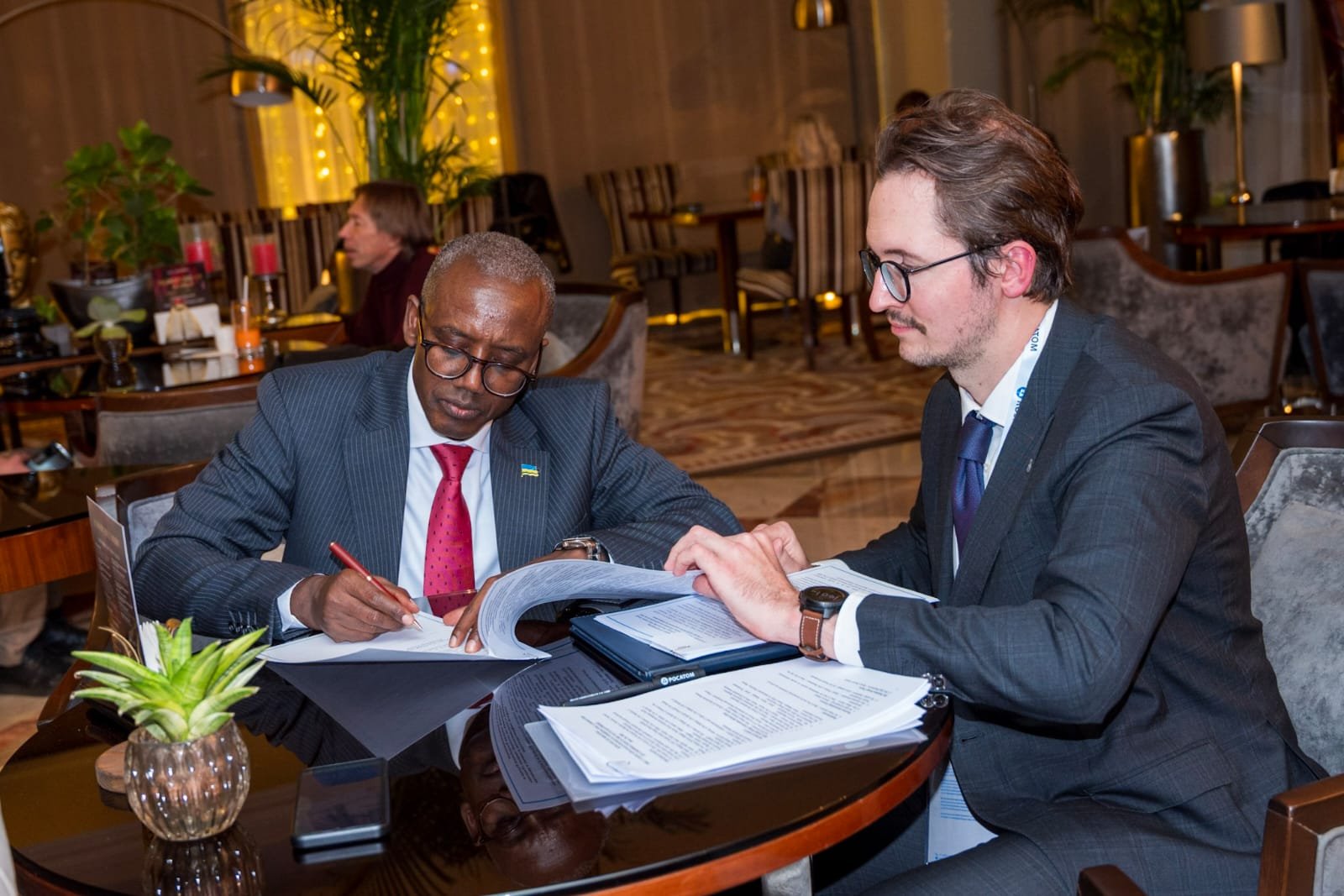
Rwanda: Formalizes Russia SMR Nuclear Agreement, Plans Center
Summary
- Rwanda and Russia recently signed a new cooperation agreement to advance Rwanda's nuclear program.
- The agreement focuses on developing a small modular reactor, a Centre for Nuclear Science and Technology, and training nuclear specialists.
- This partnership builds on formal cooperation initiated in December 2018 and includes a roadmap for small modular reactors signed in July 2026.
- Rwanda aims to introduce its first nuclear generation, targeting 110 megawatts, between 2030 and 2033.
- The country must also establish a comprehensive nuclear regulatory framework and infrastructure, guided by IAEA recommendations, for safe and sustainable operations.
What Happened
The nation's immediate challenge extends beyond merely installing advanced nuclear technology, encompassing the critical development of robust regulatory institutions, specialized technical expertise, and essential infrastructure to ensure safe and sustainable operations.
Rwanda has significantly advanced its nuclear energy aspirations through a new cooperation agreement with Russia, formalized during the Third Russia-Africa Summit in Moscow. This pivotal accord, signed by the Rwanda Atomic Energy Board (RAEB) and Russia’s state nuclear corporation Rosatom, outlines plans for the development of a small modular reactor (SMR), the establishment of a Centre for Nuclear Science and Technology, and comprehensive training programs for specialists crucial to Rwanda's burgeoning nuclear sector. Ambassador Joseph Nzabamwita, Rwanda’s envoy to Moscow, publicly announced the agreement, emphasizing the imminent commencement of construction activities within Rwanda and the anticipated creation of employment opportunities for the nation's youth.
This latest development marks a significant stride in Rwanda's long-term strategy to diversify its electricity generation sources, bolster industrial expansion, and harness nuclear technology for diverse applications across healthcare, agriculture, and mining. The collaboration with Russia, which began with formal discussions on the peaceful uses of nuclear energy in December 2018, has steadily progressed. A year later, in December 2019, an initial agreement was signed to establish a Centre for Nuclear Science and Technology, complete with a research reactor and associated laboratories, laying the groundwork for the current expanded partnership.
Broader Nuclear Ambitions
Rwanda's vision for nuclear technology extends well beyond the generation of electricity, encompassing a wide array of applications designed to foster national development. The planned Centre for Nuclear Science and Technology is poised to become a hub for innovation, supporting critical advancements in medicine, agriculture, industry, and scientific research. In the healthcare sector, nuclear technologies offer promising avenues for enhanced cancer diagnosis and treatment, while agricultural applications include research and techniques aimed at improving food preservation. Furthermore, in the mining industry, nuclear methods are expected to aid in geological surveys and detailed mineral analysis, contributing to the efficient extraction of natural resources.
Crucially, the establishment of this center is also integral to the development of Rwanda’s human capital, nurturing a new generation of scientists, engineers, and technicians whose expertise will be indispensable for the long-term success and sustainability of the nation's nuclear program. This focus on capacity building aligns with international best practices. An International Atomic Energy Agency (IAEA) review conducted in July 2026 specifically assessed Rwanda’s readiness to develop a research reactor, acknowledging its potential to significantly broaden the peaceful applications of nuclear technology across various sectors, including scientific research, healthcare, agriculture, industry, and education.
Developing the Regulatory Framework
The successful implementation of Rwanda's nuclear ambitions necessitates not only technological prowess but also the meticulous development of a robust regulatory framework and essential infrastructure. The nation's immediate challenge extends beyond merely installing advanced nuclear technology, encompassing the critical development of robust regulatory institutions, specialized technical expertise, and essential infrastructure to ensure safe and sustainable operations. The partnership with Rosatom has evolved to address these complex requirements, with a cooperation roadmap on small modular reactors (SMRs) signed in July 2026. This roadmap comprehensively covers project development, human resources, nuclear infrastructure, and the crucial regulatory requirements that will govern the deployment of Rwanda small modular reactors.
The most recent memorandum between RAEB and Rosatom specifically mandates an assessment of Rwanda’s nuclear infrastructure needs. This evaluation will incorporate recommendations from the International Atomic Energy Agency (IAEA) and leverage Rosatom’s extensive experience in the field, ensuring that the Rwanda nuclear regulatory framework is aligned with international safety standards. Rosatom Director General Alexey Likhachev highlighted the importance of this foundational work, noting that 102 Rwandan students are currently pursuing studies at Russian universities through Rosatom’s programs. He underscored that advancing these projects requires not only technological expertise and a skilled workforce but also the comprehensive development of national nuclear infrastructure, which the memorandum aims to facilitate by assessing existing needs and defining subsequent steps.
Strategic Vision and Future Outlook
Rwanda's strategic embrace of nuclear power is a cornerstone of its broader national development agenda, aiming to address growing energy demands and foster sustainable economic growth. President Paul Kagame articulated this vision at the Nuclear Energy Summit in Paris in March 2026, stating that nuclear power would diversify the country's energy mix while providing the stability essential for industrial expansion and long-term transformation. This commitment is supported by concrete targets, with Rwanda aiming to introduce its first nuclear generation in the early 2030s.
The initial goal for this nascent nuclear power program is to achieve an output of 110 megawatts between 2030 and 2033. This ambitious timeline underscores the urgency with which Rwanda is pursuing its nuclear future, recognizing its potential to provide a reliable and clean energy source. The ongoing collaboration with Russia, particularly through the Rwanda Russia SMR nuclear agreement, is central to realizing these objectives, ensuring that the necessary technological, human, and regulatory foundations are firmly established for a secure and prosperous nuclear future.
Practical Implications
Lawyers and compliance officers should closely monitor the development of Rwanda's nuclear regulatory framework, including licensing requirements and safety standards for small modular reactors and the new nuclear science center. This will be crucial for advising on compliance with national legislation and international obligations, particularly those stemming from IAEA recommendations, as the country progresses towards nuclear energy implementation.
Source
How does this affect you?
Get an AI analysis of this article grounded in your jurisdictions, practice areas, and any policy documents you've uploaded to Wansom.
Finish Reading the Full Story and the Expert Analysis.
Wansom is AI and can make mistakes.