
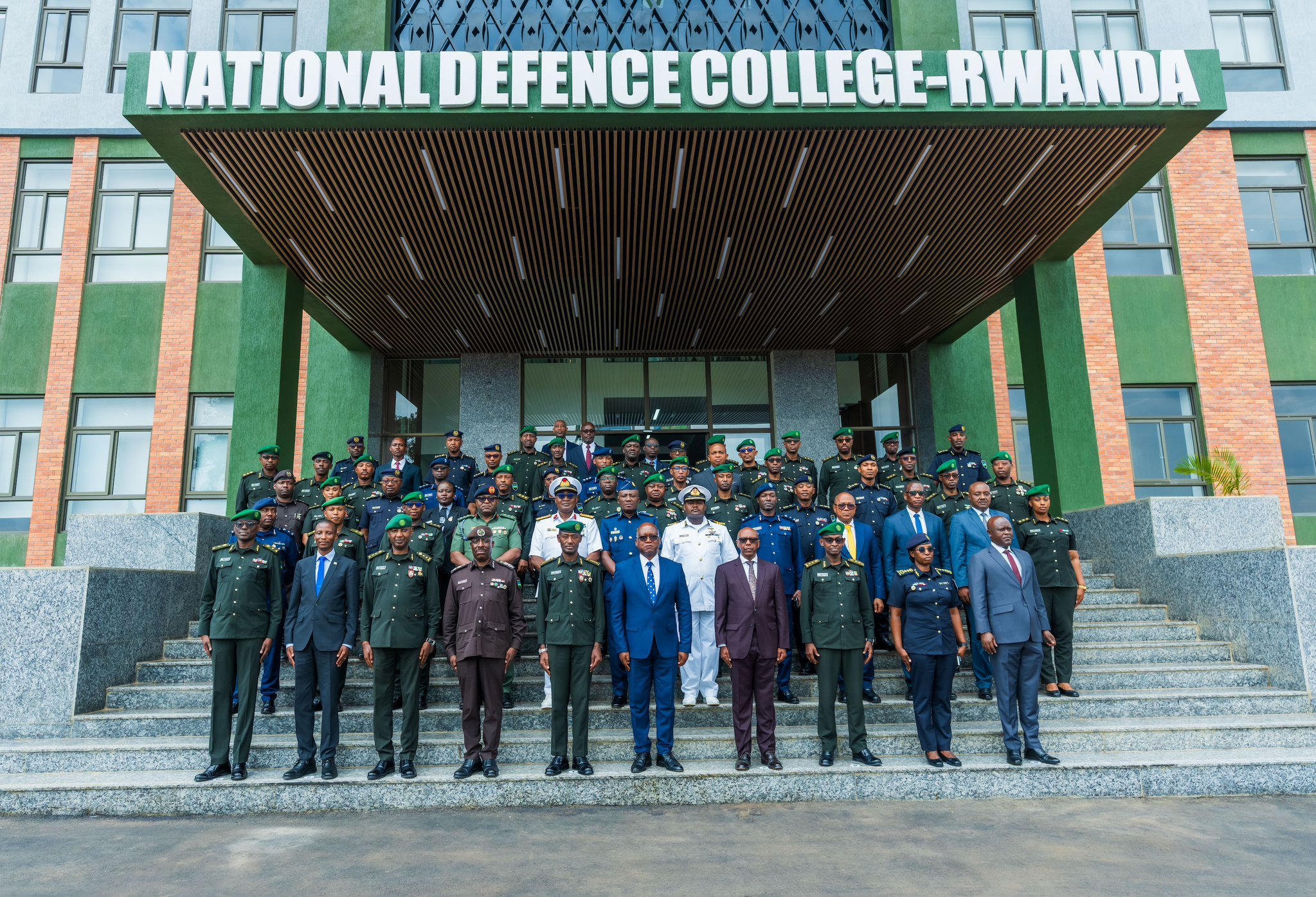
Rwanda: National Defence University Rwanda Establishment Begins Academic Activities
Summary
- The National Defence University-Rwanda (NDU-R) was formally established by a law published in the Official Gazette on April 10, 2026.
- The National Defence College–Rwanda (NDC-R) opened on September 25, and the Defence College of Health Sciences (DCHS) opened on October 2, marking NDU-R's first academic activities.
- Defence Minister Juvenal Marizamunda presided over the inaugurations of both colleges, which are designed for strategic leadership and specialized military medical education, respectively.
- NDU-R consolidates existing Rwanda Defence Force training institutions and aims to provide comprehensive defence, security, and strategic education.
- President Paul Kagame serves as the Chancellor of Honour for the newly operational university system, which also plans to host officers from partner countries.
Initial Operations Underway for NDU-R
The primary objective of NDU-R is to consolidate and integrate existing RDF training institutions, thereby creating a more comprehensive and robust system for defence, security, and strategic education.
The National Defence University-Rwanda (NDU-R) has officially begun its academic activities, marking a pivotal moment for advanced military education in the nation. This operational launch follows the formal establishment of the institution through a Rwanda military education law, which was published in the Official Gazette on April 10, 2026. Within a two-week period, two of NDU-R's foundational colleges inaugurated their first cohorts, signaling the university's transition from a long-standing concept and legal framework into an active educational system.
The Rwanda Defence Force (RDF), under the purview of the Ministry of Defence, initiated the National Defence College–Rwanda (NDC-R) on September 25. This was closely followed by the opening of the Defence College of Health Sciences (DCHS) on October 2. Defence Minister Juvenal Marizamunda presided over the launch ceremonies for both colleges, highlighting the government's commitment to the new institution. These inaugural events represent the first significant academic undertakings under the newly formed National Defence University Rwanda establishment.
Legal and Institutional Foundation
The foundational idea for a national institution dedicated to advanced defence education in Rwanda emerged around 2018. During the exploratory phase, Rwanda engaged with various international partners, including the United States National Defense University, to help shape its plans. The legislative process advanced significantly in January 2026 when the Cabinet, chaired by President Paul Kagame, approved the draft law that would formally establish NDU-R, culminating in its legal foundation in April 2026.
The primary objective of NDU-R is to consolidate and integrate existing RDF training institutions, thereby creating a more comprehensive and robust system for defence, security, and strategic education. The university's structure is expansive, encompassing several key institutions. These include the National Defence College–Rwanda (NDC-R), the Defence College of Health Sciences (DCHS), the Defence Institute of Sciences and Technology, and the Institute for Defence and Strategic Studies, all situated in Kigali. Additionally, the National Intelligence Academy in Bugesera, the RDF Command and Staff College and National Police College in Musanze, and the Rwanda Military Academy in Bugesera are integrated into the university's framework. President Kagame holds the distinguished position of Chancellor of Honour for NDU-R.
Strategic Vision and Future Impact
The NDU-R colleges opening represent a strategic initiative to bolster Rwanda's capabilities in defence and security. The National Defence College–Rwanda (NDC-R), which commenced its 11-month Course 1-26/27 at its Bumbogo Campus, is specifically designed to provide strategic-level education to both senior military and civilian leaders. Minister Marizamunda, during the NDC-R inauguration, underscored that strategic leadership extends beyond mere tactical and operational warfare, necessitating a profound understanding of national objectives and the skillful application of military, economic, diplomatic, and informational instruments. He impressed upon the pioneer cohort the significant responsibility inherent in their selection.
Similarly, the Defence College of Health Sciences (DCHS), with its first cohort at the Rwanda Military Academy–Gako, is poised to become a critical component of the university. This college integrates military science with advanced clinical training, research, and innovation, preparing health professionals for effective service in both routine peacetime care and challenging austere combat conditions. Minister Marizamunda lauded DCHS as the "premier centre of gravity for specialised military medical education," while Principal Yeshigeta Gelaw articulated the college's ambition to set "a new paradigm for Rwanda" in educational excellence, service, research, and innovation, aiming to become a leading health-sciences institution across Africa. The university's broader mandate includes fostering professional training, research, and innovation in defence and security, alongside deepening international cooperation, with plans to welcome officers from partner countries for Rwanda Defence Force education.
Practical Implications
Lawyers advising entities involved in defense, security, or international educational partnerships in Rwanda should be aware of the formal establishment and operationalization of the National Defence University-Rwanda (NDU-R) by law. This development creates a new institutional framework for advanced defense education, potentially impacting future contracts, collaborations, and regulatory considerations related to military and security training, including for foreign personnel.
Source
How does this affect you?
Get an AI analysis of this article grounded in your jurisdictions, practice areas, and any policy documents you've uploaded to Wansom.
Finish Reading the Full Story and the Expert Analysis.
Get the latest legal & regulatory intelligence in Rwanda
Wansom is AI and can make mistakes.