
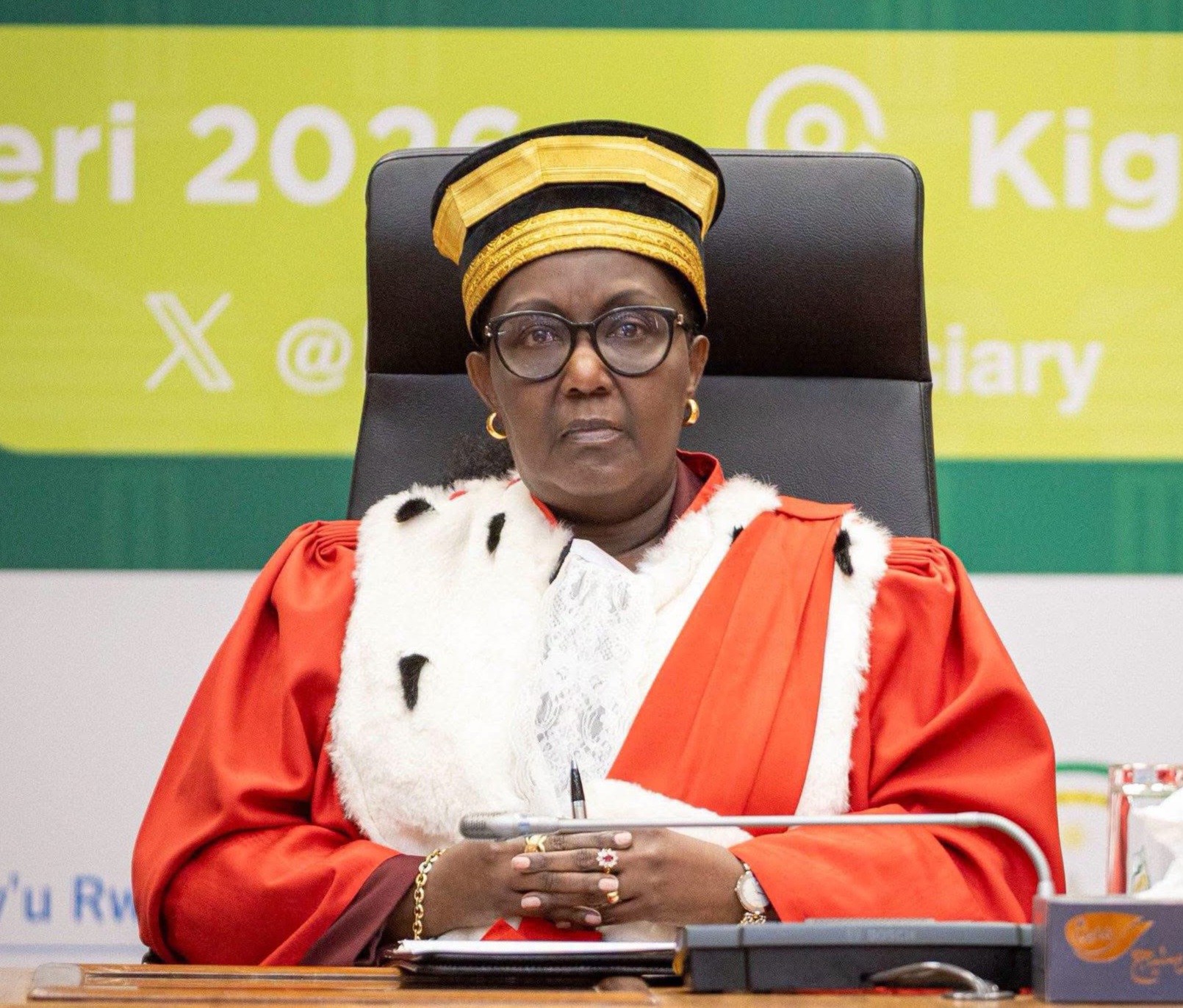
Rwanda Judiciary: Cuts Case Resolution Time to 4 Months
Summary
- Rwanda's judiciary has reduced the average case resolution time from six months to four months.
- This achievement was announced by Supreme Court President Domitilla Mukantaganzwa on September 4, 2026, for the 2025/2026 judicial year.
- During that year, 123,027 out of 163,695 cases were resolved, with 16% utilizing alternative dispute resolution mechanisms.
- The use of alternative dispute resolution increased by 32.4%, contributing to faster justice and improved judicial efficiency.
- Despite progress, the judiciary faces challenges from a growing caseload and stagnant judicial staff numbers.
Significant Reduction in Case Resolution Time
Rwanda's judiciary has successfully shortened the average duration for resolving a court case, bringing it down from six months to just four months.
Rwanda's judiciary has successfully shortened the average duration for resolving a court case, bringing it down from six months to just four months. This achievement, announced by Domitilla Mukantaganzwa, the Supreme Court President and Chairperson of the Supreme Council of the Judiciary, on Friday, September 4, 2026, marks the fulfillment of a key objective set for the 2025/2026 judicial year. The announcement was made during the official opening of the 2026/2027 judicial year.
Throughout the 2025/2026 judicial year, Rwandan courts collectively processed a substantial number of legal matters. Out of a total of 163,695 cases presented before them, 123,027 were successfully resolved. This caseload comprised 54,278 cases that had been carried over from the preceding judicial year, alongside 109,417 new cases initiated within the year.
Strategic Emphasis on Alternative Dispute Resolution
A significant factor contributing to the improved efficiency is the judiciary's proactive promotion of alternative dispute resolution (ADR) mechanisms. According to the judiciary's report, while the majority of cases—103,139, representing 84 percent—were concluded through the standard court process, a notable 19,888 cases, or 16 percent, found resolution via mediation and other ADR methods. These mechanisms enable parties to reach mutually agreeable solutions without undergoing a full trial.
President Mukantaganzwa explicitly stated that the judiciary had intentionally encouraged litigants to utilize these alternative avenues whenever feasible, viewing them as crucial for expediting justice delivery. This strategic push yielded tangible results, with the number of cases resolved through ADR increasing by 4,876, or 32.4 percent, from 15,012 in the previous judicial year to 19,888 in the 2025/2026 period. This growth in ADR usage played a vital role in mitigating court delays and improving Rwandan judicial efficiency.
Caseload Management and Remaining Challenges
The judiciary's report further detailed the distribution of resolved cases across different court levels. Primary Courts bore the heaviest workload, successfully resolving 74,348 cases during the year. Intermediate Courts followed, concluding 33,144 cases, with the remaining matters handled by the High Court, Commercial High Court, and other specialized courts. By the close of the 2025/2026 judicial year, the number of unresolved cases stood at 41,831, representing a considerable reduction from the 54,278 cases that had been carried over at the start of the year, indicating progress in Rwanda court backlog reduction efforts.
Despite these notable advancements in efficiency and backlog reduction, the Rwandan judiciary continues to grapple with an escalating caseload. The volume of new cases consistently rises, yet the expansion of judicial staff has not kept pace. This disparity presents an ongoing challenge that could potentially impact the quality and effectiveness of the services provided to citizens seeking justice, underscoring the need for sustained efforts in resource management and process optimization.
Practical Implications
Lawyers practicing in Rwanda can now advise clients on significantly reduced court case resolution timelines, which have dropped to an average of four months. This development also highlights the judiciary's increased emphasis on alternative dispute resolution, suggesting that leveraging ADR mechanisms could lead to even faster outcomes for clients.
Source
How does this affect you?
Get an AI analysis of this article grounded in your jurisdictions, practice areas, and any policy documents you've uploaded to Wansom.
Finish Reading the Full Story and the Expert Analysis.
Wansom is AI and can make mistakes.